

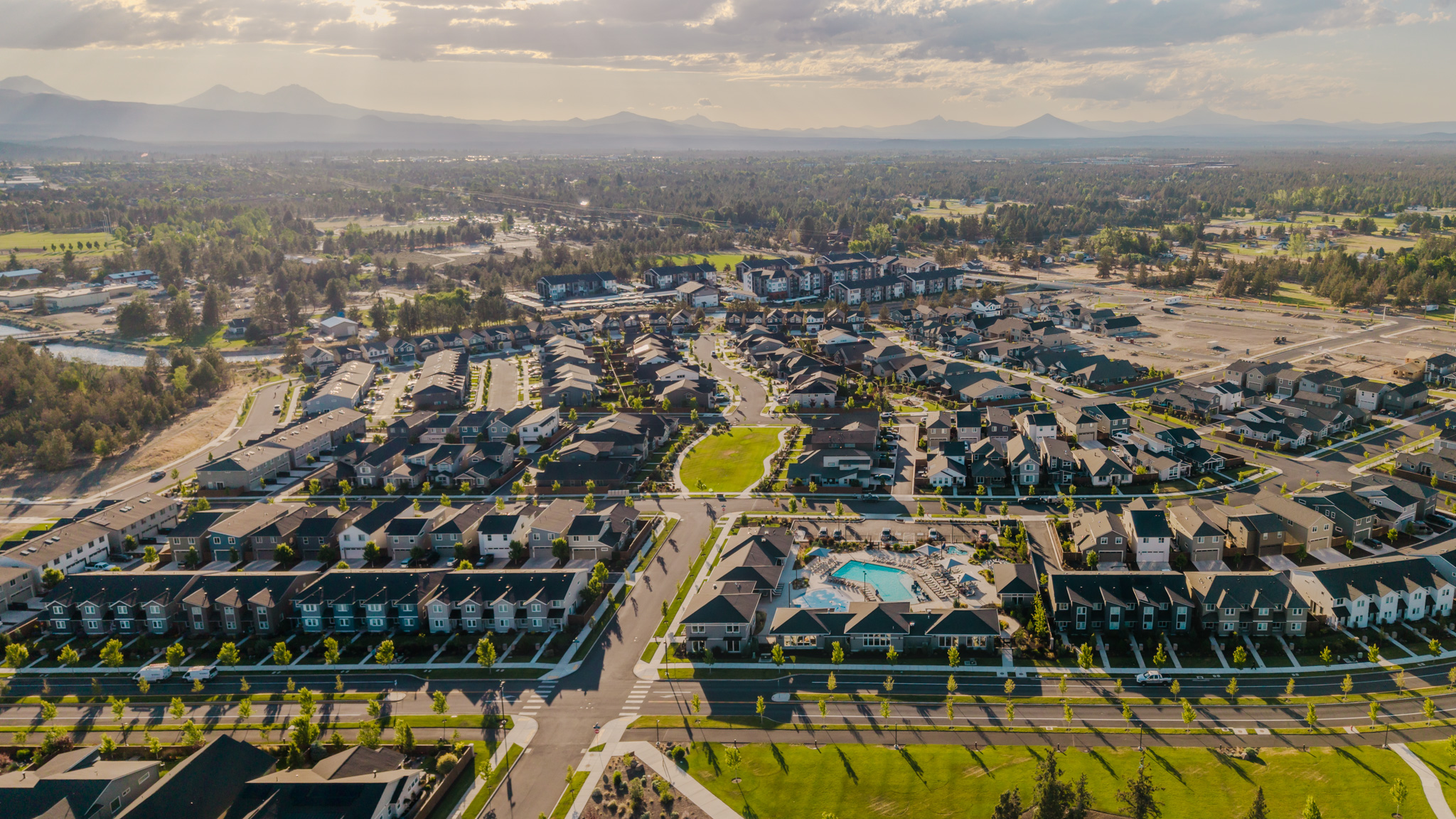
Living Near Bend’s Neighborhood Commercial Areas: A Buyer’s Guide

Small commercial areas can make daily life more convenient, but “near shops” is not the same as “walkable,” quiet or a good fit for every buyer. Before you buy, test the actual route from the house, visit at different times, confirm the current businesses and transit service, and investigate what may be built nearby.
Bend includes several kinds of neighborhood-scale commercial and mixed-use areas. Some sit within established neighborhoods; others are part of newer master-planned communities. The City’s development code describes neighborhood commercial sites as places intended to provide pedestrian-friendly access to goods and services for nearby residents while creating a transition between commercial and residential uses. That planning intent is useful context, but the experience at a particular home still depends on the block, street crossings, business mix and future development.
What buyers should compare
- Useful destinations: Are the places you would actually use—groceries, coffee, dining, childcare, fitness or professional services—nearby today?
- The real walking or biking route: Check sidewalks, lighting, crossings, winter conditions, hills and the comfort of the route after dark.
- Traffic and operations: Observe delivery times, parking turnover, outdoor seating, trash collection, loading areas and evening activity.
- Future change: Review zoning and current development applications rather than assuming an empty lot or existing storefront will remain unchanged.
- Your routine: Decide whether you want activity close by or prefer a quieter residential setting with errands reached by car.
Start with your ordinary week
A neighborhood commercial area is most valuable when it solves a real part of your routine. Make a short list of the trips you take every week. A café may matter less than a practical grocery stop. A restaurant cluster may be a benefit for one household and an evening-noise concern for another.
David Keyte’s local-knowledge framework is to evaluate the lived experience around a property, not just the listing. In places such as Northwest Crossing, that means considering how destinations such as The Grove, nearby trails, schools and parks would fit into your actual day. Bend Relo’s Northwest Crossing video tour is one local example of a neighborhood center, but it is not a promise about every address or about current business hours.
Test the route, not just the distance
A map may show that a home is close to a commercial area while overlooking a busy crossing, an incomplete sidewalk, a steep grade or a route that feels different in winter. Walk the route if you can. If biking is part of the plan, ride it at the time of day you expect to use it.
The City of Bend’s Transportation System Plan describes a long-range network for driving, transit, walking, biking and rolling. Planned projects are not the same as completed facilities, so verify present conditions on the ground. The City’s interactive maps can help you research infrastructure, and Cascades East Transit publishes its current system map and routes and schedules.
For a step-by-step field test, use our Bend walkability guide. It explains why a walk score or straight-line distance should be treated as a starting point rather than a substitute for visiting the route.
Visit more than once
A single showing gives you only one snapshot. When neighborhood businesses are an important part of the decision, visit on a weekday morning, during the afternoon and in the evening. A weekend visit can reveal a different parking and activity pattern.
Pay attention to:
- vehicle access, turn movements and cut-through traffic;
- parking spillover near the home;
- restaurant patios, music and closing activity;
- delivery trucks, loading areas and trash pickup;
- lighting that reaches residential windows;
- seasonal events or temporary street closures; and
- how snow storage or winter maintenance affects the route.
If sound is a concern, the practical checks in our guide to evaluating noise before buying can help you plan repeat visits and distinguish a one-time event from a recurring pattern.
Confirm zoning and nearby development
Today’s businesses are not guaranteed to remain, and nearby vacant or underused land may change. Bend’s Comprehensive Plan provides the broad land-use framework, while zoning and the development code govern what can be proposed on a specific property. A buyer should not rely on a listing description or a view from the driveway to predict future use.
Use the City’s zoning lookup tool to identify the current designation for a property. Then review the Development Activity Tracker for active and recently completed new-construction permits. The City also provides a Comprehensive Plan overview and access to current codes. These tools are useful for screening, but questions about what is allowed on a particular parcel should go to the City of Bend Planning Division or the appropriate land-use professional.
Also review title documents, recorded easements and any HOA declarations or architectural rules that apply to the home. Commercial proximity does not override private restrictions or resolve questions about parking, home occupations, signage or planned shared facilities.
Separate lifestyle fit from resale predictions
Convenience can be meaningful to a buyer, but proximity to shops does not guarantee appreciation, a faster sale or a specific resale premium. The same location can create a different tradeoff for different households. One buyer may value a short walk to dinner; another may prioritize a quiet street, more parking or greater separation from customer traffic.
For resale analysis, compare relevant recent sales with similar location characteristics rather than applying a blanket percentage. Look at the subject property’s exact distance, route quality, noise exposure, parking situation, home type, condition and competing inventory. A local real estate professional can help frame those comparisons, but valuation conclusions should be tied to current property-level evidence.
A buyer checklist for a home near neighborhood shops
- List the nearby destinations you would realistically use.
- Walk or bike the actual route from the property.
- Visit at several times and on more than one day.
- Check current business hours and whether key tenants are still operating.
- Review the City zoning map and nearby development activity.
- Check current transit routes if service matters to your household.
- Observe parking, deliveries, lighting, outdoor seating and noise.
- Review HOA documents, easements and title information.
- Compare recent sales with genuinely similar location characteristics.
- Decide whether the convenience-to-activity tradeoff fits your routine.
Choosing the right Bend location
Neighborhood commercial areas can make some Bend locations especially practical, but the best choice is personal and address-specific. The useful question is not whether mixed-use living is universally better. It is whether the routes, services, activity level and likely future development fit how you want to live.
Compare this due-diligence process with our Bend neighborhood comparison guide. If you are narrowing a home search, Bend Relo can help you evaluate listings alongside the surrounding streets, land-use context and day-to-day tradeoffs.
- bendrelo.com — Bend and Central Oregon property search and buyer guidance
- movingtobend.com — Local lifestyle and relocation research
- bendrelocationservices.com — Professional relocation support
Talk with David & the Bend Relo team
Buying, selling, relocating, or evaluating a specific property? Tell us what you are working through. We are happy to help.





