

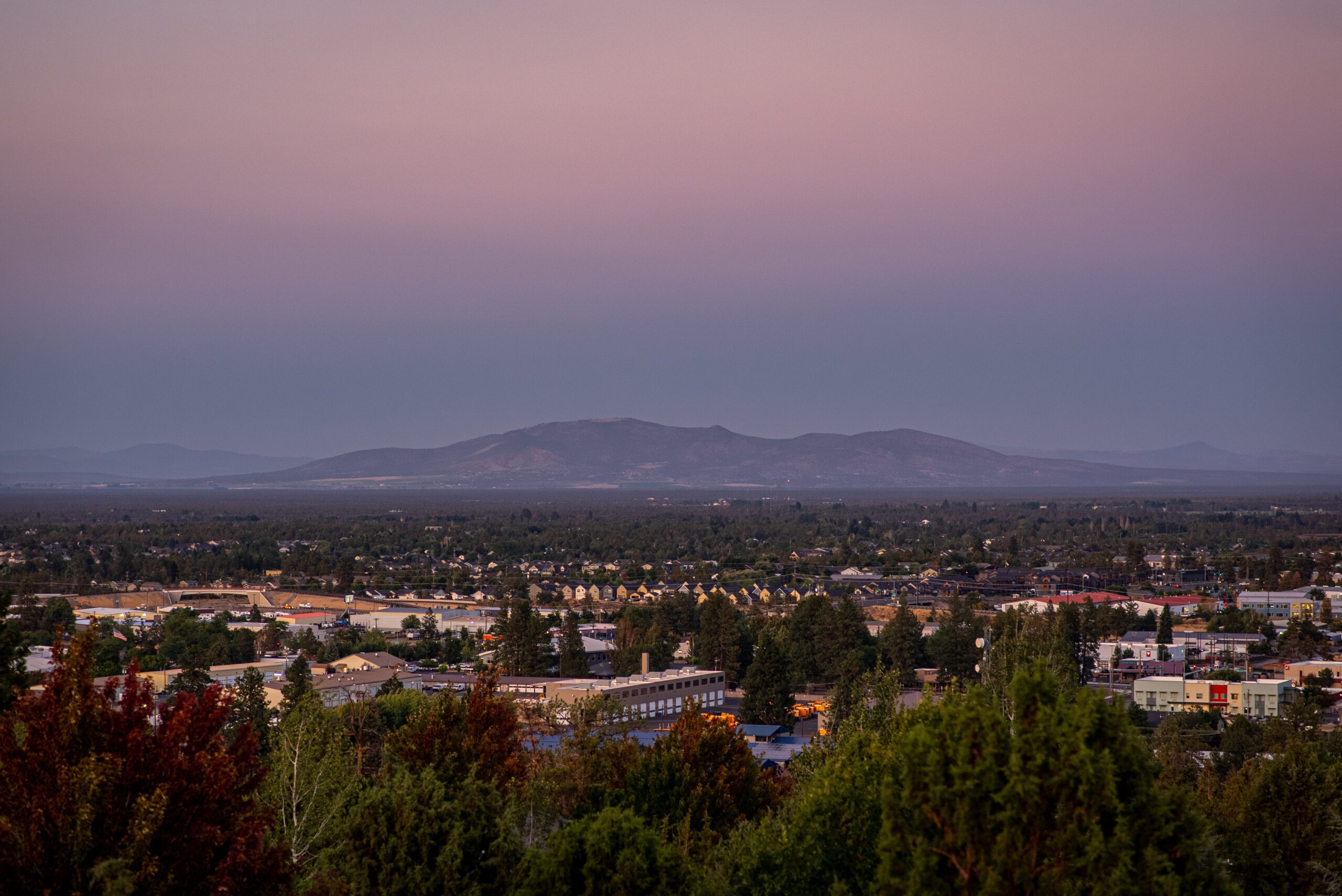

Dust is part of high-desert living, but the amount a property experiences depends on more than its ZIP code. Road surface, traffic, driveway length, exposed soil, prevailing wind, construction activity, building seals, and the home’s ventilation system can all change the day-to-day result.
For a Bend-area buyer, the useful question is not “Is this a dusty property?” It is “Where does the dust come from, who controls that source, and what will it take to manage it?” The checklist below turns that question into practical due diligence.
Start outside: identify the actual dust sources
Visit the property with vehicles moving on nearby roads, not only during a quiet showing. Look for dust plumes, loose driveway material, bare soil, disturbed construction areas, and tracks that carry fine material toward the house. Notice which doors, patios, vents, and outdoor equipment face the prevailing exposure.
Separate what you can control from what you cannot:
- On the lot: driveway speed, surface maintenance, bare-soil coverage, drainage, and entry routines.
- Shared or private road: the recorded maintenance agreement, responsible owners, budget, and treatment schedule.
- Local access road: maintenance may fall to adjoining owners rather than the County.
- County or state road: responsibility and maintenance practices depend on the road’s official jurisdiction.
Deschutes County explains that it maintains County roads but that many rural local access roads are the responsibility of abutting property owners. Some areas use a special road district to fund road work. A buyer should verify the exact road classification and governing documents rather than relying on appearance or a seller’s casual description.
Ask what road and driveway maintenance actually costs
For a private or shared surface, request recent invoices and the current maintenance plan. Useful questions include:
- Who grades the road or driveway, and how often?
- Who decides when to add aggregate or apply a dust-control treatment?
- How are costs allocated among owners?
- Are there vehicle-speed rules or seasonal restrictions?
- Does the agreement address drainage, washboarding, snow removal, and emergency access?
- Are unpaid assessments, deferred projects, or disputes documented?
Do not assume that adding water, chemicals, gravel, or pavement is automatically permitted or appropriate. The right approach depends on road ownership, drainage, nearby wells and waterways, governing documents, material specifications, and professional advice. A recurring invoice is more useful for budgeting than a generic online cost range.
Evaluate the building envelope and entry points
Dust often enters where people and pets do, through an attached garage, and through gaps around openings. During the inspection period, look at:
- weatherstripping at exterior and garage-to-house doors;
- window condition and operability;
- damaged screens and unsealed penetrations;
- attic, crawl-space, and combustion-air vents that need to remain functional;
- the condition of the HVAC filter slot and access panel; and
- visible dust patterns around returns, registers, baseboards, and storage areas.
Do not seal required ventilation or combustion openings in an attempt to stop dust. If the source is unclear, the right next step may be a home inspector, HVAC professional, or qualified contractor. Bend Relo’s home-inspection guide for buyers explains how to turn observations into scoped follow-up questions.
Review filtration as a system, not a filter number
The U.S. Environmental Protection Agency’s indoor particulate-matter guidance distinguishes particles by size and explains why smaller inhalable particles matter. A house can also generate indoor particles through cooking, candles, fireplaces, smoking, and other activities, so visible outdoor dust is not the only source.
For a forced-air system, record the filter size, current rating, condition, fit, and replacement history. EPA’s Guide to Air Cleaners in the Home recommends a filter rated at least MERV 13, or the highest rating the system can accommodate. That compatibility language matters: a higher-rated filter is not a do-it-yourself upgrade for every system. Ask an HVAC professional or the equipment manufacturer what the blower and filter slot can support.
If considering a portable air cleaner, match its clean-air delivery rate to the intended room and understand what it is designed to remove. Filtration can reduce particles in the air it processes; it does not repair air leaks, eliminate a road-dust source, or replace ordinary cleaning and equipment maintenance.
Do not treat dust and wildfire smoke as the same problem
Road dust and wildfire smoke can both involve airborne particles, but wildfire smoke is a separate episodic air-quality hazard. Use AirNow or the official Fire and Smoke Map for current conditions. AirNow also publishes guidance on preparing a cleaner-air room before smoke arrives.
When comparing homes, ask how the household would close windows, operate cooling, and filter indoor air during a smoke event. A portable air cleaner or compatible HVAC filtration plan may be useful, but it should be evaluated for the actual room and equipment rather than marketed as a guarantee of clean air.
Use landscaping without creating a water problem
Covering bare soil can reduce loose surface material near the house, but a high-desert landscape should be planned around water availability, drainage, defensible-space needs, and plant suitability. Options may include properly installed gravel, mulch where appropriate, hardscape, or site-suitable vegetation. The goal is to stabilize high-traffic and wind-exposed areas without directing water toward the foundation or adding a maintenance burden the owner does not want.
On acreage, walk the routes between the home, shop, barn, well equipment, and parking areas. A dust plan that works beside the front door may not address a long driveway or repeated equipment traffic. For broader ownership questions, use this Central Oregon acreage cost and maintenance checklist.
A practical buyer checklist
- Visit more than once. Compare calm and windy conditions, weekday and weekend traffic, and dry-weather use.
- Confirm road jurisdiction. Identify whether the route is public, local access, private, shared, or inside a special road district.
- Read the documents. Review road agreements, district information, HOA rules, assessments, and recent invoices.
- Inspect the house. Check openings, the garage connection, filter fit, HVAC service records, and visible particle patterns.
- Price the actual plan. Obtain property-specific quotes for grading, surface repair, landscaping, sealing, or HVAC work that appears necessary.
- Separate routine dust from smoke readiness. Budget for normal maintenance and create a distinct wildfire-smoke plan.
Make a property-specific decision
A dusty driveway is not automatically a deal breaker, and a paved street does not guarantee a dust-free home. What matters is whether the sources are understood, the maintenance responsibility is documented, and the property’s systems fit your expectations and budget.
If you are comparing Bend, Redmond, or rural Central Oregon homes, Bend Relo can help you identify the road, acreage, building, and ownership questions to investigate before you commit.
- bendrelo.com — Property search and relocation planning
- movingtobend.com — Lifestyle insights and relocation tips
- bendrelocationservices.com — Professional relocation support
Talk with David & the Bend Relo team
Buying, selling, relocating, or evaluating a specific property? Tell us what you are working through. We are happy to help.





