Five bedrooms sound great. Then somebody walks in from the garage and discovers that Grandma’s bathroom is also the mudroom shortcut. That’s the kind of thing we want to learn on a showing.
For multigenerational living in Bend, our first question is simple. When you say you want to live close, do you mean Sunday dinner together or walking over in slippers with your morning coffee?
How do you start a home search with two households?
We scout twice and tour together. First, we hear from each person.
What do you need every day? What would be fun to share? What would you like to keep all to yourself? If one person wants a big family kitchen and someone else wants a quiet front door, both answers go on our list.
Then we try it. At a house with an accessory dwelling unit (ADU), each household uses its own entrance. For two separate homes, drive between them when you’d usually visit.
Add the trip to work or school. Ten minutes on a map feels different when it’s the third drive of the afternoon.
Choose the arrangement before you choose the house
Sketch three possibilities: one home with shared spaces, one property with a separate living space, or two homes close enough to help each other. Each solves a different problem. If the point is dinner together most nights, a shared kitchen may be a plus.
If one person works nights and another starts early, two quiet entrances may matter more than an extra bedroom. If both households want their own front door and yard, put two nearby addresses on the tour list.
Three ways to live close in Central Oregon
| Layout | What makes it work | What to test in person |
|---|---|---|
| One shared home | Both households want easy access to the same kitchen, laundry or gathering space. | Walk from each bedroom to a bathroom with the other bedroom door closed. Who loses privacy? |
| One property with a separate space | You want a short walk between front doors and some control over sound, visitors or meals. | Use the actual second entrance with groceries. Ask for records for the finished space. |
| Two nearby homes | Each household wants its own front door and day-to-day independence. | Drive door to door at dinner time. Include parking and the walk inside. |
For a family comparing Bend and Redmond, put the usual helper’s address on the itinerary too. If one person expects to do school pickup three days a week, drive that route from both candidates.
Ten minutes between the two households on a quiet Sunday won’t tell you when someone has to leave on a working Tuesday.
Walk two morning routines at the same showing
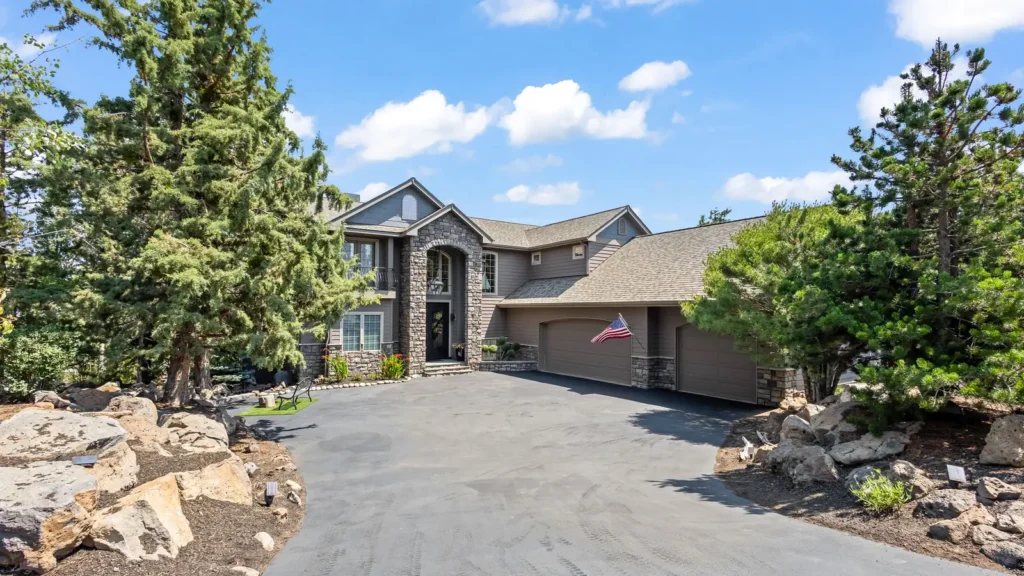
Have one person start at the bedroom they’d use and head for coffee. Have the other enter from the parking spot they’d normally take. Where do those paths cross? Try the stairs, close the doors and listen from the other side of the wall.
Walk the route to the laundry room. Measure the narrowest doorway if a particular piece of equipment has to fit. Listing photos rarely tell you whose space becomes the hallway.
Outside, park both cars as you would on a weekday. Can the early riser leave without somebody else getting up? On a winter tour in Bend, look for the path that stays shaded between the second entrance and the driveway.
A separate entrance loses some of its appeal if the person using it has the longest icy walk.
Does that Bend home actually have an ADU?
If the description says “guest quarters,” “ADU potential” or “separate living,” write down exactly what you’re counting on. Is there an existing kitchen? A second entrance? A space you hope to change later? Ask the agent to gather available plans and permit records for the address.
If the second living space is essential to the purchase, resolve that question with the permitting authority before relying on the space in your decision. Our Bend ADU guide covers that specific decision in more detail.
Where to look up a Bend-area address. Start with Deschutes County’s DIAL property search to identify the parcel. For City of Bend records, the City’s permit records page directs readers to its Online Permit Center for active applications and ePlans for older planning files.
For county-issued permits, use the county’s permit research tools. Ask the responsible office what the file establishes about the specific space. A permit for a detached garage alone leaves open whether a later conversion was approved.
A five-minute scorecard for each household
Save this list on both phones. Mark each item works / needs an answer / rules it out. Give everyone a chance to do it before you compare answers.
- Sleep. Close the bedroom door while someone makes coffee, opens the garage or watches television.
- Bathroom. Trace the nighttime route. Note steps, door widths and who else uses that bathroom.
- Parking. Try leaving in the early car with the second one parked. Include a guest’s car if visits are frequent.
- Privacy. Decide which spaces a guest could reach without crossing the other household’s living area.
- Unanswered costs. List any work necessary before move-in and who will obtain a written estimate. If it only works after construction, keep that house in a separate column.
If a household needs to sell before purchasing, use our Bend home-buying timeline to put the sale, tour dates and move on one calendar.
Decide whether the house earns a second tour
Before anyone gets back in the car, let each household answer first on one question: “Would you choose this place if the other household loved it?” Then ask what they’d want to change.
If everyone mentions the same bathroom, it’s time to try a different floor plan. If the two-house option wins, drive home from one front door to the other.
Should we buy one Bend home with an ADU or two nearby?
Try the coffee test. If someone wants to walk over in slippers every morning, tour a home with an existing ADU. If both households want their own yard and mainly get together for dinner, tour two houses and drive between them at dinnertime.
Who gets a say on a multigenerational home tour?
Everyone who’ll live there. Give each person a turn to lead the walk. A teenager showing you where they’d practice drums and a night-shift worker showing you where they’d sleep can settle a floor-plan question in about thirty seconds.
Send our team one or two Bend listings and tell us whether you’re considering one shared property or two nearby homes. We can use that first conversation to decide which layouts are worth seeing in person.
Talk with David & the Bend Relo team
Buying, selling, relocating, or evaluating a specific property? Tell us what you are working through. We are happy to help.