

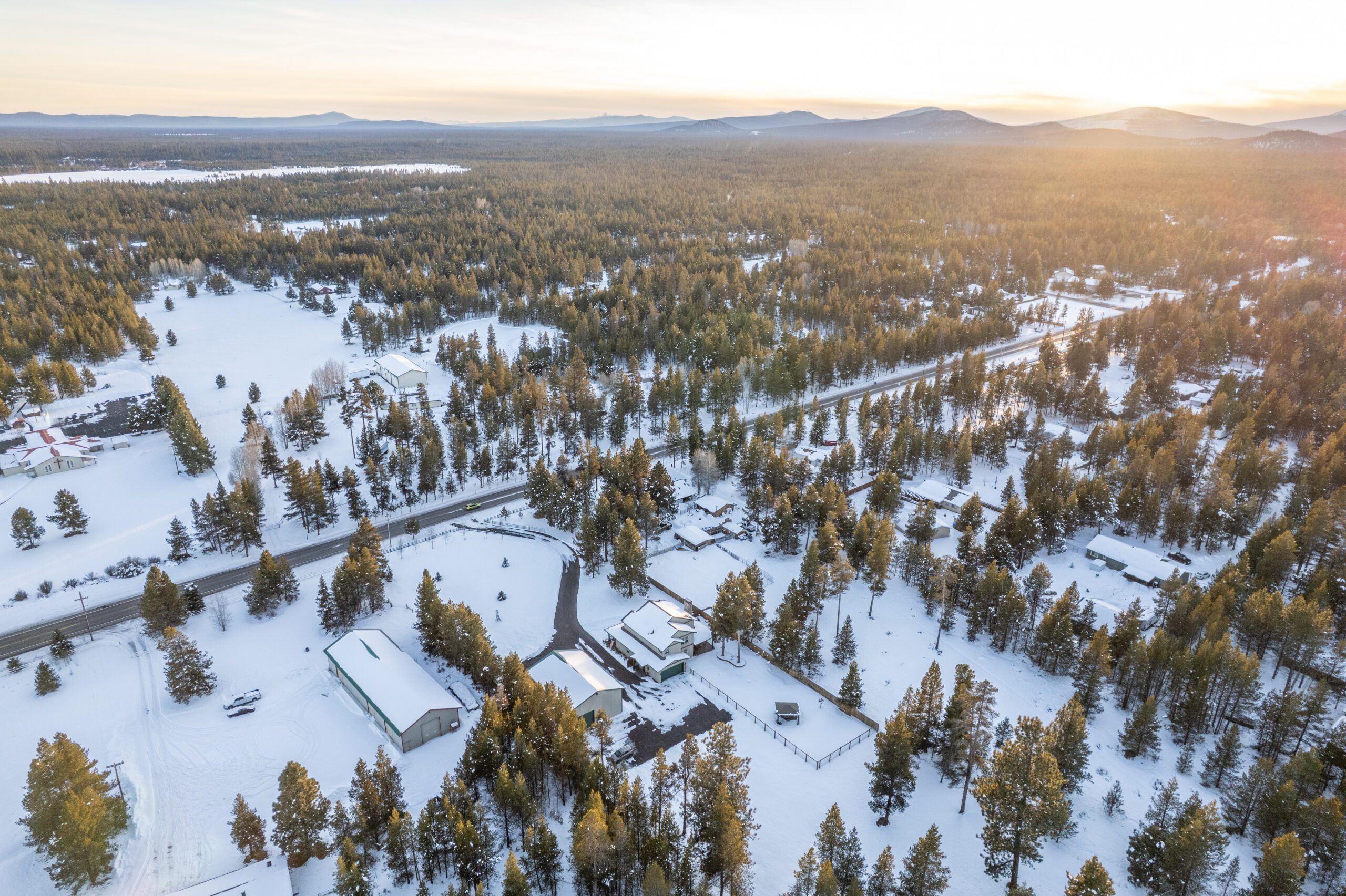

Acreage near Bend can offer privacy, room for projects and a closer connection to the Central Oregon landscape. It can also shift costs and responsibilities that city homeowners rarely manage themselves.
The most useful way to evaluate an acreage property is not to apply one generic monthly estimate. Build a property-specific operating plan: identify each private system, understand the land and access obligations, inspect deferred maintenance and price the work you would hire out.
Start with a complete property systems inventory
Before estimating costs, confirm what the property actually includes and who is responsible for it. A practical inventory may cover:
- domestic well, storage tank, pump house and water-treatment equipment;
- septic tank, distribution components and drain field;
- irrigation rights, delivery infrastructure, pumps and seasonal obligations;
- private driveway or shared road;
- fences, gates, culverts and drainage;
- shops, barns, detached garages and other outbuildings;
- heating fuel, backup power and rural internet service;
- vegetation, mature trees and wildfire-mitigation work; and
- tractors, plows, trailers or other equipment included in the sale.
Separate recurring expenses from replacements that may happen only occasionally but can be significant. A well pump, septic component, long gravel drive or extensive fence line may not require major work every year, yet each deserves a realistic reserve.
Well ownership involves testing, equipment and records
A private well shifts water quality and much of the delivery system to the owner. Review the well log when available, recent water-quality results, production or flow information, pump age, pressure equipment, storage and treatment systems. Ask what maintenance has been performed and whether the property has experienced seasonal changes in supply or water quality.
Oregon requires the seller in many real-estate transactions involving a domestic well to test the water and share the results. That transaction test is important, but it does not answer every question about the well’s physical condition, long-term production or treatment needs. The Oregon Health Authority’s domestic-well transaction guidance explains the testing rules and exemptions.
If the well is shared, ownership costs depend heavily on the agreement, meters, power, repair allocation and access rights. Our guide to shared wells in rural Oregon provides a separate due-diligence checklist.
Septic costs depend on the system and how it has been used
Obtain the available permit, site-evaluation and as-built records, then compare them with what exists on the property. Ask about pumping history, inspection results, repairs, alarms and any known limitations. The number of bedrooms or intensity of use you envision may not match the system’s permitted design.
Routine care matters. Deschutes County advises owners to conserve water and avoid overloading the system, because excessive use and leaks can increase maintenance needs and contribute to failure. Its septic-system care guidance is a useful starting point.
During due diligence, use an appropriate septic professional to evaluate the specific system and explain maintenance intervals, access, expected service life and likely repair scenarios.
Roads, driveways and drainage create their own budget
A long driveway or private road may require gravel, grading, dust control, snow removal, ditch work and culvert maintenance. Steep grades, shade, drifting snow and drainage problems can change both the cost and the equipment required.
Confirm whether the road is publicly maintained, privately maintained or shared. Read the recorded access and maintenance documents, request recent invoices, and identify how major repairs are approved and divided. The companion guide to rural easements and private roads near Bend covers those legal and operational questions in detail.
Land management is more than mowing
Central Oregon acreage can involve weeds, brush, juniper, storm debris, irrigation ditches, pasture, wildlife damage and tree health. Walk the full property rather than evaluating only the area around the house.
Ask which work the current owner performs, what is hired out and which equipment is necessary. If the property includes pasture or animals, add fencing, gates, water delivery, feed storage, manure management and shelter to the plan. If it includes forested ground, consult qualified professionals about tree hazards and fuel reduction.
Wildfire preparation is recurring work
Defensible space is not a one-time cleanup. Vegetation grows back and woody material accumulates, so fuel reduction, pruning, debris removal and access maintenance should be treated as recurring property work.
Oregon State University Extension’s wildfire guide for homes and property explains defensible-space and fuel-reduction practices. Use it to frame questions for a local mitigation contractor, arborist or fire professional rather than assuming every acre should be treated the same way.
Insurance should be quoted for the actual property
Acreage, outbuildings, access, construction, fire-protection availability and replacement cost can all affect an insurer’s review. Oregon’s Division of Financial Regulation explains that carriers may consider a home’s location, construction, replacement cost and access to fire protection when estimating risk.
Request written quotes early and disclose the intended use of shops, barns, animals, equipment and any rental or business activity. Compare coverage for other structures, equipment, liability, wildfire, water backup and temporary living expenses—not only the premium. Our Bend buyer home-insurance guide walks through that comparison.
Utilities can be less predictable outside town
Confirm the heat source, fuel deliveries, well and irrigation electricity, internet options, trash service and any backup-power needs. Review actual utility and fuel records when the seller is willing to provide them, but adjust for differences in household size, occupancy and operating habits.
Also identify every service run between the home, well, septic components, gates and outbuildings. Long underground electrical, water or communication lines can make troubleshooting and repairs more involved.
Equipment ownership versus hiring the work
A tractor, mower, snowblower, plow, trailer or utility vehicle can reduce labor, but equipment also brings storage, fuel, maintenance, attachments and replacement costs. Before buying machinery, compare that total commitment with local contractor availability and pricing for the tasks the property actually requires.
If equipment is included in the real-estate sale, document what transfers, how its value is treated and whether you have enough information to evaluate its condition. Do not assume that included equipment eliminates the need for a maintenance budget.
Build a property-specific acreage budget
- List every private system, structure, access feature and major piece of equipment.
- Collect permits, well records, septic records, agreements, invoices and service histories.
- Separate annual service from larger replacement reserves.
- Obtain quotes for deferred work revealed by inspections and the site walk.
- Verify insurance before purchase deadlines expire.
- Decide which recurring tasks you will perform and which you will hire out.
- Add time, storage and seasonal access to the cost calculation.
Acreage ownership can be deeply rewarding when the property fits both the lifestyle and the operating plan. For a broader look at recurring expenses, see our guide to often-overlooked Central Oregon homeownership costs.
If you are comparing acreage properties near Bend, contact Bend Relo. We can help you organize the property-specific records, inspections and local specialists needed to understand what you are buying.
Talk with David & the Bend Relo team
Buying, selling, relocating, or evaluating a specific property? Tell us what you are working through. We are happy to help.





