
A shared well can serve a rural property reliably, but the buyer is evaluating more than water quality. The due-diligence package should explain who has legal access, which parcels are served, how the system performs, who pays for electricity and repairs, and what happens when owners disagree.
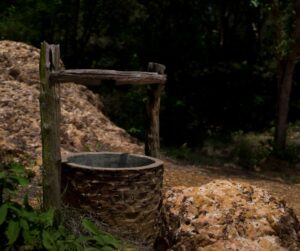
Do not treat “shared well” as one standard arrangement. The well, pump, pressure tank, storage, power source and distribution lines may sit on different parcels and may be governed by recorded documents, an informal practice or both.
Identify exactly what is shared
Start with a diagram and document list. Confirm:
- the well location and the parcel on which it sits;
- every parcel and dwelling currently served;
- ownership of the pump, pressure tank, storage and treatment equipment;
- the route and ownership of water and electrical lines;
- meters, valves and shutoffs for each user;
- access for testing, maintenance and emergency repair; and
- whether irrigation, livestock or accessory dwellings also use the system.
Compare the physical system with the preliminary title report, recorded easements, shared-well agreement and seller disclosures. A line on the ground is not a substitute for a documented right to use, enter and repair the system.
Collect the well history and public records
Ask for the well log or water-well report, pump and treatment records, repair invoices, electrical information, recent test results and any prior disputes or outages. The Oregon Water Resources Department explains that a well report records construction and performance at the time of the work; it is an archived record and is not continuously updated.
Use the state’s well-report query and verify that the record actually corresponds to the property and well. Missing or ambiguous records warrant more investigation, not an assumption about the system.
Understand Oregon’s transaction testing
Oregon’s domestic-well rules require the seller, after accepting an offer on covered real estate, to test the well water and share the results and required form. Oregon Health Authority identifies arsenic, nitrate and total coliform bacteria in the transaction-testing framework and explains exemptions and reporting on its well testing and regulations page.
That legal test is an important baseline, not a complete evaluation of every possible contaminant or the well’s mechanical performance. Use an accredited laboratory and ask the water professional whether location, nearby land uses, taste, odor or prior results justify additional testing. Oregon Health Authority also publishes routine testing recommendations.
Test performance, not only a single water sample
A buyer’s investigation may include:
- flow or yield under an appropriate test;
- pressure and recovery;
- performance while more than one household is using water;
- pump, pressure tank, controls and electrical condition;
- storage capacity and treatment equipment;
- visible leaks and distribution-line condition; and
- backup procedures during a power or equipment failure.
The appropriate test depends on the well and property. A well professional can explain what the result does and does not establish. Do not convert one flow number into a blanket guarantee of future supply.
Read the shared-well agreement as an operating plan
A useful agreement should address:
- the properties and permitted uses covered;
- water allocation and any limits;
- electricity, testing, maintenance and repair costs;
- routine decisions and approval for major work;
- access easements and restoration after entry;
- emergency authority and shutoff procedures;
- collection from an owner who does not pay;
- insurance, liability and damage responsibility;
- future connections, accessory dwellings or expanded use;
- sale or transfer of a participating property; and
- dispute-resolution and amendment procedures.
Have the title company identify the recorded documents and exceptions. Ask a qualified Oregon attorney to interpret or revise legal rights and obligations; the home inspector, well contractor and real estate broker serve different roles.
Ask the lender and insurer early
Loan programs and lenders may have their own water-supply and agreement requirements. For example, federal program guidance can include specific provisions for shared wells. HUD maintains the current FHA Single Family Housing Policy Handbook, and USDA Rural Development publishes its property and appraisal guidance.
Give the lender the agreement, title information, well records and test plan early. Do not assume that a system accepted by one lender or loan program will automatically satisfy another. Confirm insurance availability and any shared-equipment or liability questions with the insurer as well.
Budget for routine service and a major repair
Request the actual payment and repair history when available. Identify who pays for electricity, testing, filters, treatment, pump work, storage and distribution-line repair. Then model a major component failure and each owner’s share under the agreement.
A low routine payment does not prove the reserve is adequate. If the agreement has no method to collect money or authorize emergency work, the practical risk may be greater than the current cost suggests.
Red flags that need resolution
- No recorded access or water-use right can be identified.
- The physical system does not match the documents.
- Owners describe different rules or payment histories.
- Water tests, well records or repair information are incomplete.
- The system cannot demonstrate the performance needed for the intended use.
- A participating owner is delinquent or refuses necessary work.
- The lender, title company, insurer or attorney identifies an unresolved requirement.
A red flag is a reason to investigate, renegotiate or add protection—not an automatic conclusion that every shared-well property is unsuitable.
Structure the due-diligence sequence
- Obtain title, agreement, easement, disclosure and well records.
- Send the documents to the lender and title company immediately.
- Schedule water-quality and system-performance evaluations.
- Have the legal documents reviewed when rights or obligations are unclear.
- Estimate routine and major-repair costs.
- Resolve missing documents, lender conditions or agreement changes before the applicable deadline.
Make the decision property by property
A clear agreement, documented access, acceptable testing, adequate performance and a workable cost-sharing structure can make a shared well manageable. Unclear rights or an unreliable system can turn a normal repair into a dispute involving several properties.
For the larger rural-property budget, review the guide to Central Oregon ownership costs. If you are evaluating a specific acreage or rural home, contact Bend Relo so the offer can include the right document, inspection and financing questions.
Talk with David & the Bend Relo team
Buying, selling, relocating, or evaluating a specific property? Tell us what you are working through. We are happy to help.