
Good outdoor gear storage in a Bend home is less about having a dedicated “gear room” and more about whether the space is secure, dry, easy to use and compatible with the household’s actual equipment. A well-planned garage wall can outperform a larger but awkward storage area. Buyers should test the layout with their vehicles and gear in mind; sellers should improve function without assuming every storage project will produce a dollar-for-dollar return.
That distinction matters in Central Oregon. A household may be rotating skis, bikes, paddleboards, camping bins and wet winter clothing through the same space. The useful question is not simply, “Does this home have storage?” It is, “Can we get the gear in, let it dry, secure it and still use the garage and doors as intended?”
Start With the Gear, Not the Shelving
Before evaluating a home or buying an organization system, make a rough inventory in four groups:
- Long or bulky items: skis, snowboards, paddleboards, kayaks and rooftop boxes.
- Heavy items: bikes, e-bikes, coolers and large camping bins.
- Wet or dirty items: boots, waders, snow gear, muddy packs and bike-cleaning supplies.
- Powered equipment: e-bikes, lights, radios, tools and anything that needs a safe charging location.
Then measure the largest pieces, the garage-door path and the space needed to park the vehicles you actually own. Ceiling-mounted racks may look efficient in listing photos, but they are not useful if they conflict with an open garage door, a tall truck, lighting, a heater or the user’s ability to lift gear safely. Wall systems need suitable attachment points and weight ratings; a qualified installer should confirm the design when loads are substantial.
Build Four Practical Storage Zones
A functional setup usually separates gear by what happens before and after a trip.
- Arrival zone: A bench, hooks or open floor area near the most-used entrance gives boots and packs a place to land before dirt and snow travel through the house.
- Drying zone: Wet gear needs air movement and surfaces that can tolerate moisture. Avoid packing damp equipment immediately into a closed cabinet.
- Clean storage zone: Seasonal clothing, sleeping bags, helmets and smaller equipment benefit from closed, labeled storage away from floor moisture and garage dust.
- Bulky and powered-gear zone: Bikes, skis and boards need stable racks, while battery-powered gear needs access to the correct charger and an outlet that is not overloaded.
The best arrangement shortens the routine: unload, dry, clean, store and reload. If every trip requires moving a vehicle, climbing over bins or carrying wet equipment through finished living space, the storage area is larger on paper than it is in practice.
Garage, Mudroom or Detached Storage?
Each location solves a different problem.
- Garage: Usually the most flexible place for bikes, skis, boards and maintenance tools. Check parking clearance, temperature swings, dust, wall condition, security and whether stored items block equipment or exits.
- Mudroom or utility room: Best for boots, jackets, helmets and frequently used smaller items. Durable flooring, washable surfaces and ventilation matter more than decorative cubbies.
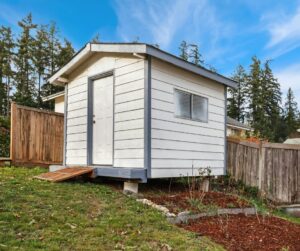
- Detached shed or exterior storage: Useful for bulky or dirty gear, but buyers should inspect water entry, pest evidence, locks and the route between the structure and the home. Confirm that any structure and electrical work were approved when required.
- Dedicated gear room: Convenient when it is located near an exterior door and has enough ventilation and clear floor area. A finished room deep inside the house may be less practical for muddy or wet equipment.
For a new home, compare these everyday details alongside finishes and floor plans. Our guide to buying new construction in Bend explains why the delivered cost, builder contract, inspections and future neighborhood phases deserve separate review.
Use Extra Care With E-Bikes and Lithium-Ion Batteries
An e-bike charging corner should be treated as a safety decision, not just a convenience feature. The U.S. Consumer Product Safety Commission advises owners to follow the manufacturer’s charging instructions, remain present while charging, unplug when charging is complete and never charge while sleeping or away from home. CPSC also recommends using the manufacturer-provided or recommended charger and a compatible, approved replacement battery.
During a home tour, note whether the proposed charging location has a suitable outlet, keeps cords out of vehicle and walking paths, and is separated from combustible clutter. A power strip or extension cord is not a substitute for confirming that the electrical setup is appropriate. If the plan requires a new or upgraded outlet or permanent wiring, verify the permit and contractor requirements first.
Know When a Storage Upgrade Becomes a Permit Question
Movable racks and cabinets are different from altering a building. Structural changes, new walls, plumbing, ventilation, permanent wiring and new or upgraded outlets can trigger building or trade permits. Oregon’s residential permit guidance specifically lists new or upgraded electrical outlets and permanent wiring among work that requires a permit.
Within Bend city limits, the City of Bend’s property-owner permitting guide directs owners to confirm requirements based on the actual project. Jurisdiction matters: a Bend mailing address is not always inside the city, and a homeowners association may have separate restrictions even when a government permit is not required.
If you are planning a larger conversion or reviewing a home with a finished garage or utility space, use our Bend renovation-permit guide to organize the jurisdiction, permit-history and inspection questions before relying on the space.
Buyer Walk-Through Checklist
Bring a tape measure and evaluate the storage area as a working system:
- Will the household’s vehicles still fit with the proposed bike, ski or board racks?
- Can long items enter through the doors and turn into position?
- Do overhead racks clear garage doors, open vehicle hatches and roof-mounted accessories?
- Is there evidence of water intrusion, condensation, pests or damaged wall attachments?
- Can wet gear dry without affecting finished walls, stored belongings or living areas?
- Are built-in cabinets and racks included in the sale, and are their keys or hardware available?
- Does powered equipment have an appropriate charging location?
- Do finished or altered areas have permit and final-inspection records when required?
- Does the HOA regulate exterior sheds, racks, doors or other visible storage?
A storage system is not a reason to skip broader property review. It is one component of how a home supports daily life. Outdoor living areas, for example, have their own exposure, permit, fire and maintenance questions; see our year-round outdoor-living planning guide.
Seller Improvements That Do Not Overpromise
Sellers do not need to create an expensive custom gear room to show useful function. A focused preparation plan can be enough:
- Remove broken racks and excess stored material so buyers can see the available clearances.
- Group equipment by use and leave a visible path to doors, panels, mechanical equipment and vehicles.
- Repair obvious moisture or pest issues rather than hiding them behind new cabinets.
- Collect permits, installation instructions and transferable information for permanent systems.
- Photograph the storage area only after it demonstrates scale and function accurately.
A buyer may value a well-organized garage, but there is no universal resale premium for racks, cabinets or a mudroom. The appropriate investment depends on the property, the quality of the work and the likely buyer pool. Function, accurate representation and clean documentation are safer objectives than a guaranteed return.
Make Storage Part of the Home Search
For an outdoor-oriented household, storage belongs on the home-search checklist with location, layout, systems and ownership costs. Bend Relo can help compare how different homes handle gear, vehicles, wet-season routines, permitted improvements and future projects without treating a lifestyle feature as a substitute for complete due diligence.
If you are buying or preparing a home for sale, contact the Bend Relo team to build a property-specific plan. You can also explore Bend Relo property resources, Moving to Bend lifestyle guidance and Bend Relocation Services.
Talk with David & the Bend Relo team
Buying, selling, relocating, or evaluating a specific property? Tell us what you are working through. We are happy to help.