

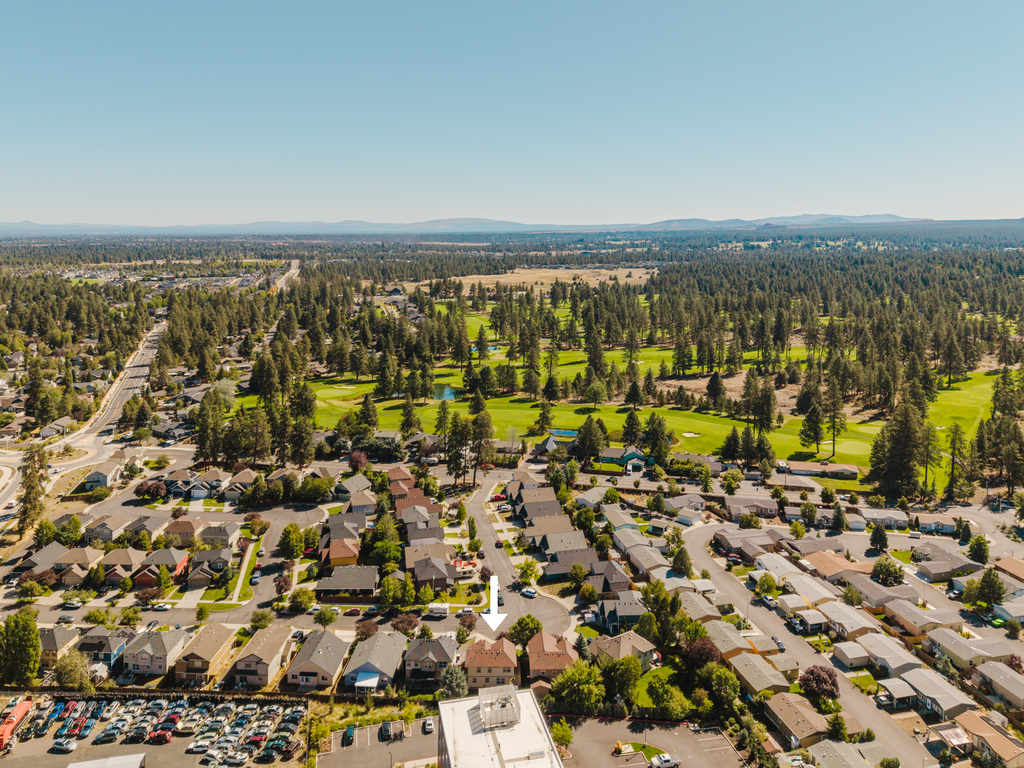
If you are moving to Bend from a brighter metro area, expect outdoor lighting to feel more restrained—and do not assume every Bend-area address follows the same rulebook. Properties inside the City of Bend are governed by the City’s outdoor-lighting standards. Homes outside city limits may fall under Deschutes County’s separate code, and an HOA can add another layer of design rules.
For a buyer, the practical question is not simply whether a fixture is labeled “dark sky.” Confirm the property’s jurisdiction, inspect the actual lighting after dark, review recent installation records and compare the fixtures with the rules that apply to that address.
Start with the address, not the marketing language
A listing may describe a property as “in Bend” even when it is outside Bend city limits. That distinction matters because the City of Bend Development Code section 3.5.200 and Deschutes County Code Chapter 15.10 are not identical.
Use the address and tax lot to confirm jurisdiction before treating a rule summary as property-specific advice. The County’s mapping services can help identify boundaries, but a planning or code-enforcement office should answer close calls and interpret how a rule applies to a particular installation.
What the City of Bend requires
Within the city, new outdoor fixtures installed after February 18, 2004, generally must be full cut-off fixtures or use shielding that directs light down onto the site without sending direct illumination or glare onto adjacent property. The code also addresses roadway and pedestrian lighting, searchlights, recreational facilities, neon lighting and several exemptions.
The City standard is more nuanced than “all exterior light must point straight down.” It includes limited exemptions for certain residential decorative and low-wattage lighting that does not create glare, direct illumination or a shadow on adjacent property. It also allows narrowly contained uplighting in specified circumstances. Existing fixtures and replacement fixtures are treated differently, so installation history can matter.
The City code does not create a general color-temperature limit for every residential fixture. A package marked 2700K or 3000K may be a useful design choice, but the label alone does not establish compliance with shielding, aiming and glare requirements.
What changes in unincorporated Deschutes County
The County’s current outdoor-lighting chapter took effect December 23, 2025. Unless an exemption applies, outdoor lighting must be downcast, fully shielded and must not create light trespass beyond the property line. The chapter also contains transition language for older lawful fixtures and makes replacement fixtures subject to the current requirements.
Some County provisions are easy to miss during a daytime showing. Residential string lights may outline patios, porches, decks and similar structures, but the code says they must be extinguished by 11 p.m. The County’s warm-color recommendation appears among guiding principles rather than as a mandatory approval criterion. That distinction is important when evaluating product claims or a seller’s representation.
For a concise comparison of the two jurisdictions, see our City-versus-County outdoor-lighting guide.
Inspect the property after dark
Daylight can hide both poor function and nuisance glare. When practical, return after sunset or ask for a video showing the exterior-lighting system in operation. Review:
- front steps, walkways, entries and house numbers;
- driveways, detached garages, sheds and gates;
- floodlights and motion sensors near property lines;
- landscape and tree lighting that points upward;
- patio, deck and string-light controls;
- timers, dimmers and smart-home integrations;
- light spilling into neighboring windows or the street; and
- dark areas where a fixture exists but does not work.
The goal is not to make the property as bright as possible. It is to identify whether the system puts useful light where people walk and enter, avoids unnecessary glare, and can be operated in a way that fits the applicable rules.
Ask for records before assuming a fixture is compliant
If exterior lighting appears new or extensive, ask when it was installed and whether the project involved new wiring, circuits, structures or an HOA architectural review. Keep product specifications, invoices, approvals and contractor information with the property records.
A “dark-sky friendly” product description is not a substitute for checking the installed angle, shield, brightness and location. The same fixture can perform differently depending on how high it is mounted, where it points and what surfaces reflect the light.
If the property belongs to an HOA, review the declaration, design guidelines and architectural-review process. HOA rules may address fixture style, brightness, placement and operating hours separately from public code. Our Central Oregon outdoor-lighting and HOA guide explains how to organize that document review.
Do not price a home around unsupported lighting claims
There is no reliable basis for promising that dark-sky fixtures create a set resale premium or guarantee lower utility bills. Energy use depends on lamp wattage, operating time and controls; buyer preferences vary. Treat functional, well-documented lighting as a property-maintenance and due-diligence issue, not an automatic value adjustment.
Likewise, do not assume the City has created designated stargazing zones in local parks or that every Bend-area home must meet one universal “2026” standard. Those claims require specific evidence and do not replace an address-level review.
A practical relocation decision
Outdoor lighting is one small part of choosing a Bend-area home, but it affects how a property feels when winter evenings arrive early, how comfortably guests find an entry, and whether neighbors experience avoidable glare. Add an after-dark lighting check to the same property-specific review you use for access, utilities, wildfire exposure and permit history.
If you are comparing homes from out of state, use our remote home-touring guide to plan the information you cannot see in a standard daytime video. For questions about a particular property, contact Bend Relo. We can help organize the real-estate due diligence while the City, County, HOA, inspector or licensed contractor handles questions within its authority.
Talk with David & the Bend Relo team
Buying, selling, relocating, or evaluating a specific property? Tell us what you are working through. We are happy to help.





