Wildfire risk is part of owning a home in Central Oregon, but it is not a single yes-or-no label. Two homes in the same general area can present different insurance, access, vegetation and building-condition questions. Buyers get a clearer picture by reviewing the exact address with an insurer and walking the property with wildfire resilience in mind.
This guide is a practical starting point for Bend and Deschutes County. It is not an insurance-policy interpretation or a substitute for advice from a licensed insurance professional, inspector, fire official or building department.
Start the insurance conversation before deadlines get tight
Do not wait until the end of a transaction to find out whether the home is insurable on terms that fit your budget. Oregon’s Division of Financial Regulation explains that insurers may consider the home’s age and replacement cost, location, construction materials, access to fire protection and surrounding vegetation, among other factors.
Give an insurance professional the exact property address and accurate details about the home. Ask for a written quote and clarify:
- Dwelling limit: How was the estimated rebuilding cost calculated, and does the policy include extended replacement-cost coverage?
- Deductibles: Is there a separate wildfire deductible or other loss-specific deductible?
- Additional living expenses: What dollar and time limits apply if a covered loss makes the home temporarily uninhabitable?
- Smoke, ash and debris: What does the policy cover, and what exclusions or sublimits apply?
- Detached structures and landscaping: How are garages, sheds, fences and vegetation treated?
- Binding conditions: Is an inspection, vegetation clearance, roof repair or other work required before coverage can begin?
A quote is not the same as a bound policy. Confirm the effective date and any remaining requirements with the insurer, and do not cancel existing coverage until replacement coverage is in force. If the first carrier declines or prices the property outside your budget, compare alternatives with a licensed agent or broker and use the state’s insurance-shopping resources.
Walk the property from the structure outward
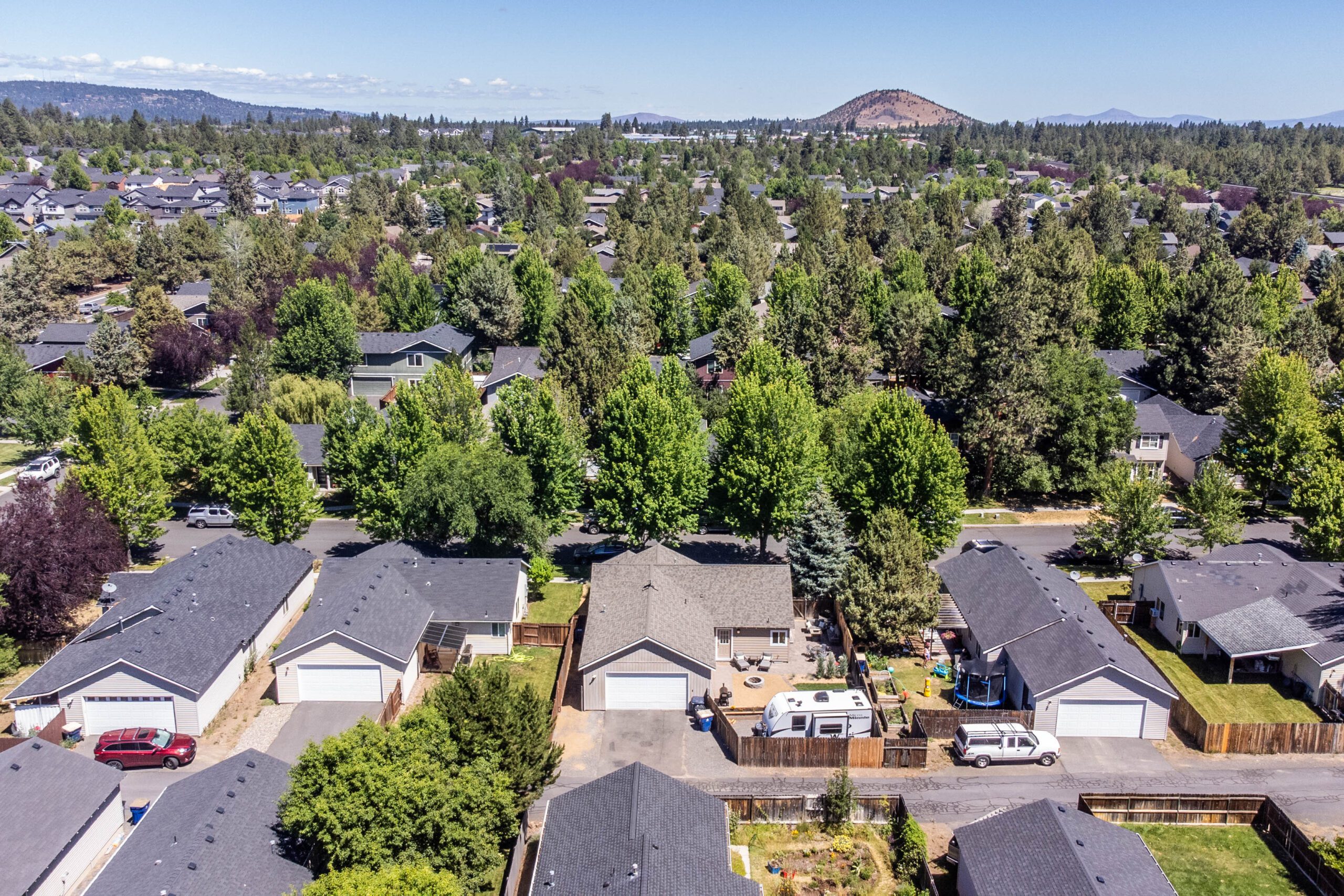
The Oregon State Fire Marshal organizes defensible space into three areas: zero to five feet, five to 30 feet, and 30 to 100 feet or more. For a buyer, those zones create a useful way to inspect the property without assuming that every recommendation is already a local legal requirement.
Zero to five feet: the immediate zone
- Look for needles, leaves and other debris on the roof, in gutters, below decks and against exterior walls.
- Note bark mulch, shrubs, stored lumber, firewood, propane containers or combustible fencing next to the structure.
- Check whether attic, crawlspace and eave vents appear screened and in good repair.
- Review roofing, siding, windows and deck materials with the inspector; appearance alone does not establish a material’s rating or condition.
Five to 30 feet: the intermediate zone
- Notice dead vegetation, tall dry grass and shrubs beneath tree canopies that could act as ladder fuels.
- Look at tree and branch spacing, especially near the roof, chimney and power lines.
- Check whether decks, stairs, outbuildings and fences create a continuous path of combustible material toward the home.
- Identify irrigation, slope and drainage conditions that could affect a future landscape plan.
Beyond 30 feet: access and the larger setting
- Evaluate driveway width, grade, turnaround space, gates and visible address signage.
- Identify adjoining public land, common area, vacant parcels or HOA-maintained vegetation; ownership determines who can authorize work.
- Ask who maintains private roads and whether governing documents address vegetation or emergency access.
- Review evacuation routes and neighborhood access instead of relying on distance to a fire station alone.
Bend Fire & Rescue offers a free wildfire risk home assessment, and the State Fire Marshal offers free advisory defensible-space assessments statewide. These programs can help an owner prioritize work, but neither is a promise that a property will survive a fire or qualify for a particular insurance policy.
Separate guidance from enforceable requirements
Defensible-space recommendations, building-code requirements and insurance underwriting are related, but they are not interchangeable. In May 2026, the State Fire Marshal finalized a model defensible-space code that local governments may choose to adopt. Oregon’s Building Codes Division also explains that wildfire-hardening standards under ORSC Section R327 apply where adopted and within the locally designated areas covered by those rules.
Before assuming a checklist is mandatory—or that completing it will change a premium—verify the property’s jurisdiction and ask the relevant agency. The current state resource lists Bend and Deschutes County among local adopters of the wildfire-hazard provisions, but the exact application can depend on location, project type and permit scope. For additions, exterior replacements or new construction, contact the appropriate building department before planning the work.
Put wildfire questions into the transaction plan
A home inspection and an insurance review answer different questions. The inspector evaluates visible systems and conditions; the insurer decides whether it will offer a policy and on what terms. For a broader property review, use our Bend home-inspection checklist alongside these wildfire questions.
Before removing contingencies, a buyer may want to:
- Obtain an address-specific insurance quote and understand any pre-binding work.
- Review roof age, permits, exterior materials and documented mitigation improvements.
- Confirm city, county, fire-district and HOA jurisdiction.
- Estimate near-term work for vegetation, vents, gutters, decks, fencing and access.
- Ask the insurer which photos, receipts or assessments it wants to see.
- Plan for smoke as well as flame exposure; our wildfire-smoke and indoor-air guide covers HVAC filters and portable air cleaners.
Sellers and current homeowners can use the same process before listing or renewal. Keep photos, invoices, permits and assessment reports with the property file. Documentation helps an insurer or future buyer understand what was completed, but it should never be presented as a guarantee of coverage, price or safety.
A practical next step
If you are comparing Central Oregon homes, treat wildfire resilience and insurance as address-level due diligence—not as a neighborhood stereotype. Bend Relo can help you organize the property questions, identify the correct jurisdiction and coordinate the real-estate timeline. For policy interpretation and coverage decisions, rely on a licensed insurance professional. Contact Bend Relo to discuss the property and your buying plan.
Talk with David & the Bend Relo team
Buying, selling, relocating, or evaluating a specific property? Tell us what you are working through. We are happy to help.