

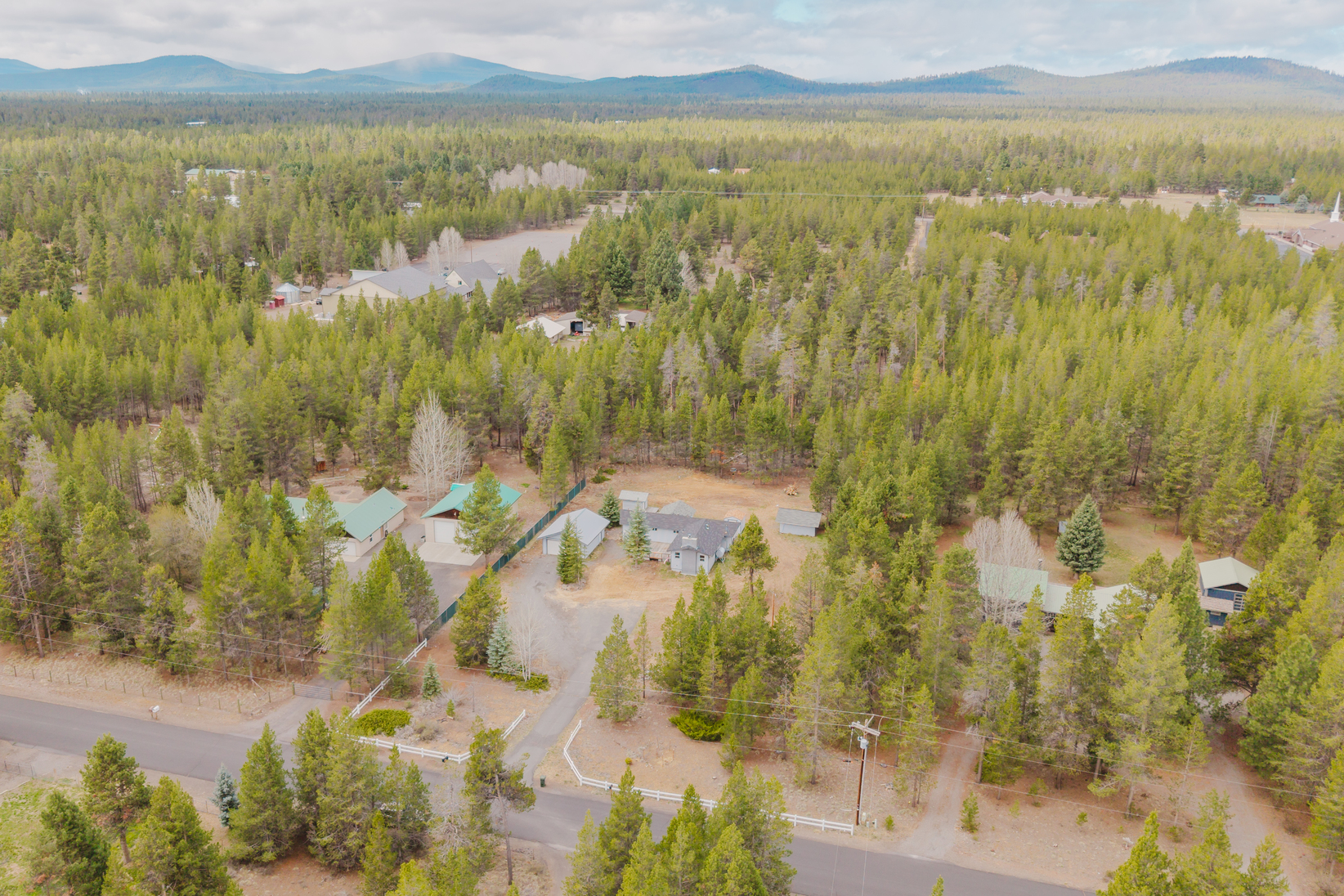
Answer first: If a Cascade view is high on your Bend wish list, begin with elevated west and northwest Bend areas—but evaluate the individual home, not the neighborhood label. Two houses on the same street can have completely different sightlines, and today’s open view may depend on trees, an undeveloped parcel or a building envelope that can change.
A useful search is less about naming one “best” neighborhood and more about answering four questions: What can you actually see from the rooms you use? What could interrupt that sightline? Is the view supported by comparable sales? And what extra ownership costs come with the site?
Where Bend buyers commonly start a view-home search
Elevation and western exposure make several parts of Bend logical starting points. Depending on the exact lot and home design, buyers often explore:
- Awbrey Butte: elevated streets can open toward multiple Cascade peaks, but curves, trees and neighboring roofs make the experience highly parcel-specific.
- Westgate, Skyliner Summit and Tree Farm: these west-side locations may combine elevation or open-space edges with access to trails and the Deschutes National Forest. Lot size, wildfire exposure and driving routes can matter as much as the view.
- Broken Top, Tetherow and The Highlands at Broken Top: some homes use golf-course or open-space sightlines and west-facing design to frame the mountains. Review the community documents, building envelopes and nearby construction carefully.
- Selected lots in Northwest Crossing and other west- or southwest-facing ridges: a partial or “peek” view can be meaningful from one room and absent everywhere else. Treat listing photos as a reason to inspect, not proof of a permanent panorama.
These are search areas, not rankings or guarantees. If Tetherow is part of your search, you can also review the current Tetherow homes for sale. For a broader orientation, start with the Bend real estate and relocation guide.
Judge the view from daily-life rooms
A dramatic deck photo does not tell you what the home feels like on an ordinary Tuesday. During a showing, stand at the kitchen sink, dining table, main seating area, primary bedroom and any workspace. Note whether the view is available while seated, only while standing, or only from an outdoor corner.
Also separate a full mountain panorama from a framed, seasonal or partial view. None is automatically “better”; the right answer depends on how much of your budget you are assigning to the view and how often you will experience it.
Run a real-world sightline test
- Visit at more than one time of day when practical. Western glass can create beautiful evening light, but glare and summer heat gain may affect comfort.
- Look beyond the nearest roofline. Identify vacant parcels, mature trees, utility infrastructure and neighboring building sites.
- Check the view in person. Wide-angle listing photography, elevated cameras and carefully chosen seasons can make a sightline look broader than it feels at normal eye level.
- Ask which peaks are visible, then verify the orientation rather than relying on memory or marketing copy.
- Consider smoke, clouds and winter weather. A mountain can be part of the home’s identity without being visible every day.
Do not assume a view is protected
A current view is not the same thing as a legally protected view. Zoning, an HOA rule, a recorded easement and a seller’s statement are different forms of information, and none should be stretched beyond what the underlying document actually says.
Start with the City of Bend Planning Division, the city’s zoning map and its Planning Application Viewer. For parcel and tax-lot context, use Deschutes County DIAL. These tools help identify current zoning, property boundaries and recorded or proposed activity; they do not promise that the surrounding scene will remain unchanged.
For a particular property, ask for the preliminary title report, recorded easements, plats, HOA declarations, architectural guidelines and available information about adjacent building envelopes. If a view materially affects your offer, consider having the relevant documents reviewed by the appropriate land-use, title or legal professional.
How a view should enter the price conversation
There is no defensible universal percentage that a Cascade view adds to a Bend home. The contribution can vary with the breadth and permanence of the view, where it is visible inside the home, the site, privacy, architecture, condition and the alternatives available to buyers at that moment.
A stronger valuation question is: What have buyers paid for genuinely comparable homes with similar sightlines? Fannie Mae’s sales-comparison guidance requires comparable-sale data sources to be reported, and its adjustment guidance calls for adjustments to reflect market reactions rather than arbitrary formulas. In practice, that means a list-price premium is a seller’s position—not evidence by itself.
When comparing view homes, ask your agent to separate the view from the other differences: square footage, remodeling, lot size, garage space, privacy, community amenities and condition. If no close comparable exists, recognize the uncertainty instead of forcing a precise number.
Price the site, not only the scenery
Elevated or view-oriented properties can bring responsibilities that ordinary listing language glosses over. During due diligence, look closely at:
- Slope and drainage: retaining walls, surface-water movement, snow and ice, driveway grade and access.
- Exterior exposure: wind, sun, windows, decks, roofs and ongoing tree work.
- Wildfire and insurance: obtain a property-specific insurance quote rather than assuming two nearby homes will be treated alike. Oregon’s Division of Financial Regulation wildfire guidance explains the state-map rules, but insurers use additional property and risk information. The Bend Relo guide to home insurance for Bend buyers outlines questions to ask before committing.
- Inspection scope: a standard inspection is a starting point. The site may justify additional review of drainage, retaining structures, trees, roof access or other property-specific systems. See the Bend home-inspection guide.
- Community obligations: confirm HOA dues, design review, landscaping rules and any private-road or shared-facility responsibilities.
A practical offer checklist for a Bend view home
- Photograph the actual sightlines from the rooms and outdoor spaces that matter to you.
- Identify the tax lots, roads, trees and structures between the home and the mountains.
- Review current zoning and planning activity without treating either as a future guarantee.
- Read title, plat and HOA documents for the specific property.
- Compare closed sales with similar views and isolate other value differences.
- Get an insurance quote and estimate site-specific maintenance before the end of due diligence.
- Decide how much the view is worth to your daily life—even if a future buyer values it differently.
The better question to ask
Instead of asking, “Which Bend neighborhood has the best Cascade views?” ask, “Which available home gives me the view, daily routine, risk profile and total ownership cost I want?” That question keeps the scenery in perspective while still treating it as a meaningful part of the purchase.
If you are comparing Bend view properties, Bend Relo can help you narrow the search, document the parcel-level questions and coordinate the specialists needed for due diligence. For the full purchase sequence, use our Bend home-buying timeline.
Talk with David & the Bend Relo team
Buying, selling, relocating, or evaluating a specific property? Tell us what you are working through. We are happy to help.





