

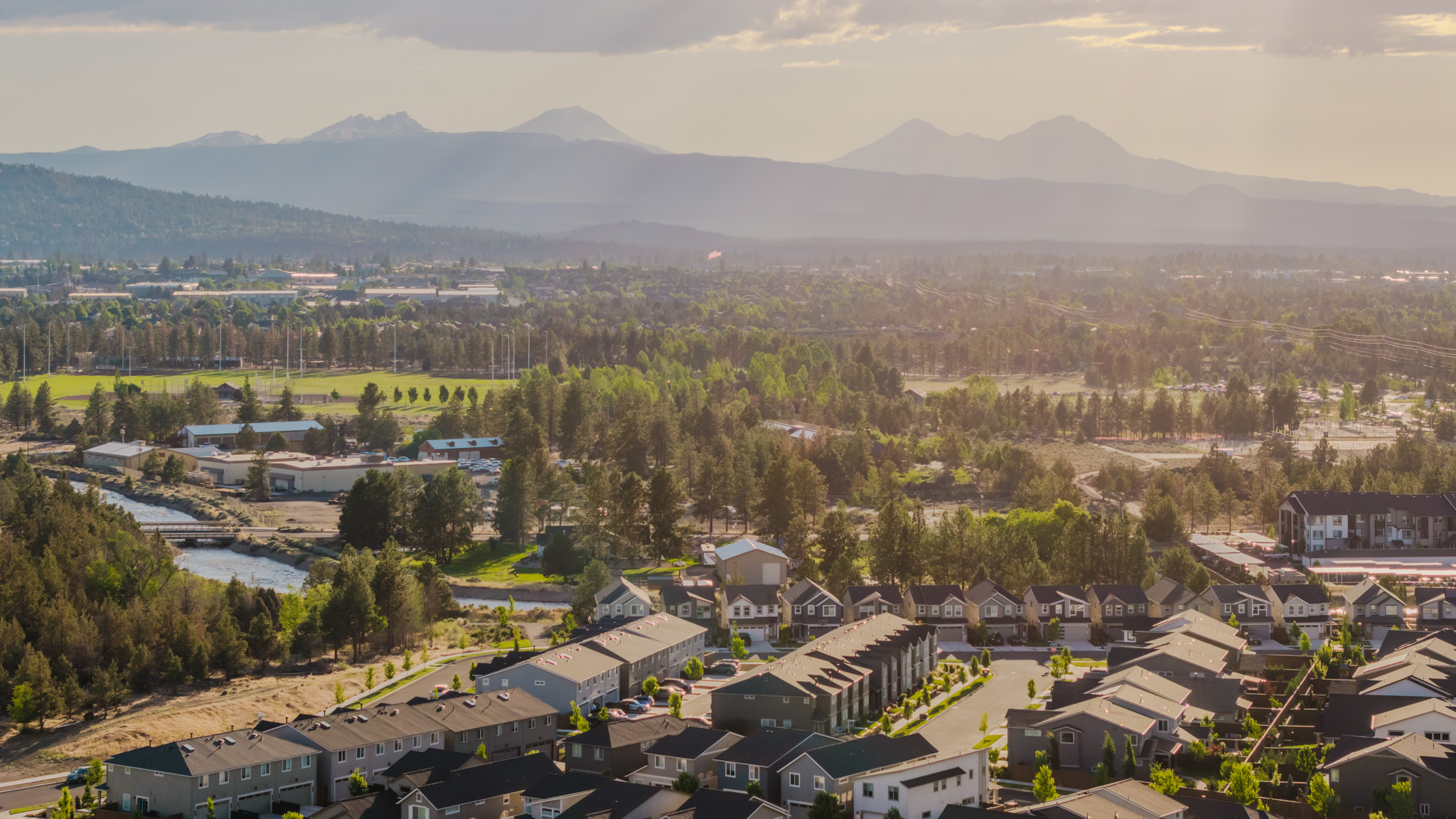
A healthy mature tree can be an asset, but the maintenance decision should start with the specific tree, its location and what could be damaged if it fails. For a Bend-area home, look beyond appearance: identify structural defects, drought stress, branches over roofs or driveways, proximity to utilities, root-zone conflicts and wildfire fuel conditions. Then price the work that property actually needs.

Start with a property-specific tree inventory
There is no useful one-size-fits-all tree-maintenance budget. A small ornamental tree in an irrigated yard presents a different set of questions than mature ponderosa pines near a roof, a driveway or overhead lines. Walk the site and note:
- tree species when known, approximate size and overall vigor;
- dead, cracked, hanging or crossing branches;
- trunk cavities, seams, decay, recent lean or disturbed soil near the base;
- branches over the house, parking areas, play areas, fences or neighboring property;
- contact with utility lines or limited clearance above a roof or chimney;
- irrigation coverage, drainage and signs of repeated drought stress;
- recent trenching, paving, grading or construction in the root area; and
- dense shrubs, dry grass, needles or woody debris that may connect vegetation to the home.
This first pass is not a substitute for a professional risk assessment. It is a way to separate ordinary upkeep from conditions that deserve closer evaluation before a purchase, renovation or major landscaping project.
Central Oregon water stress deserves attention
Bend’s dry summers make water availability an important part of tree care, especially for newly planted trees and species that are not naturally adapted to the site. Oregon State University Extension explains that drought stress may not be obvious at first and can make trees more susceptible to insects and disease. OSU recommends watering the root zone rather than the trunk or foliage and notes that lawn sprinklers may not deliver enough water to a tree’s roots.
Ask where irrigation reaches, how long it runs, whether the tree has been relying on lawn watering and whether a recent landscape change altered the water supply. Wilting, browning or a single declining section can have more than one cause, so avoid diagnosing a tree from one symptom alone. A qualified professional can distinguish water stress from root damage, disease or insect activity.
Prune for a reason, not just a shape
Pruning can remove dead or hazardous wood, establish clearance and improve young-tree structure. Excessive or poorly placed cuts can create new problems. The right scope depends on species, age, condition and the purpose of the work.
OSU’s pruning guidance advises preserving the branch collar and using a three-cut method for larger branches so bark is not torn from the trunk. It also notes that pruning time depends on the plant and its growth cycle. In practical terms, homeowners should be cautious about copying a generic seasonal schedule or removing a large share of the canopy at once.
Ground-level work on small branches may be manageable with proper tools. Large limbs, decay, storm damage, climbing, work near a structure or any contact with utility lines calls for a qualified professional. For line-clearance questions, contact the serving utility rather than attempting the work.
Treat roots as part of the tree
A tree can look undisturbed above ground while its root area is being compacted, cut or buried. Before adding a driveway, patio, addition, utility trench or heavy equipment route, map the trees you hope to keep and discuss protection before work begins. Avoid storing materials, changing grade or repeatedly driving over the root area without a site-specific plan.
When planting, choose for mature height and spread—not the size in the nursery container. Allow room for the canopy and roots, and consider utilities, foundations, pavement, sight lines and irrigation needs. OSU’s tree selection and care guide is a useful starting point for matching the tree to the site.
Build tree work into wildfire preparation
Tree maintenance and defensible space overlap, but they are not the same as clear-cutting a yard. The goal is to interrupt paths that can carry fire toward the structure and to keep vegetation maintained over time.
The Oregon State Fire Marshal’s defensible-space program provides homeowner guidance and offers education-focused property assessments. Current state guidance emphasizes spacing and pruning to reduce ladder fuels, keeping roofs and gutters clear, removing accumulated needles and leaves, and maintaining a five-foot buffer next to structures without combustible vegetation or materials.
Conditions vary by lot, slope, vegetation and nearby fuels. Use the state guidance as a framework, then develop a site-specific plan rather than assuming every tree close to a home must be removed.
Check Bend rules before removal or major work
Tree rules depend on where the tree is located and whether development is proposed. The City of Bend provides a residential tree-removal flowchart for existing residential sites when no development is proposed. For a tree in the public right-of-way—often the area between the sidewalk and street—the City says approval is required before removal, significant pruning or alteration. Development projects may have separate tree-preservation and mitigation requirements.
When the boundary, right-of-way or permit status is uncertain, confirm it with the City before authorizing work. Also verify the contractor. The Oregon Landscape Contractors Board states that tree removal, stump grinding and limb guying require an LCB or CCB license, while tree planting requires an LCB license. Check the active license and insurance for the scope being proposed.
Tree questions to ask when buying a Bend home
- What work has been done? Request arborist reports, pruning or removal invoices, permits and insurance correspondence when available.
- What needs attention now? Look for dead wood, broken limbs, obvious trunk defects, root disturbance and branches over high-consequence areas.
- What will the site require each year? Include irrigation, pruning, debris cleanup and recurring fuel-reduction work.
- Are there constraints? Verify right-of-way location, easements, utility lines, access for equipment and any development-related tree rules.
- Could the condition affect insurance? Ask an insurer about the actual address and current vegetation conditions rather than assuming a prior owner’s coverage will transfer. Our Bend home-insurance guide explains why an early property-specific quote matters.
- What should be priced before closing? If an inspection identifies material work, obtain a written scope from an appropriately licensed professional before relying on a rough estimate.
Use a simple annual care plan
Keep a record of species, photos, irrigation changes, professional reports and completed work. Review trees after severe weather and before major construction. Schedule routine pruning based on actual need, keep debris from accumulating near structures and revisit the wildfire plan as vegetation grows back.
For a larger rural site, fold tree work into the broader land and equipment budget described in our Central Oregon acreage maintenance guide. The point is not to fear mature trees. It is to understand their condition, responsibilities and costs before they become surprises.
If you are evaluating a Bend-area home with mature trees, contact the Bend Relo team. We can help you organize the property questions, local records and specialist evaluations that belong in your due diligence.
Talk with David & the Bend Relo team
Buying, selling, relocating, or evaluating a specific property? Tell us what you are working through. We are happy to help.





