


Using retirement money can make a down payment look more reachable, but a 401(k) loan and a 401(k) withdrawal are not the same decision. They have different plan rules, tax treatment, repayment requirements and long-term effects. Before moving money, ask your plan administrator, lender and tax or financial adviser to evaluate the exact transaction.
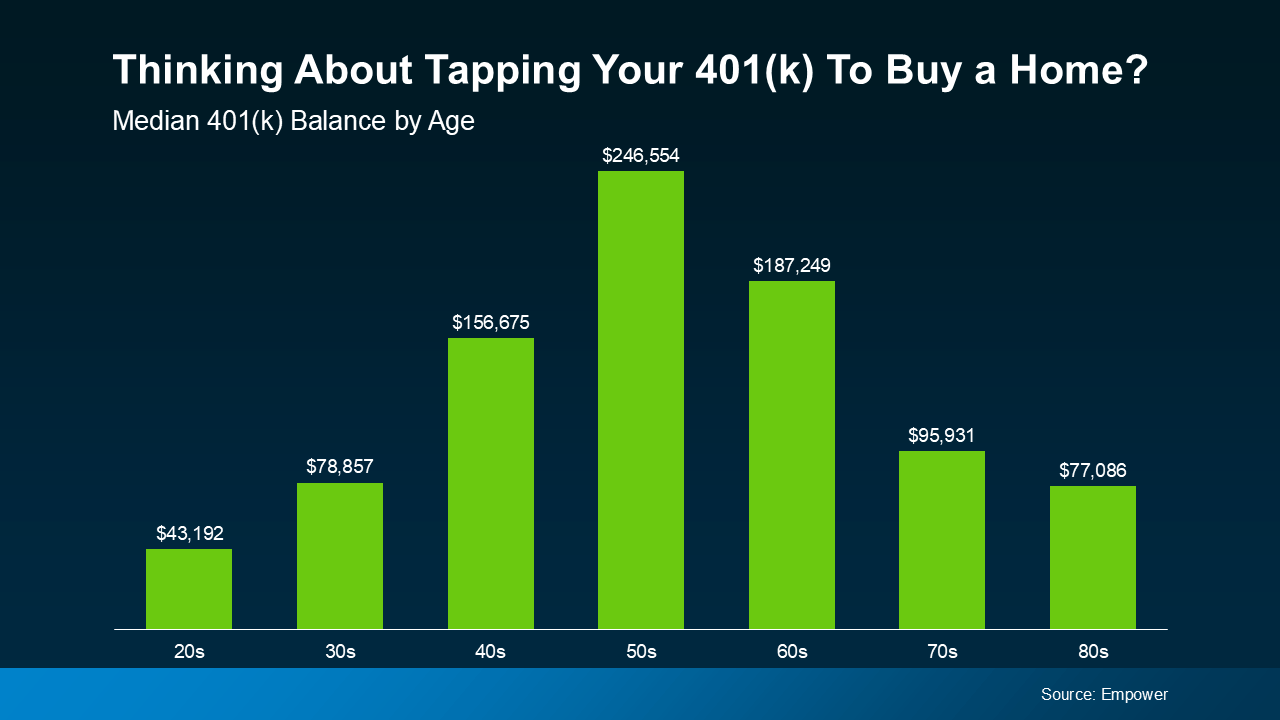
First, confirm what your plan actually allows
An employer plan is not required to offer loans or hardship distributions. The plan’s Summary Plan Description and administrator control what is available within federal rules. Do not assume that a feature described online applies to your account.
Ask for written answers to these questions:
- Does the plan permit participant loans, hardship distributions or both?
- How much is available from your vested balance?
- What documentation is required for a principal-residence purchase?
- How are payments collected, and what happens if you leave the employer?
- What fees, processing time and restrictions apply?
How a 401(k) loan works
A plan loan is borrowed from the account and repaid to the plan. According to the IRS retirement-plan loan guidance, the general federal maximum is the lesser of $50,000 or 50% of the vested account balance, subject to plan terms and rules for recent loans.
Repayment is generally required within five years with payments at least quarterly. A loan used to buy a principal residence may qualify for a longer repayment period if the plan allows it. The administrator can explain the available term and required proof.
The amount is not generally taxable when the loan follows the rules and repayment schedule. But it creates a required payment that affects monthly cash flow. If employment ends, the plan may require repayment of the outstanding balance. An unpaid balance can become a taxable distribution and may also face an additional early-distribution tax.
How a hardship withdrawal differs
A plan may allow a hardship distribution for costs directly related to purchasing a principal residence. The IRS hardship-distribution rules require an immediate and heavy financial need and limit the withdrawal to the amount necessary under the applicable rules.
A hardship distribution is not a loan. It is generally included in taxable income, cannot be repaid to the plan and permanently reduces the account balance. It may also be subject to the 10% additional tax on early distributions.
Do not confuse the IRA homebuyer exception with a 401(k)
The federal exception that can waive the 10% additional tax for up to $10,000 used by a qualified first-time homebuyer applies to IRAs—not to qualified plans such as a 401(k). The IRS shows that distinction in its early-distribution exception table.
That does not mean every 401(k) withdrawal produces the same result. Age, plan type, employment status, Roth or pre-tax funds and other exceptions can matter. Have a qualified tax professional calculate the likely federal and state consequences for your circumstances before requesting a distribution.
Compare the real cost, not just the cash received
The cash available today is only one side of the decision. Compare:
- the taxes and possible additional tax on a withdrawal;
- the required payment and employment risk of a plan loan;
- the investment growth the money could have earned;
- the cash reserves left after closing;
- the effect on mortgage qualification and debt-to-income analysis; and
- the cost of delaying the purchase or choosing a different property.
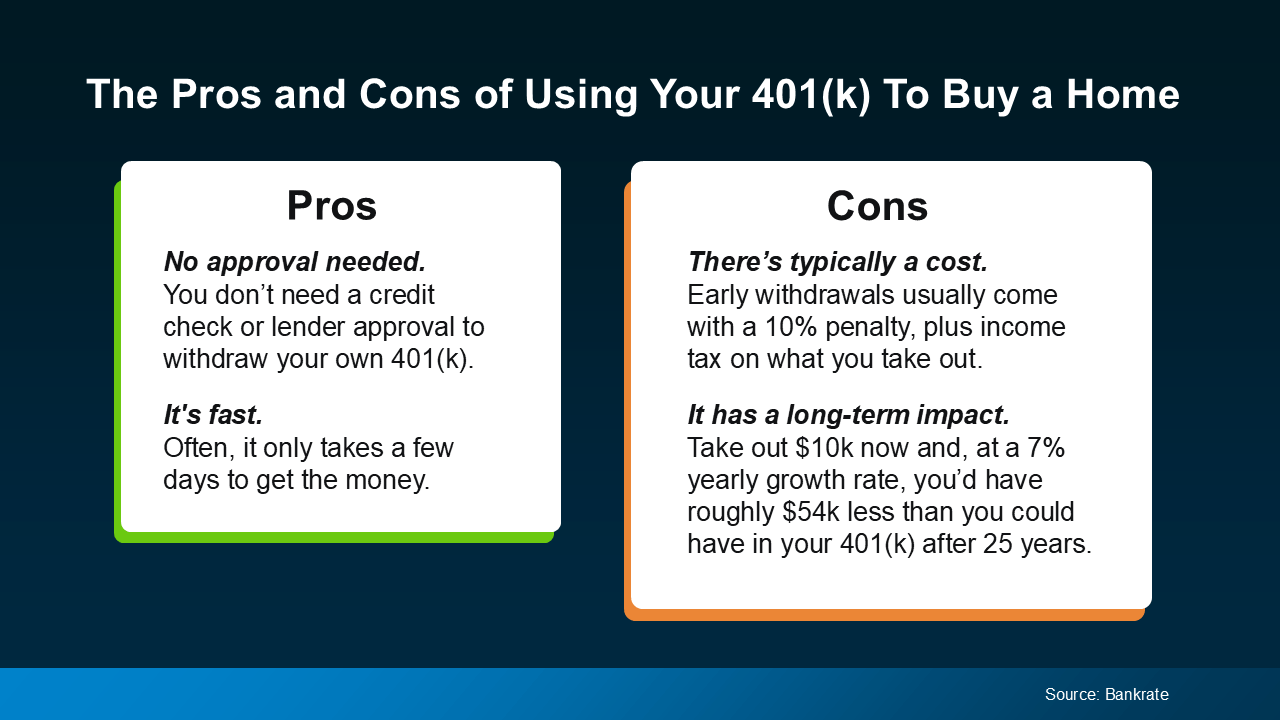
The illustrations retained from the original article summarize common considerations, but they are not a substitute for your plan documents or a transaction-specific calculation.
Review home-financing alternatives before touching retirement funds
A large down payment is not required for every mortgage. Eligibility, pricing and property rules vary, so ask a licensed lender to compare realistic options rather than starting with a withdrawal target.
- Conventional loans can offer several down-payment structures.
- FHA-insured loans may help qualified borrowers with a smaller down payment.
- VA and USDA programs may provide low- or no-down-payment paths for eligible borrowers and properties.
- State or local assistance may be available subject to income, property and program requirements.
- A lower-priced home, seller credit or longer savings period may preserve retirement assets and emergency reserves.
Start with a full preapproval discussion, not a website maximum. Our mortgage preapproval guide covers the questions to ask a lender, and our homeownership-cost guide can help estimate the cash you may need after closing.
A decision sequence for Bend buyers
- Ask the lender how much cash is actually needed and how retirement-account activity would be documented.
- Ask the plan administrator for loan and distribution terms in writing.
- Have a tax professional estimate the taxes and any additional tax.
- Compare the monthly loan payment, lost growth and remaining reserves.
- Evaluate lower-down-payment and lower-price alternatives.
- Move funds only after the lender, plan administrator and adviser agree on the sequence.
Coordinate the housing decision with the financial plan
Bend Relo can help you compare properties, purchase costs and realistic next steps, but retirement-plan and tax advice belongs with qualified professionals who can review your account. If you are building a home-buying plan in Central Oregon, contact our team and bring your lender and adviser into the conversation early.
Talk with David & the Bend Relo team
Buying, selling, relocating, or evaluating a specific property? Tell us what you are working through. We are happy to help.





