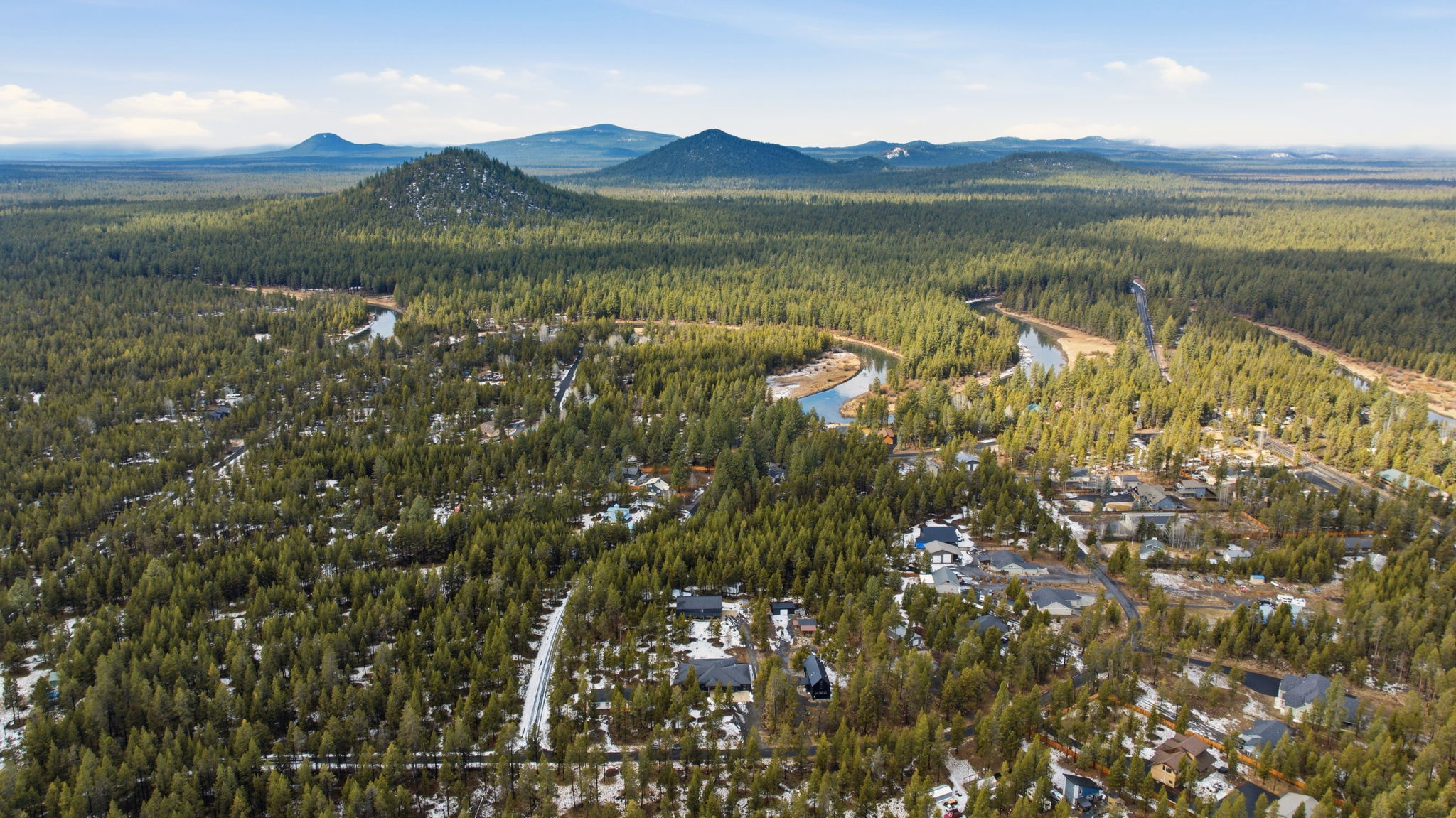
Oregon’s one-time urban growth boundary expansion is a planning tool for qualifying cities—not a promise that housing will be built immediately. The current program can let cities add land through an expedited alternative process, but cities still must adopt a binding concept plan, address urban services and transportation, meet affordability requirements, and complete state review.
Policy status checked October 2026. Land-use rules and project approvals can change; confirm the current city and state records for a specific property.
Key takeaways
- The acreage depends on the jurisdiction. Under current Oregon Department of Land Conservation and Development guidance, a qualifying city with at least 25,000 residents may add up to 150 net buildable acres; a smaller city may add up to 50. Metro has a separate regional limit.
- “Expedited” does not mean automatic. A city must establish eligibility, solicit and review sites, provide public participation, adopt a binding concept plan, coordinate services, and submit the amendment for state review.
- Affordability is built into the program. The concept plan must place affordability restrictions on at least 30% of the residential units. The exact income limits, tenure and covenant terms depend on the statute and the adopted project documents.
- A UGB change is not a building permit. Annexation, master planning, subdivision, infrastructure design and construction permits may still follow.
- Bend’s local example is Caldera Ranch. Bend adopted a roughly 93-acre UGB expansion ordinance in September 2026, with a binding concept plan for at least 716 homes and at least 254 deed-restricted affordable units.
What the one-time program actually does
Senate Bill 1537, adopted in 2024, created a temporary alternative process for a one-time UGB addition or land exchange. Senate Bill 48 refined the program in 2025, and House Bill 4035 changed several eligibility and acreage provisions in 2026. The program’s UGB sections are scheduled to sunset on January 2, 2033.
According to DLCD’s March 31, 2026 guidance, cities using the main addition path must demonstrate both a need for land and a need for affordable housing. Eligible sites generally must be next to the existing UGB, or separated from it only by a street or road. State law prioritizes urban reserves, nonresource land and land with an acknowledged exception to farm or forest protections. Other land may be considered only under specific conditions, including a lack of qualifying applications from the higher-priority categories.
The current maximum is not a universal “100-acre rule.” After the 2026 amendments, the limit is up to 150 net buildable acres for a qualifying city with a population of 25,000 or more, up to 50 net buildable acres for a smaller city, and up to 300 total net buildable acres for petitions within Metro. A city may also use a smaller-addition or land-exchange alternative when the statutory requirements fit.
What a binding concept plan must cover
Before changing the boundary, a city must adopt a binding concept plan as part of its comprehensive plan. DLCD says the plan must address:
- a mix of housing types and sizes, including needed and middle housing;
- minimum residential densities tied to the city’s population;
- recreation, open space and commercial land;
- walking, bicycling and transit connections where applicable;
- protection measures for relevant statewide planning goals;
- assurances that water, sewer, transportation and other urban services can be provided; and
- affordability restrictions on at least 30% of the residential units.
Those requirements are meaningful, but they do not establish a construction date. A concept plan sets a framework. Property-specific entitlements, financing, infrastructure agreements and later development approvals still determine what gets built and when.
Bend’s Caldera Ranch status
Bend selected the Caldera Ranch site, south of Knott Road and east of Woodside Road, in December 2024. On September 16, 2026, the Bend City Council adopted Ordinance NS-2561, which expands the UGB and adopts a binding concept plan for the site.
The ordinance describes 91.4 gross acres, including 55.9 net residential acres. It requires capacity for at least 716 homes, including at least 120 middle-housing units and at least 230 multi-unit attached units. It also requires 30% of the total housing or 254 units—whichever is greater—to be deed-restricted affordable housing. The adopted plan includes 38 units for households at 30% of area median income or below, 192 units for households up to 80% AMI, and 24 for-sale units for households up to 130% AMI. The ordinance requires those affordable units to remain restricted for at least 60 years.
That is a more precise description than saying Bend simply “added 100 acres.” The ordinance also requires a future master plan, open space, commercial convenience land, transportation connections, wildfire mitigation and assurances for urban services. It states that the UGB amendment takes effect after approval by DLCD, so buyers should check the City’s adopted-plans record and the state review record for the latest procedural status.
What this means for a nearby homebuyer
A future growth area can affect more than the number of homes on a map. It may change planned roads, utility extensions, construction activity, park locations and nearby commercial uses. Those changes are neither automatically positive nor automatically negative for a particular property.
Before relying on a sales description or concept map, verify:
- The exact jurisdiction and parcel. A Bend mailing address does not always mean the property is inside city limits or the UGB.
- The latest adopted map. Compare the city’s comprehensive plan, UGB map and project file—not an old marketing graphic.
- Whether the land is merely inside the UGB or also annexed and zoned for urban development. Those are separate steps.
- The controlling plan. Read the binding concept plan, later master plan, conditions of approval and recorded affordability or infrastructure agreements.
- Road, utility and wildfire requirements. Look for funded improvements, phasing conditions and responsibility for costs.
- The construction horizon. An adopted boundary does not guarantee when lots, streets or homes will be delivered.
For a closer look at how planning documents can affect a specific part of southeast Bend, see our Southeast Area Plan homebuyer due-diligence guide.
A separate 2026 option for senior and manufactured housing
House Bill 4082 created an additional, separate one-time UGB option for qualifying manufactured or prefabricated housing, manufactured dwelling parks, and certain housing for older persons. It took effect in June 2026 and has different affordability and land-use conditions. It should not be treated as a blanket expansion of every city’s SB 1537 project.
The practical bottom line
Oregon’s one-time UGB program can shorten one part of the land-planning process, but it does not erase due diligence. For Bend, the most useful questions are not “Did the city add 100 acres?” or “When will homes be finished?” They are: What has been adopted, what still needs approval, what infrastructure and phasing are required, and how does the latest plan affect the specific property you are considering?
If a planned growth area is part of your purchase decision, Bend Relo can help you assemble the right city maps and project documents and identify the questions to take to planning staff, your inspector, title company or land-use attorney.
Talk with David & the Bend Relo team
Buying, selling, relocating, or evaluating a specific property? Tell us what you are working through. We are happy to help.