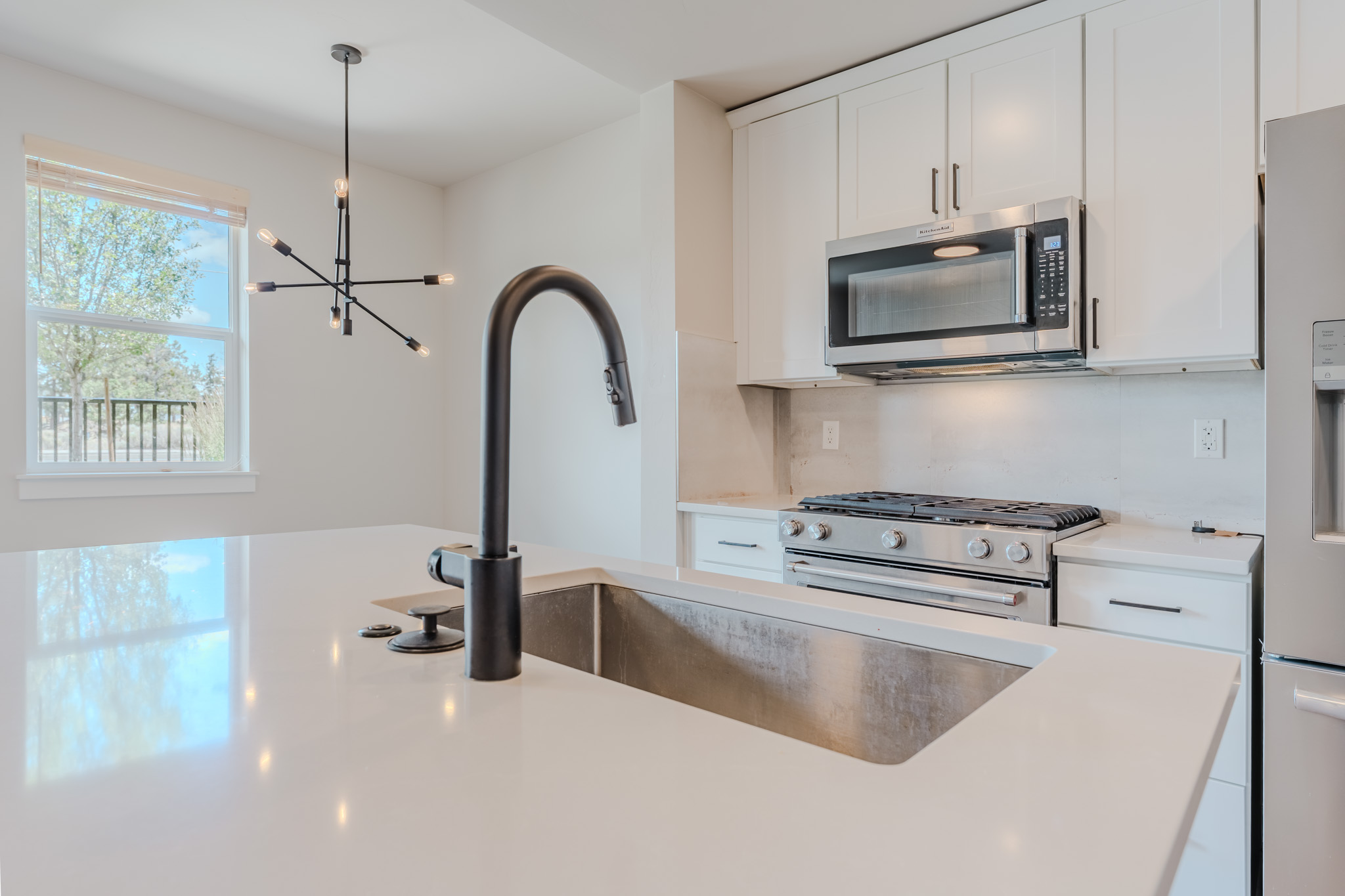
Home staging in Bend is not an all-or-nothing decorating project. The useful question is: what will help buyers understand this particular home quickly, accurately and without distraction? For many sellers, the best plan is a thorough clean, selective editing and a few well-placed furnishings—not a full-house rental package.
Start with condition and clarity. Repair obvious defects, clean from top to bottom, reduce crowded surfaces and make every room’s purpose easy to recognize. Then decide whether an occupied edit, partial staging or full vacant staging fits the property, the likely buyer and the marketing plan.
What staging can—and cannot—do
Staging can improve presentation, define an awkward room and help buyers picture how a home might function. It cannot correct deferred maintenance, change a floor plan or guarantee a faster sale or higher offer. Those outcomes also depend on price, condition, location, competing inventory and the strength of the listing launch.
The National Association of REALTORS® 2025 Profile of Home Staging found that 83% of surveyed buyers’ agents said staging made it easier for buyers to visualize a property as a future home. The same report also shows why guarantees are inappropriate: 41% of buyers’ agents said staging had no effect on the dollar value offered. Treat staging as one part of a complete listing strategy, not a promise of a particular result.
Choose the right level of staging
Occupied editing
This is often the most efficient choice when the seller is still living in the home and the existing furniture fits the rooms. The work usually includes removing excess pieces, simplifying shelves and counters, improving lighting, adjusting furniture placement and packing personal or high-value items.
Partial staging
A partial plan adds or replaces a limited number of pieces in the rooms that need the most help. It can be useful when a living room lacks a clear layout, a dining area is difficult to read, or an empty primary bedroom needs scale. It also lets a seller concentrate the budget where photography and tours will benefit most.
Full vacant staging
A vacant home may benefit from a more complete furniture package when empty rooms are hard to understand or the presentation standard for competing listings is especially high. Before committing, compare the written scope, rental period, installation and removal fees, insurance terms and extension costs. A full package is not automatically the best investment for every house.
Prioritize the rooms buyers use to understand the home
The 2025 NAR survey ranked the living room, primary bedroom and kitchen as the most important rooms to stage from the buyers’ agents’ perspective. That does not mean every seller must furnish all three. It is a useful order for allocating attention and budget.
- Living room: Create a clear conversation area and an unobstructed path through the room. Do not push every piece against a wall simply to expose floor area.
- Kitchen: Clean counters, appliances, grout and lighting. Leave enough on display to feel lived-in, but not so much that work surfaces disappear.
- Primary bedroom: Use correctly scaled furniture, simple bedding and clear nightstands. Make closets accessible; buyers are evaluating storage, not just the bed.
- Dining area: Show the intended function without crowding circulation. In an open plan, the dining setup should help explain the relationship between kitchen and living spaces.
- Flex rooms: Give each one a believable purpose. An undefined bonus room is harder to evaluate than a simple office, guest room or exercise space.
Make the plan specific to Central Oregon
Central Oregon homes often ask buyers to evaluate more than formal living spaces. Entries, gear storage, garages, covered patios and outdoor connections may be important to daily life. Stage these areas to show function without suggesting uses the property cannot support.
- Work with the light: Clean glass, open operable coverings and replace burned-out bulbs. Strong daylight can also reveal dust, touch-up paint and streaks, so review each room at the same time of day planned for photography.
- Edit outdoor gear: Keep enough context to explain mudroom or garage storage, but remove crowded racks, loose equipment and anything that narrows walkways.
- Show outdoor living honestly: Clean decks and patios, arrange a restrained seating area and remove worn covers or dead containers. Do not block access to utilities, crawl spaces or inspection points.
- Respect the season: Control tracked dust, needles, snow residue and wet footwear. A simple entry setup can make showings easier without turning the house into a themed display.
- Keep safety and maintenance visible: Staging should never conceal staining, damage, electrical panels, shutoffs or other conditions a buyer or inspector needs to evaluate.
Exterior presentation should support the same story. Our guide to outdoor lighting and evening curb appeal explains how to improve visibility without creating glare or hiding safety concerns.
Prepare for photography before preparing for showings
The camera and an in-person visitor notice different things. Finish the permanent work first, then make a dedicated photography pass.
- Complete repairs, deep cleaning, paint touch-ups and landscape cleanup.
- Remove excess furniture and packed boxes from the rooms being photographed.
- Check every bulb for consistent operation and a reasonably consistent color appearance.
- Clear refrigerator doors, bathroom counters, visible cords, pet items and trash containers.
- Straighten window coverings and bedding, then check reflections in mirrors and glass.
- Walk the property in the order a buyer will see it, including the approach, entry and route to the primary living spaces.
Staging and media planning should be coordinated. Accurate room dimensions and a legible floor plan can answer questions that furniture alone cannot; see our overview of professional floor plans in real estate marketing.
How to spend a limited staging budget
Use this order of operations before renting furniture or buying accessories:
- Correct problems: Address repairs and visible maintenance issues that could distract buyers or raise questions.
- Clean: Include windows, floors, appliances, fixtures, vents and exterior approaches.
- Edit: Remove enough belongings to show surfaces, storage and circulation.
- Improve presentation: Adjust lighting, furniture scale and room purpose.
- Add only what is missing: Rent or purchase pieces when they solve a specific presentation problem.
Ask a stager or listing agent for a prioritized scope instead of a generic package. A good proposal should explain which rooms matter, what is being added or removed, how long the rental lasts and what happens if the listing timeline changes.
Occupied-home showing checklist
- Secure medication, documents, jewelry, firearms, keys and other valuables.
- Remove pet waste, food bowls and odor sources; make a safe plan for pets during access.
- Open interior doors where appropriate and make mechanical or storage areas accessible.
- Turn on needed lights, set a comfortable temperature and avoid strong artificial fragrances.
- Clear vehicles from the most useful parking spaces when possible.
- Do a final walk for dishes, laundry, charging cables, toilet lids and exterior debris.
Frequently asked questions
Should every Bend home be professionally staged?
No. Some homes are best served by cleaning, repairs and an occupied-home edit. Others benefit from a consultation, partial staging or a full vacant package. The choice should follow the property’s layout, condition, price position, competition and marketing needs.
Is an empty home better than a furnished one?
Neither is universally better. Empty rooms reveal condition and can feel clean, but unusual dimensions may be difficult to judge. Furniture can provide scale and function, but oversized or crowded pieces can work against the room. Evaluate the house room by room.
Does staging mean hiding defects?
No. Staging is presentation, not concealment. Sellers should disclose material facts as required and keep relevant conditions available for evaluation. Buyers should still complete their own inspections and due diligence; our Bend homebuyer red-flags guide explains how to separate observations from professional diagnosis.
When should the staging plan be made?
Ideally, before photography is scheduled. That leaves time to prioritize repairs, arrange storage, obtain bids and coordinate installation without rushing the listing launch.
Build a property-specific listing plan
A useful staging consultation should end with clear priorities: what stays, what goes, what gets repaired and where professional help is worth considering. If you are preparing a Bend or Central Oregon home for sale, contact Bend Relo for a property-specific review of presentation, pricing and launch strategy.
Talk with David & the Bend Relo team
Buying, selling, relocating, or evaluating a specific property? Tell us what you are working through. We are happy to help.