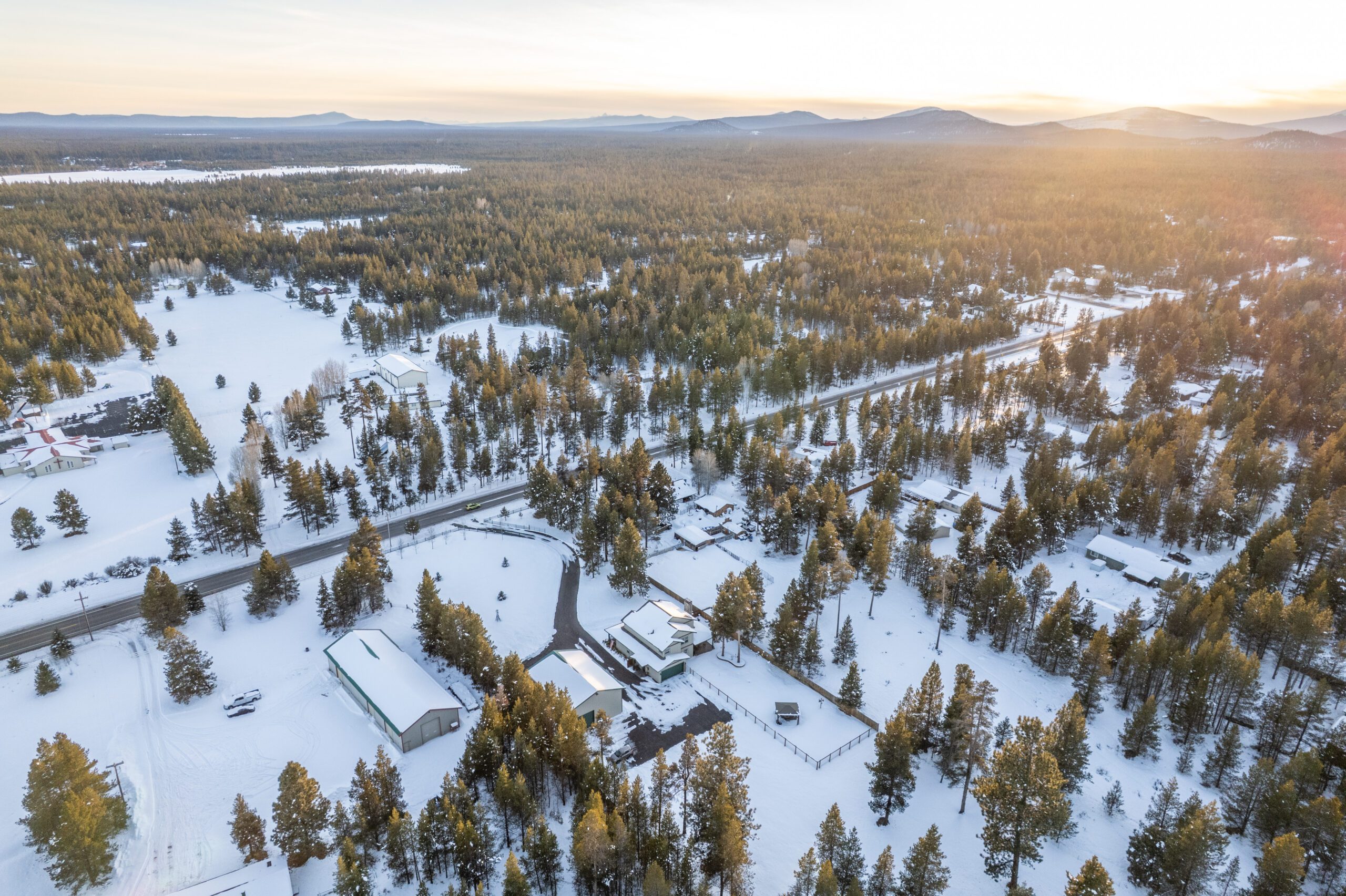
Moving to Bend during winter is workable, but it rewards a more deliberate plan than a fair-weather move. The variables are practical: pass conditions, street priority, driveway access, heat and water service, and what snow may hide during a property walkthrough.
This checklist is designed for buyers and relocating households who need to coordinate travel, closing and move-in without treating winter weather—or the real estate market—as predictable.
Build flexibility into the travel and moving schedule
Check conditions for the full route, not just Bend. Oregon’s TripCheck shows highway cameras, closures and chain requirements. Recheck it before the moving truck departs and again on arrival day. Mountain-pass conditions can differ sharply from conditions in town.
Ask the moving company how it handles weather delays, whether its truck can access a steep or narrow driveway, and who decides when conditions are unsafe. Keep closing, possession and delivery dates distinct in your planning. A contract may close on schedule even if a storm delays the truck.
- Add buffer time for pass restrictions, de-icing and slower traffic.
- Keep medications, warm clothing, chargers, pet supplies and one night of essentials with you rather than on the truck.
- Confirm where the truck can wait if the driveway or street is not ready.
- Have a local contact who can check the property shortly before arrival.
If you are coordinating the purchase remotely, use the same documentation standards described in our guide to touring Bend homes from out of state.
Understand how snow removal works at the address
The City of Bend does not promise bare pavement. Its stated goal is a passable roadway, and crews prioritize major arterials and emergency routes before selected collectors and residential streets. Private streets, alleys, apartment complexes and private property are not maintained by the City. The City’s winter road-maintenance page and operations map show the priority system and recently serviced routes.
Before move-in, identify who is responsible for the final stretch:
- Is the driveway public, private or shared?
- Does an HOA or road association arrange plowing?
- Where can snow be stored without blocking sight lines, mailboxes, drainage or access?
- Will a plow berm form at the driveway entrance?
- Are there shaded grades or north-facing areas where ice may linger?
These questions are part of property due diligence, not just move-day logistics. If access is private or shared, review the recorded easement and maintenance agreement instead of relying on a casual description.
Prepare the vehicle for the route—not just city driving
All-wheel drive can help a vehicle move, but it does not replace appropriate tires, stopping distance or chain compliance. Oregon requires drivers to follow posted snow-zone restrictions. In typical conditions, qualifying light vehicles that are not towing may use traction tires instead of chains; more severe restrictions can require chains. ODOT’s chain and traction-tire guide explains the rules, including separate requirements for towing and heavier vehicles.
Carry the correct traction devices, know how to install them, and follow the vehicle manufacturer’s instructions. ODOT also recommends extra stopping distance, low-beam headlights, no cruise control on slick roads and a stocked emergency kit. Its winter driving checklist is a useful pre-departure review.
Have heat, water and insurance active before possession
Do not make utility activation a move-in-day task. Confirm electric or gas service, water, internet and any propane delivery early enough to resolve account or access issues before the home is vacant in freezing weather.
The City advises keeping a vacant home’s thermostat at a minimum of 55 degrees during cold weather, disconnecting exterior hoses, protecting exposed faucets and winterizing irrigation. Its winter home guidance also recommends checking pipes near exterior walls and in crawl spaces. Our Bend winterization checklist covers the property-side follow-through in more detail.
Know the location of the main water shutoff and the contact process for each utility. Also confirm that homeowners insurance is effective when required by the purchase contract or lender. Winter conditions can make roof, plumbing and access questions property-specific, so obtain a quote based on the actual home rather than assuming coverage from a generic estimate. See our guide to home insurance for Bend buyers.
Use winter conditions as due-diligence information
A snowy showing can reveal useful facts, but it can also conceal them. Record what you can observe and identify what still needs verification.
- Access: Note driveway slope, plow storage, stairs, drainage and shaded areas.
- Roof and gutters: Ask about roof age, repairs, ventilation, insulation and any history of ice dams or leaks. Do not treat a snow-covered roof as proof of condition.
- Heating: Confirm the system type, service history and how evenly the home heats. Identify any supplemental heat source and its maintenance needs.
- Plumbing: Locate vulnerable pipes, hose bibs, irrigation controls and the main shutoff.
- Site and boundaries: Snow may hide grading, landscaping, pavement, septic components or boundary markers. Preserve the right to investigate what matters rather than guessing.
- Natural light: Visit at a representative time of day when possible. Winter sun angles can make shade and interior daylight easier to evaluate.
A professional inspection is still essential. Use our Bend home-inspection guide to organize questions and follow-up specialists.
Prepare the unloading area before the truck arrives
Clear and treat the walking route from the truck to the entry, including steps and handrails. Keep tools, salt or traction material, towels and floor protection accessible. Do not pack the shovel in the middle of the truck.
Within Bend, residential properties generally have 24 hours after snowfall to clear adjacent sidewalks, while snow should remain on the property rather than being pushed into the street. The City’s sidewalk snow-removal guidance explains the local rule. Keep parked vehicles, containers and other obstacles out of the street when plowing is underway.
A practical winter move-in checklist
- Recheck TripCheck, weather and the City winter-operations map.
- Confirm keys, possession time, utility activation and insurance.
- Verify driveway, private-road and snow-removal responsibility.
- Clear the driveway, stairs, sidewalk and unloading path.
- Set the thermostat and check heat before the home is left unattended.
- Locate the water shutoff and inspect vulnerable plumbing.
- Keep winter-driving equipment and first-night essentials with you.
- Document any condition hidden by snow for later follow-up.
Winter does not automatically create a buyer advantage or a problem property. It simply changes what deserves attention. A good relocation plan coordinates the contract, the route, the property and the weather without assuming any one of them will cooperate on cue.
If you are planning a winter move, tell Bend Relo your arrival window and property priorities. We can help you build a home-search and move-in plan around the address—not a generic seasonal promise.
Talk with David & the Bend Relo team
Buying, selling, relocating, or evaluating a specific property? Tell us what you are working through. We are happy to help.