

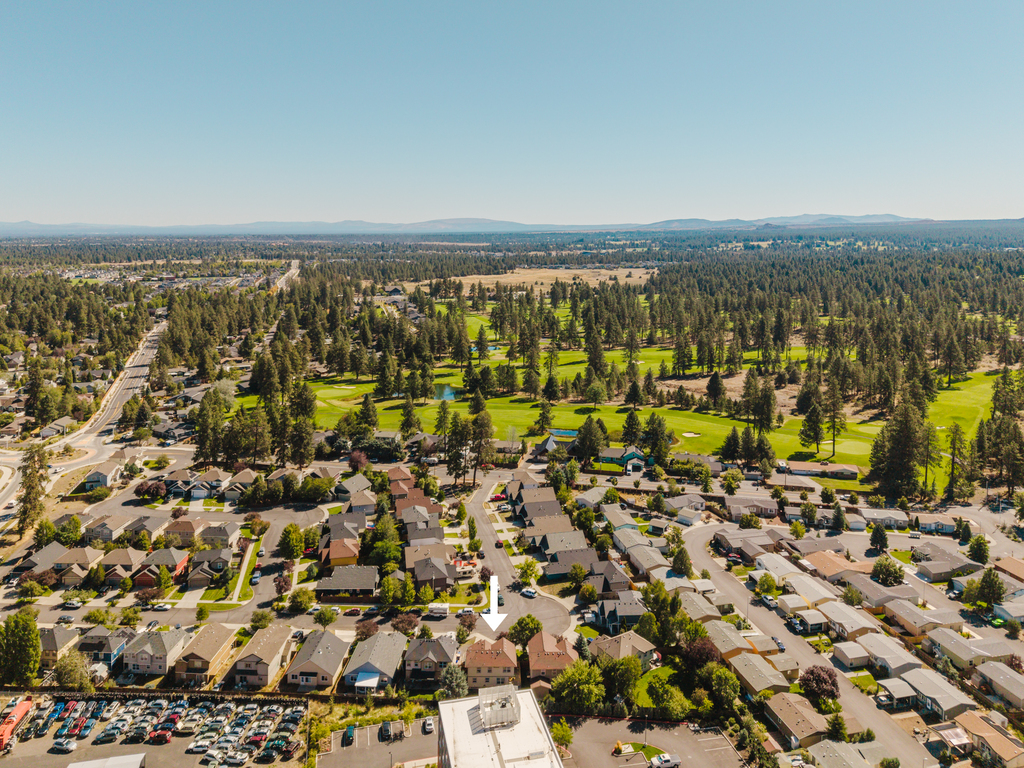
Living near Bend’s Old Mill District can be a strong fit if you want the Deschutes River, trails, restaurants, shops and concerts close to home. The tradeoff is equally important: this is an active destination area, not a quiet, self-contained residential neighborhood. Event traffic, sound, visitor activity, parking and the exact walking route can feel very different from one property to the next.
Before you focus on a listing’s “Old Mill” label, test the actual address. Walk from the front door to the places you expect to use, visit at more than one time of day, and review the property’s parking, storage, association rules and operating costs.
First, define what “Old Mill” means
The City of Bend places the Old Mill District within the Southern Crossing Neighborhood District. The Old Mill itself is the riverfront shopping, dining, office and entertainment area centered around Powerhouse Drive and the Hayden Homes Amphitheater. Buyers and listings may also use “Old Mill” to describe homes across the river or on nearby blocks.
That distinction matters. A condo beside the district, an attached home several blocks away and a detached home farther into Southern Crossing can all be marketed for Old Mill access, but they will not offer the same route, noise exposure, parking arrangement or housing style. Treat the district name as a starting point, not a substitute for a map and an on-site visit.
What daily life can look like
The most durable lifestyle advantage is access to the river corridor. Bend Park & Recreation District’s Old Mill Reach of the Deschutes River Trail runs from Farewell Bend Park toward McKay Park, Miller’s Landing Park and the Bend Whitewater Park. Trails on both sides of the river and three footbridges create useful walking and cycling loops.
Riverbend Park, on the south side of the district, adds river access, lawn and connections to paved and unpaved paths. These public amenities are a real benefit, but “near the river” does not mean every home has direct or private access. Confirm the route, crossings and ownership boundaries for the specific property.
The Old Mill District’s current business directory includes shopping, restaurants, services, galleries, fitness options and a movie theater. Tenants and hours change, so use the directory rather than an old business list when deciding whether your regular destinations are nearby.
Walkability is address-specific
A home can be close to the Old Mill on a map and still require a less convenient route than the listing language suggests. Test the trip you would actually make instead of relying on a mileage figure or a generic walk score.
- Start at the front door. Check whether the route has a continuous sidewalk or trail and where you must cross Bond Street, Columbia Street, Colorado Avenue or another busy street.
- Try the route in both directions. A footbridge may make a destination convenient on foot even when driving requires a different route.
- Visit after dark and in poor weather. Lighting, snow storage, icy surfaces and seasonal trail conditions can change how often you choose to walk.
- List your ordinary errands. Coffee and dinner may be close while groceries, schools, medical appointments or work still require a car.
- Check mobility needs. Review the actual surface, curb ramps, grade, winter maintenance and building access for anyone who uses a stroller, wheelchair or other mobility aid.
The right question is not “Is Old Mill walkable?” It is “Can this address support the trips I expect to make, in the seasons and at the times I will make them?”
Concerts and events are part of the location
The Hayden Homes Amphitheater is an outdoor riverfront venue in the district. For a concertgoer, being able to walk to a show can be a meaningful benefit. For a buyer who values quiet evenings, the same proximity deserves careful testing.
Show dates and operating details change by season. The venue’s official information notes that event parking can be limited and recommends arriving early or using rideshare. That can translate into heavier traffic, more pedestrians and different parking conditions around nearby homes on event days.
Visit a candidate property during a scheduled event if possible. From inside the home, listen with windows open and closed, check the balcony or patio, observe guest parking and drive the route you would normally use. Do not assume that distance alone predicts sound; building orientation, floor level, glazing and surrounding structures all matter.
Housing choices near the district
The surrounding area includes a mix of condos, attached homes, apartments and detached homes. Inventory changes, and two homes with similar distances to the district may offer very different ownership responsibilities.
For condos and attached homes
Read the association documents before you treat low exterior maintenance as a simple benefit. Review:
- monthly dues and what they include;
- the current budget, reserve study and recent meeting minutes;
- pending or recent special assessments;
- insurance responsibilities and deductibles;
- rental, pet and use restrictions;
- assigned and guest parking;
- storage for bikes, skis, paddleboards and seasonal gear;
- balcony, exterior-maintenance and window responsibilities.
An attractive monthly payment can change meaningfully when dues, insurance and likely capital projects are considered together.
For detached homes
Evaluate lot size, driveway and garage function, street parking, outdoor privacy and the route to the district. A detached home may provide more storage or separation from activity, but the practical walk may be longer than the marketing description implies.
River proximity requires property-specific due diligence
River access and views can be valuable lifestyle features, but they also call for careful review. Check the parcel—not the neighborhood generally—using the seller’s disclosures, title information, insurance quotes and the official FEMA Flood Map Service Center. Ask about prior water intrusion, drainage, below-grade spaces and any association or maintenance responsibilities related to river-adjacent improvements.
A map is not an insurance quote, and a home outside a mapped high-risk zone is not guaranteed to be free of water-related risk. Bring questions to the appropriate insurer, inspector, lender and other specialists before removing contingencies.
Parking and storage deserve an early check
Parking is easy to overlook during a quiet daytime showing. Verify what is deeded, assigned, shared or public. Ask whether guest spaces have time limits, whether street parking changes during events, and whether a garage can hold your vehicle after bikes and seasonal equipment are stored.
If you expect to charge an electric vehicle, do not assume an outlet can be added. Confirm electrical capacity, association approval and installation rules. If you regularly host visitors, test the guest-parking plan on an event evening rather than relying on an empty lot during the showing.
Who tends to like living near the Old Mill?
This area may suit buyers who value:
- regular access to river trails and nearby parks;
- walking to dining, shopping, movies or concerts;
- a more active, mixed-use setting;
- attached or lower-maintenance housing options; and
- a central Bend location with several possible routes to downtown and other parts of town.
It may be a weaker fit if your priorities are a large private yard, minimal visitor activity, predictable quiet during summer evenings, abundant private parking or a neighborhood where most daily errands are residential rather than destination-oriented.
A practical property tour checklist
- Map the address within Southern Crossing and identify the exact walking routes you would use.
- Walk to the river trail, a regular errand and the amphitheater entrance.
- Return during an event or another busy period.
- Test traffic, noise, parking, building access and nighttime lighting.
- Review association finances, restrictions and insurance responsibilities when applicable.
- Confirm storage for the equipment that is part of your Central Oregon lifestyle.
- Compare the home with nearby alternatives that offer a different balance of privacy, space and convenience.
Compare the address, not just the label
Living near the Old Mill is most compelling when the specific home delivers the access you want without asking you to accept tradeoffs that will wear on you later. Bend Relo can help you compare properties block by block, test the practical routes and review the real-estate documents that shape cost and use.
Explore more Bend and Central Oregon communities, or start a Bend home-buying conversation.
Talk with David & the Bend Relo team
Buying, selling, relocating, or evaluating a specific property? Tell us what you are working through. We are happy to help.





