

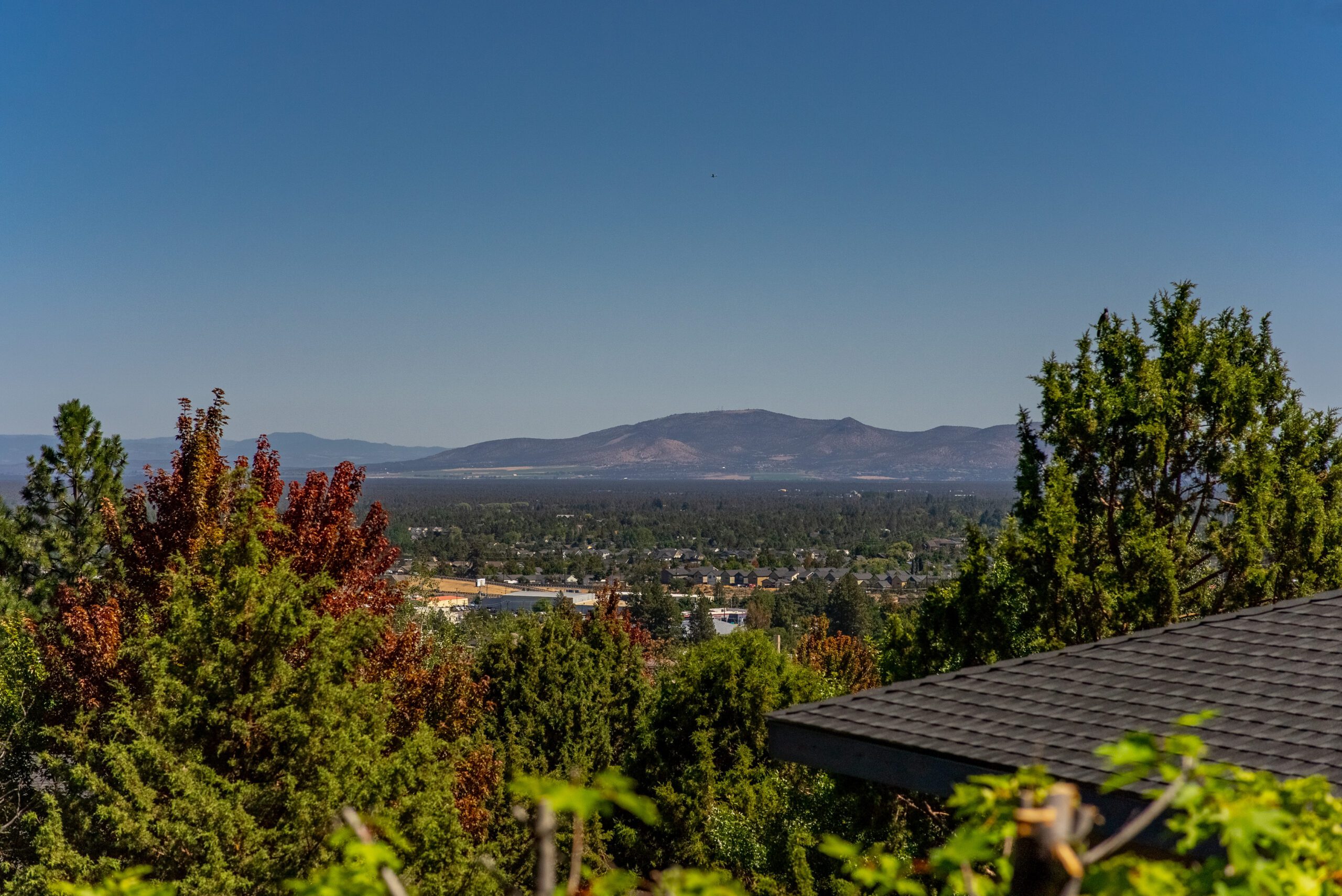
Wildfire landscaping and wildfire building rules are related, but they are not the same thing. For an existing Bend-area home, the most useful approach is to separate three questions: what the building code requires for this address and project, what the fire-safety agencies recommend around the home, and what an insurer wants to know about the property. A defensible-space checklist alone cannot answer all three.
This distinction matters because a Bend mailing address may be inside the City of Bend, in unincorporated Deschutes County or in another jurisdiction. Requirements can also depend on whether you are maintaining an existing home, replacing exterior components or building a new structure.
First, confirm what applies to the address
Oregon Residential Specialty Code Section R327 covers wildfire hazard mitigation for certain new one- and two-family dwellings and certain new accessory structures where a local jurisdiction has adopted the section and the site is in a designated hazard zone. The state lists Bend, Deschutes County and Sisters among the jurisdictions that have adopted R327.
That does not mean every existing home or every landscaping project must be rebuilt to the same standard. The Oregon Building Codes Division recommends contacting the local building department to determine whether R327 applies to a specific address and project. Its wildfire hazard mitigation page explains the scope, while the Oregon Design Criteria Hub helps identify the jurisdiction and locally adopted criteria for an address.
Before buying, remodeling or replacing siding, roofing, vents, windows, a deck or an accessory structure, ask the building department a narrow question: “What wildfire provisions apply to this address and this exact scope of work?” If the property is in an HOA, review those standards separately. An HOA’s landscaping rules are not a substitute for building or fire requirements.
Then walk the property from the house outward
The Oregon State Fire Marshal organizes defensible space into three practical zones: 0–5 feet, 5–30 feet and 30–100 feet or to the property line. The work is ongoing maintenance, not a one-time certification.
Within 0–5 feet
- Clear leaves, needles and other combustible debris from the roof, gutters, decks and the base of exterior walls.
- Look for combustible mulch, dense shrubs, firewood, patio cushions or stored materials next to the structure.
- Check whether vents are screened with corrosion-resistant metal mesh with openings no larger than 1/8 inch.
- Review attached fences and gates; the State Fire Marshal recommends noncombustible materials for the portion closest to the home.
Within 5–30 feet
- Remove dead vegetation and break up continuous fuels between grasses, shrubs and tree canopies.
- Keep grass maintained and reduce ladder fuels that could carry fire into trees.
- Prune lower branches where appropriate, while avoiding damage to tree health.
- Separate propane tanks, firewood and other combustible storage from buildings and vegetation.
Beyond 30 feet
- Continue removing dead material and thinning crowded vegetation as site conditions allow.
- Keep driveways and access routes visible and passable for emergency vehicles.
- Pay attention to neighboring vegetation, slope, wind exposure and where embers could collect.
The State Fire Marshal’s defensible-space program provides the complete checklist and offers free, education-focused property assessments. Those assessments are advisory; they do not create a guarantee that a home will survive a wildfire.
Choose plants for behavior and placement, not a “fireproof” label
No plant is fireproof. Oregon State University Extension notes that moisture content, plant age, the amount of plant material, dead material, spacing and maintenance all affect how vegetation burns. A plant that performs well in one location can still become a hazard if it is dry, overgrown or placed against a structure.
Use the OSU Extension fire-resistant plant guide as a starting point, then match the selection to the site’s sun, irrigation, soil and mature size. Be cautious with resinous or highly flammable plants near the home; OSU specifically identifies juniper as highly flammable. Favor an arrangement that can be watered and maintained without creating a continuous path of fuel.
For a more detailed zone-by-zone yard plan, see our practical Bend defensible-space guide.
Do not treat landscaping as an insurance promise
Defensible space and home-hardening features may be part of an insurer’s underwriting or rating review, but Oregon’s Division of Financial Regulation explains that insurers consider many factors and decide how mitigation measures affect their decisions. A cleaner yard or a specific plant palette does not guarantee coverage or a lower premium.
When evaluating a home, request quotes early and give the insurer accurate information about the roof, siding, vents, access, vegetation, water supply and recent mitigation work. Keep photos, invoices, inspection reports and any defensible-space assessment. The state’s homeowners insurance underwriting guide is a useful overview. Our home insurance cost guide for buyers explains what to investigate before the contingency period ends.
A property-specific checklist for buyers and owners
- Identify the jurisdiction. Confirm whether the property is in Bend, unincorporated Deschutes County, Sisters or another authority.
- Define the project. Maintenance, replacement work, an addition and new construction can trigger different reviews.
- Check the structure. Review the roof, gutters, vents, siding, decks, fences and places where embers can collect.
- Walk all three defensible-space zones. Note dead material, combustible storage, continuous fuels, access and maintenance needs.
- Review water and ongoing workload. A landscape plan is only useful if the property owner can irrigate, prune, clear debris and manage regrowth.
- Get insurance information early. Do not wait until closing or the start of construction to learn what a carrier will require.
- Use qualified specialists. A building official, fire professional, arborist, landscape professional and insurance agent answer different parts of the problem.
Wildfire preparation is one part of the full ownership picture, especially on larger parcels. Our Central Oregon acreage-maintenance guide covers other site-level costs and inspections worth planning for.
Make the plan fit the property
The best wildfire-landscaping plan is specific to the address, the structure, the terrain and the owner’s ability to maintain it. Start with the applicable jurisdiction and project rules, then use Oregon’s defensible-space guidance to prioritize work from the house outward. Document the improvements, but avoid assuming they create code compliance, insurance savings or a guaranteed outcome.
If you are comparing Bend-area homes and want help identifying the property questions to investigate before making a decision, contact the Bend Relo team. We can help you organize the due-diligence process and bring the right local specialists into it.
Talk with David & the Bend Relo team
Buying, selling, relocating, or evaluating a specific property? Tell us what you are working through. We are happy to help.





