

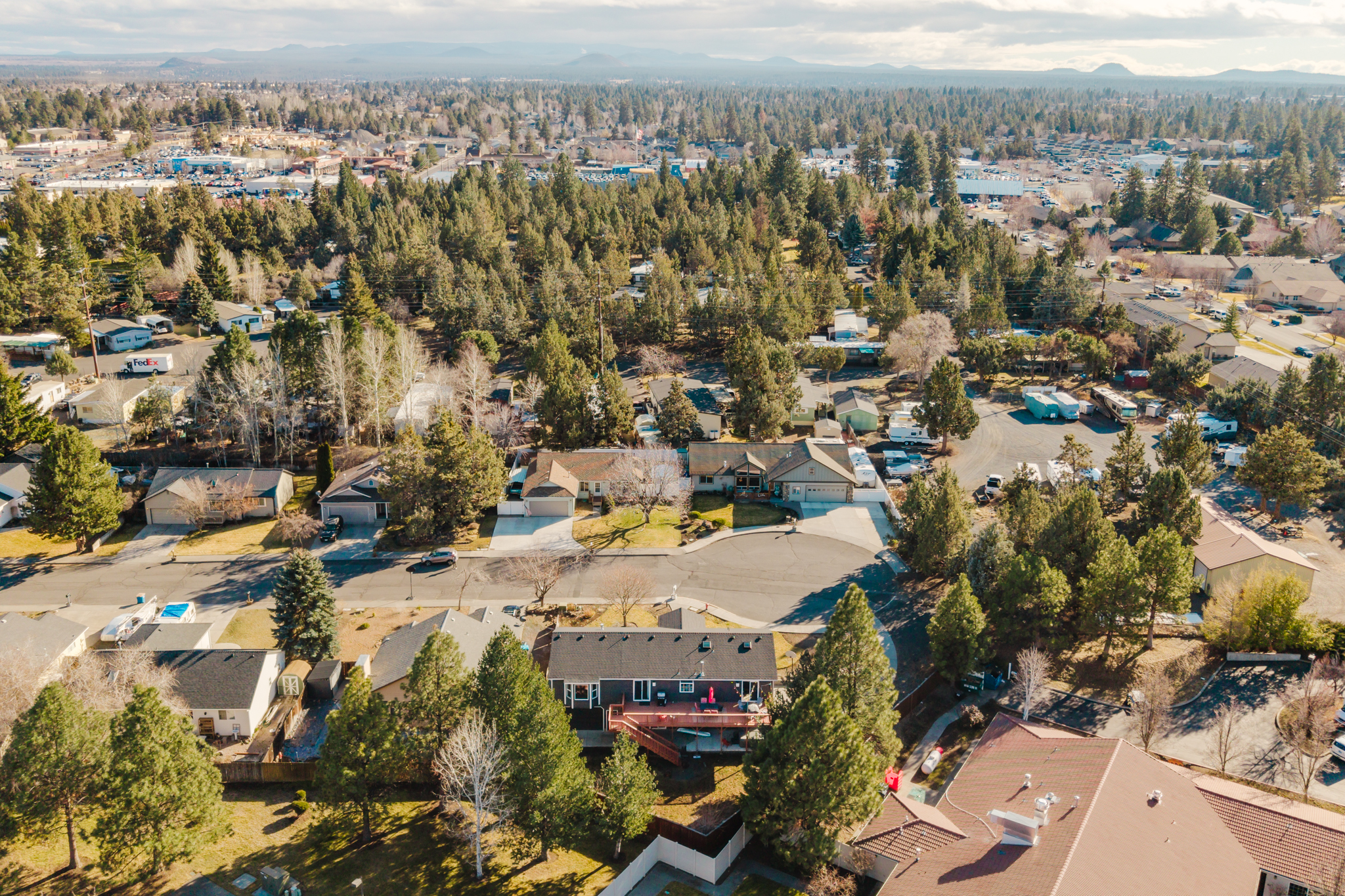

A corner-lot home in Bend can feel open and distinctive, but the address should be evaluated as a two-frontage property—not automatically as a larger, more private, or more valuable one.
The practical questions are specific: How much of the yard is usable? Which street carries more traffic? Where do headlights, snow berms, utilities, and drainage affect the site? Do setbacks, sight-line rules, easements, or HOA standards limit a future fence, gate, driveway, shed, or addition? A careful walk around both street edges will tell you more than the words “corner lot” in a listing.
Start With the Lot, Not the Label
Confirm the parcel boundaries and lot dimensions rather than judging from the lawn, fence, curb, or landscaping. The apparent side yard may include public right-of-way, utility easements, or an area that cannot be enclosed or built on. A larger recorded lot also does not guarantee more private or functional outdoor space.
Before treating extra frontage as a benefit, compare the survey or plat, title report, property records, HOA documents, and current improvements. Bend’s Development Code regulates matters such as land use, building height, setbacks, access, and other site standards. The correct answer depends on the property’s jurisdiction, zoning, street classifications, plat, and applicable approvals.
Seven Corner-Lot Checks for Bend Buyers
1. Measure the usable yard
Walk the entire perimeter and identify what is truly private, level, irrigated, fenced, and convenient to the home. Look at the relationship between the patio, doors, neighboring windows, sidewalks, and both streets. A broad landscaped strip along the street may create visual openness without adding much space for pets, play, gardening, or outdoor dining.
If a future addition, accessory structure, fence, or gate matters, verify feasibility with the appropriate planning, building, HOA, and utility authorities before relying on it. Bend’s property-owner permitting guide is a useful starting point, but it does not replace an address-specific review.
2. Check both street edges at different times
Visit during the morning commute, school arrival or dismissal if relevant, evening hours, and a weekend. Listen for turning vehicles, delivery traffic, buses, maintenance activity, and acceleration from a nearby stop. At night, look for headlights sweeping across bedrooms or living areas. Notice where pedestrians cross and whether parked vehicles reduce visibility.
The quieter street on a map is not always the quieter edge of the property. Street grade, a stop sign, a curve, nearby community facilities, and the location of the driveway can change how the lot feels.
3. Verify fences, landscaping, and clear vision
Do not assume an open corner can be enclosed with a tall fence or dense hedge. The City’s fence and retaining-wall guidance explains that permits and standards help preserve clear vision at streets, alleys, and driveways. Sight-line requirements can affect fences, walls, vegetation, signs, structures, and other obstructions near an intersection.
If privacy is a priority, ask what could legally and practically be added—not simply what you would like to add. Confirm property lines first; the edge of pavement or sidewalk is not necessarily the parcel boundary.
4. Confirm driveway and parking assumptions
Two street frontages do not automatically create two legal driveways, extra on-street parking, or RV access. Existing curb cuts, street classification, sight distance, utility locations, HOA restrictions, and City standards all matter. The City’s residential districts guide directs owners to the applicable parking, driveway, and access standards and notes that corner-lot access depends on the specific street conditions.
For the home you are considering, count usable parking spaces when vehicles are actually present. Test garage approach angles, snow-storage areas, trailer turning radius, and whether street parking would block the view from the driveway. Review HOA documents before assuming recreational vehicles, boats, or trailers may be stored outside.
5. Budget for two exposed sides
A corner property may have more sidewalk, curb-adjacent landscaping, fencing, irrigation, and street trees to maintain. It may also have more public-facing frontage governed by HOA appearance rules. Ask for irrigation maps and recent maintenance records, and look for overspray, freeze damage, roots lifting hardscape, or landscaping that obstructs visibility.
Winter adds another Bend-specific test. The City says residential property owners must clear snow from bordering sidewalks within 24 hours after snowfall stops, and plows may move snow back toward the curb and sidewalk. Review the City’s current winter road-maintenance guidance, then estimate the actual sidewalk length and identify where snow can be stored without blocking sight lines, hydrants, mailboxes, or access.
6. Look at drainage, grading, and utilities
More frontage can mean more curb, gutter, catch-basin, and utility interaction. Walk the lot during or after precipitation when possible. Look for low areas, erosion, ice-prone slopes, roof discharge near walks, and evidence that street runoff or snowmelt enters the yard or driveway.
Locate utility boxes, meters, hydrants, poles, sewer or septic components, and any recorded easements. Ask whether access must remain available for utility work and whether planned landscaping or structures would conflict with it. An inspection and, when appropriate, specialist review should address the property’s actual systems and drainage—not a generic corner-lot assumption.
7. Evaluate orientation and daily use
Corner placement can improve light on one home and increase glare, wind, heat, or exposure on another. Note the direction each major window faces, where snow and ice linger, how prevailing weather reaches entrances and patios, and which rooms are visible from the street.
Then compare the home with an interior-lot alternative in the same neighborhood and price range. The best choice is the one whose layout, yard, maintenance, and exposure fit your daily routine—not the one with the more marketable label.
Do Corner Lots Sell for More?
There is no dependable Bend-wide corner-lot premium. One buyer may value openness, architecture, or a side-entry garage; another may discount traffic, sidewalk work, a smaller private backyard, or limited fencing options. The effect should be measured through recent comparable sales in the same neighborhood, price band, housing type, lot size, condition, and street setting.
When reviewing comparable homes, separate corner placement from other value drivers. A better view, larger finished area, newer construction, quieter street, superior outdoor space, or recent remodel can easily explain a price difference that might otherwise be credited to the lot position.
Questions to Ask Before You Offer
- Where are the recorded property lines, rights-of-way, and utility easements?
- Which street is the legal and practical access point?
- What are the applicable setbacks and clear-vision restrictions?
- Are the existing fence, driveway, retaining wall, and improvements permitted or otherwise documented?
- What do the HOA rules require for landscaping, fencing, parking, and exterior storage?
- How much sidewalk, irrigation, and public-facing landscaping will the owner maintain?
- Where do traffic, headlights, snowplows, drainage, and pedestrians affect the home?
- Which part of the yard is private and usable for your priorities?
- Do the title report, plat, disclosures, and visible conditions agree?
Put the Corner Lot in Context
Lot position is one part of a property-specific decision. Bend Relo’s guide to checking Bend property-use rules explains how zoning, title restrictions, utilities, permits, and physical feasibility fit together. If walkability is part of the appeal, use the Bend neighborhood walkability test to evaluate the exact routes you would use.
For help comparing a corner-lot home with nearby alternatives, contact Bend Relo. You can also use bendrelo.com for property search and relocation planning, movingtobend.com for local lifestyle research, and bendrelocationservices.com for relocation support.
Talk with David & the Bend Relo team
Buying, selling, relocating, or evaluating a specific property? Tell us what you are working through. We are happy to help.





