


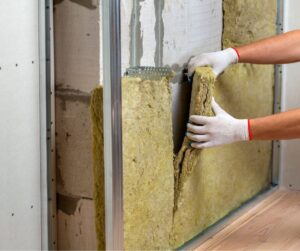
Good insulation in a Bend home is not simply a matter of adding more material to the attic. The useful question is whether the building envelope works as a system: insulation, air sealing, moisture control, ventilation, windows, doors and heating equipment all affect comfort and operating cost.
For a buyer, the practical goal is to understand the home’s current performance, identify visible warning signs and decide whether a specialist should investigate during due diligence. For an owner, it is usually smarter to diagnose the house before choosing a product or accepting a one-size-fits-all upgrade proposal.
Start With the Whole House, Not an R-Value
R-value describes resistance to heat flow, but it does not tell the whole story. Insulation can be uneven, compressed, displaced or interrupted around framing and penetrations. Air can also move through gaps around plumbing, wiring, attic hatches, recessed lights and other transitions in the building envelope.
The U.S. Department of Energy recommends finding out how much insulation a home has and where it is installed, then using a whole-house energy assessment to identify areas that need air sealing. DOE also advises addressing air leaks before adding insulation. That sequence matters because insulation alone is not a substitute for a continuous air barrier.
DOE guidance on adding insulation to an existing home is a useful starting point when planning an assessment or upgrade.
What Bend Buyers Can Check During Due Diligence
A standard home inspection is an important first layer, but insulation and energy performance can require a more focused review. Ask the inspector what was visible, what was inaccessible and whether any condition calls for an energy assessor, insulation contractor, roofer, HVAC technician or other specialist.
Attic conditions
- Is insulation present across the full attic floor, or are there thin, bare, compressed or disturbed areas?
- Are bath, kitchen and dryer exhausts routed outdoors rather than into the attic?
- Is there staining, damp insulation, frost evidence, mold-like growth or damaged framing that should be evaluated before more insulation is added?
- Does the attic hatch appear insulated and weather-stripped?
- Are recessed lights, flues and other heat-producing components suitable for the insulation detail around them?
ENERGY STAR recommends professional help when an attic has conditions such as wet insulation, rotted framing, improper exhausts, limited ventilation or older wiring that may create a safety concern. Its attic guidance also places air sealing before additional attic insulation.
Insulation and ventilation solve different problems. If the attic has moisture, roof or ventilation issues, adding insulation without diagnosing the cause can hide evidence rather than fix it. See Bend Relo’s separate guide to attic ventilation in Central Oregon’s high-desert climate.
Crawl spaces, floors and foundations
Cold floors do not automatically prove that a home needs more insulation. They can also point to air leakage, disconnected or damaged insulation, duct problems, moisture or an unusual boundary between conditioned and unconditioned space. In a crawl space, look for the condition of insulation, ground vapor control, plumbing, ducts and vents, and ask how the space is intended to function.
If moisture or pests have affected the crawl space, the repair sequence matters. Correct the source and damaged materials before treating insulation as the entire solution.
Walls, additions and remodeled areas
Wall insulation is difficult to judge from finishes alone. Additions, converted garages, bonus rooms and enclosed porches deserve extra attention because the thermal boundary may change where old and new construction meet. Ask for permit records, plans, energy documentation and invoices when they exist. A thermal-imaging scan can help identify patterns, but a specialist should interpret the results in context rather than treating a colored image as a diagnosis.
Windows, doors and penetrations
Drafts near a window do not always mean the window unit must be replaced. The source may be weather-stripping, trim, installation gaps or another nearby leak. Evaluate the window’s condition, operation, glazing and installation before choosing repair or replacement. Bend Relo’s Central Oregon window checklist explains the ratings and property-specific questions to compare.
Use Bend’s Home Energy Score as One Piece of Evidence
For many homes listed for sale within Bend, the City’s Home Energy Score program provides a standardized report on energy performance. The scorecard can help a buyer compare the building envelope, equipment and modeled energy use, but it should not replace an inspection, utility-history review or specialist evaluation.
Read the report itself, not only the score. Look at the documented home characteristics, estimated energy use and recommended improvements. Then compare that information with the home’s current condition and any changes completed after the assessment. The City maintains current program information through its Home Energy Score Program.
Comfort Problems Are Clues, Not Diagnoses
Uneven rooms, drafts, dry winter air, high bills or an HVAC system that runs frequently can justify further investigation. None of those symptoms, by itself, proves that insulation is the cause. Equipment sizing and condition, duct leakage, thermostat settings, solar exposure, window coverings and occupant behavior can all affect the result.
Ask for at least 12 months of utility history when available, while recognizing that one household’s usage will not predict another’s bill. Compare the fuel source, conditioned square footage, thermostat habits and periods of vacancy. For a broader operating-cost review, use the Bend home-heating cost checklist.
Air Sealing Changes the Ventilation and Safety Conversation
Reducing uncontrolled air leakage can improve comfort, but a tighter house also changes how combustion gases, moisture and indoor pollutants move. ENERGY STAR advises considering ventilation, radon and combustion safety when sealing a home. Homes with naturally vented fuel-burning appliances deserve particular care before and after major air-sealing work.
This is one reason a comprehensive energy assessment can be more useful than a product estimate. A qualified professional can use tools such as blower-door testing, infrared imaging and combustion-safety checks to identify priorities and verify results. Ask what tests are included, what assumptions are being made and how proposed work will be measured after completion.
Current Code Is Not a Shortcut for Evaluating an Older Home
Oregon’s current residential energy code regulates the thermal envelope and related building systems for covered new construction and alteration work. The Oregon Building Codes Division identifies the 2023 Oregon Residential Specialty Code as the adopted residential energy code.
That does not mean every older Bend home should be expected to match today’s prescriptive details. Construction date, permitted alterations and prior code editions all matter. If a seller or contractor claims that an addition, conversion or insulation project is “to code,” ask which permit, inspection and code edition support the statement. Verify records with the appropriate jurisdiction rather than assuming a newer-looking finish proves compliant work.
Questions to Ask Before Hiring an Insulation Contractor
- What problem are you diagnosing, and what evidence supports that conclusion?
- Where is the intended air barrier and thermal boundary?
- Will air sealing happen before insulation is added?
- How will roof leaks, damp materials, mold-like growth, pests or damaged wiring be handled?
- Could the work affect attic or crawl-space ventilation, combustion appliances or indoor-air quality?
- What insulation type, installed depth and target R-value are included in the bid?
- How will recessed lights, flues, vents, attic access and other penetrations be detailed?
- Are permits or inspections required for any part of the scope?
- What photographs, test results, warranties and product documentation will be provided at completion?
Get the scope in writing and compare bids on the same assumptions. A low price is not directly comparable if it omits air sealing, prep work, ventilation corrections, safety details or post-work verification.
A Practical Bend Insulation Decision
For buyers, insulation should be evaluated as part of the home’s total condition and first-year ownership budget. A thin attic area may be a manageable improvement; moisture, unsafe wiring, an unpermitted conversion or a poorly defined building envelope can require a broader plan. The right response depends on the specific property.
For owners, start with the symptom and the evidence. Fix water and safety problems first, confirm the air-sealing strategy, then choose insulation that fits the assembly. That process is more reliable than assuming the highest advertised R-value will solve every comfort problem.
If you are comparing Bend homes and want help organizing the inspection, energy and ownership-cost questions, contact Bend Relo. We can help you identify what belongs in normal due diligence and when a qualified specialist should take the next look.
Talk with David & the Bend Relo team
Buying, selling, relocating, or evaluating a specific property? Tell us what you are working through. We are happy to help.





