

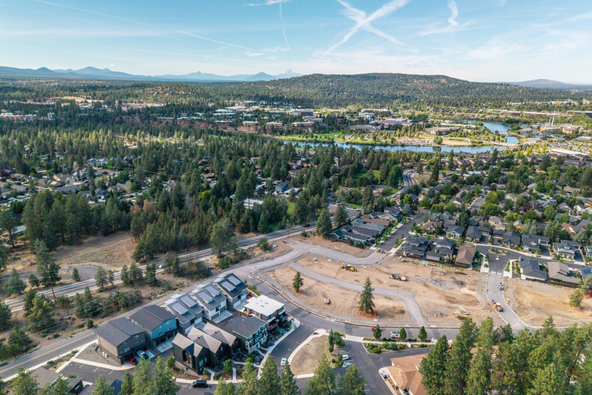
A home near the Deschutes River can offer a setting you enjoy every day, but “near the river” does not describe one uniform type of property. A view above the canyon, a house beside a public trail and a parcel with actual river frontage create different experiences and responsibilities.
Before paying for a river-oriented location, establish what you are buying: the land, the access rights, the condition of the improvements and the ability to use the property as you intend.
1. Separate views, frontage and legal access
Start with the parcel boundaries and title documents. Ask whether the property actually touches the river, whether land lies between the house and the water, and whether any route to the river crosses someone else’s property. A worn path or a listing photo does not establish an access right.
Review recorded easements, any survey and relevant association documents with the appropriate professionals. If the boundary or access is material to your decision and unclear, resolve it before relying on it. A map is a useful starting point, not a replacement for a survey or title analysis.
For some buyers, a comfortable walk to a public park provides the lifestyle they want without owning the bank. Bend Park & Recreation District’s Old Mill Reach guide identifies access through Farewell Bend, McKay and Riverbend parks. Its Pioneer Reach guide describes the route through older parts of Bend. Walk the actual route from the home and check current trail conditions and rules.
2. Check flood risk and insurance for the actual building
Review the address and building location using the FEMA Flood Map Service Center, and ask the lender and insurer to confirm their determinations. If the seller has an elevation certificate or a map-amendment document, obtain a copy and have it evaluated rather than assuming it eliminates the issue.
FEMA’s National Flood Insurance Program explains that flood insurance is required for a property in a Special Flood Hazard Area with a government-backed mortgage. Lenders can also require coverage outside high-risk areas. Most homeowners policies do not cover flood damage.
Get property-specific quotes, coverage details and effective-date information before your decision deadlines. Being outside a mapped high-risk area does not establish that a home cannot flood. Ask about the property’s history and inspect drainage, low areas and the building’s condition.
3. Verify what you can change near the river
If your purchase depends on expanding a deck, adding a structure, clearing vegetation or changing the riverbank, investigate the plan before making the property yours. An existing improvement does not prove that the same work could be built or expanded today.
The City’s residential development guide identifies Waterway Overlay and related special areas as additional considerations. Deschutes County also maps a Landscape Management water overlay. City and County standards should not be treated as interchangeable.
Identify the jurisdiction, applicable zoning and any other approvals for your specific parcel. Bring a sketch of the proposed work to planning staff and ask what review it would require. Do not assume a river view can be permanently preserved by removing vegetation or that owning frontage permits a dock or bank modification.
4. Inspect the site as well as the house
Include the deck, stairs, paths, retaining walls and drainage in your condition review. If the parcel has steep terrain or direct bank exposure, ask a qualified professional whether erosion, slope stability or existing repairs need further investigation.
Visit at more than one time of day. Consider sun and shade, outdoor privacy, public-trail activity, parking and noise. A peaceful photograph may not show the busiest hours, and a water view from one room may differ from the experience in the yard.
Evaluate what you would maintain and what belongs to an association or public agency. Get estimates for identified work rather than assuming river proximity means either unusually low or unusually high maintenance costs.
5. Value the specific rights and setting
Compare homes with similar frontage, access, views, condition and location. A house a few blocks from the river is not equivalent to a riverfront parcel, and two riverfront homes can differ substantially in usable land and development limits.
Treat a location premium as part of your purchase decision, not a guarantee that the property will hold its value or be easy to resell. Include insurance, maintenance, association costs and any needed specialist work in the ownership budget.
Bring these questions to a property review
- What land and recorded access rights come with the sale?
- What do the lender and insurer require for this building?
- Can the improvements or outdoor changes I want be approved?
- What condition concerns need a specialist and a cost estimate?
- Does the daily experience justify the price for my plans?
Explore buying with Bend Relo or contact the team to compare a river-oriented home with the other locations that fit your life.
Talk with David & the Bend Relo team
Buying, selling, relocating, or evaluating a specific property? Tell us what you are working through. We are happy to help.





