

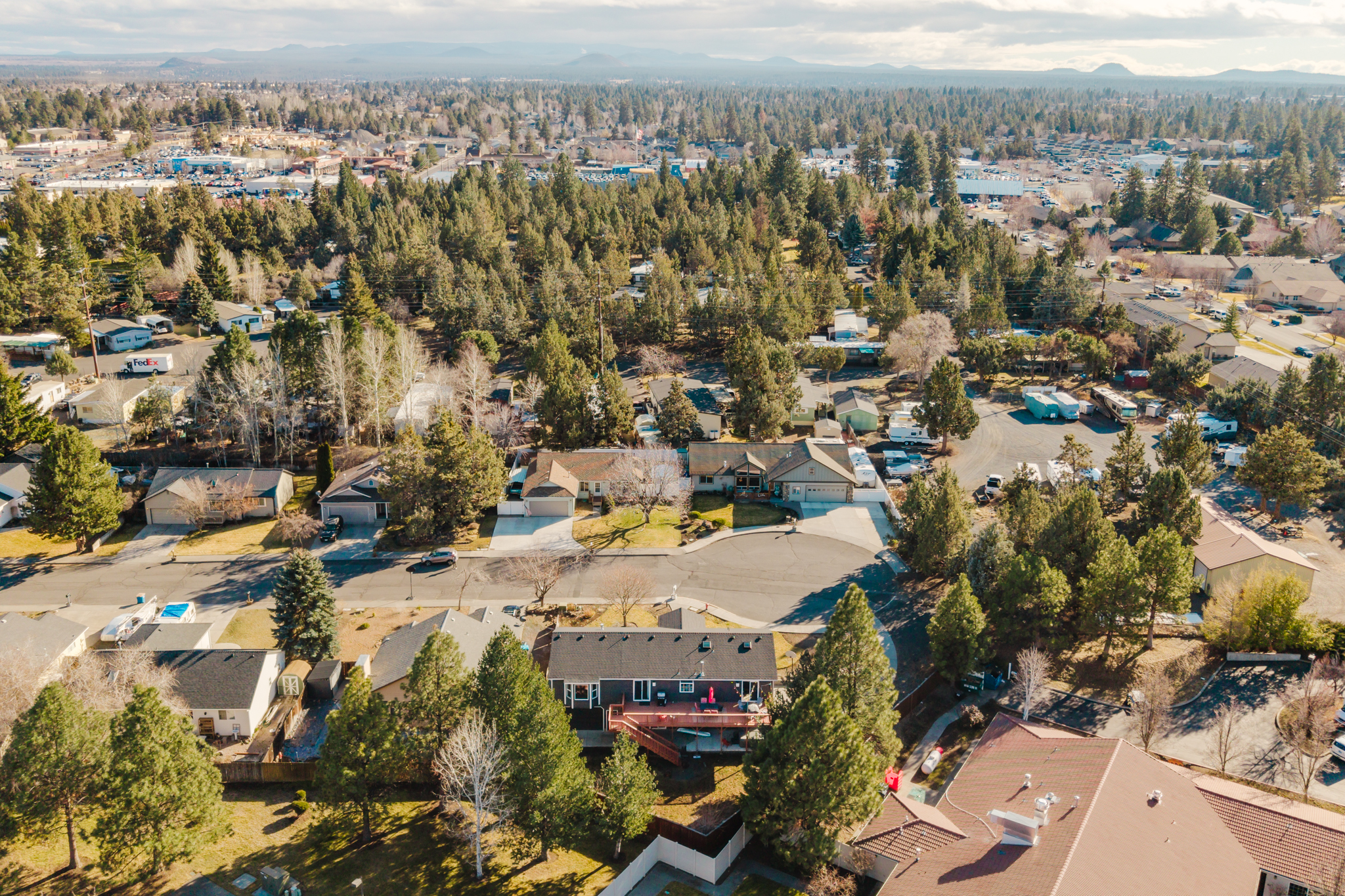

Living near one of Bend’s visitor and activity hubs can be a great fit if you regularly use the restaurants, river access, trails, shops or events nearby. The tradeoff is that the experience can change by hour, season and even block. A buyer should test the exact address—not assume that “near Downtown,” “near the Old Mill” or “walkable” automatically means convenient, quiet or valuable.
The useful question is not whether a busy Bend location is good or bad. It is whether the home’s routes, parking, sound, privacy and ownership rules fit the way you plan to live.
What counts as a Bend visitor or activity hub?
“Tourist area” is not a land-use category or a precise neighborhood boundary. In practical buyer conversations, it may refer to a home near Downtown and Old Bend, the Old Mill District and river trail, a west-side dining corridor, a major park or trailhead, or an event venue.
Those settings do not behave the same way. A home a few blocks from restaurants may face late-evening activity or deliveries. A home near a river access point may see more pedestrian, bike and parking activity on warm weekends. A home near an event venue may feel quiet most days and very different when a concert or festival is underway.
Start with the property address, its street and the routes people actually use. If proximity to an amenity matters to you, verify the real walking or biking route with the Bend Park & Recreation District trail locator and visit it in person. A straight-line map distance does not prove a comfortable or continuous route.
The main benefit: easier access to the Bend life you want
Living close to an activity hub may let you make some trips without a car, meet friends more easily or use the river, parks and trails as part of an ordinary week. That convenience is meaningful when it matches your actual routine.
Test the trips you expect to make instead of counting nearby map pins:
- Walk from the front door to the places you would use most often.
- Check crossings, lighting, grades, sidewalk or trail gaps and winter surfaces.
- Time the route while carrying groceries, walking a dog or pushing a stroller if those situations matter to you.
- Confirm whether an apparent trail or shortcut is public, private, seasonal or subject to closure.
- Drive the route to work, school and essential services at the times you would normally travel.
For a deeper route test, use our address-specific Bend walkability checklist. It focuses on the complete trip rather than a neighborhood label or score.
The main tradeoff: activity is not evenly distributed
Busy conditions can be intermittent. A ten-minute showing on a quiet afternoon may not reveal restaurant closing activity, event traffic, weekend parking, trailhead overflow, delivery vehicles or late-evening pedestrians.
Visit the property at least three times when possible:
- A normal weekday: Check school, work and service traffic, driveway access and your usual route.
- An evening: Listen from the yard and bedrooms with windows open and closed. Note outdoor dining, loading areas, parking-lot lights and headlights.
- A busy weekend or event period: Observe street parking, pedestrian routes, turning movements and whether you can enter and leave the property comfortably.
When a specific venue is the concern, use the separate Bend event-venue property checklist. It covers event-night testing, parking, traffic, light and operational boundaries in more detail.
Parking needs an address-level review
Parking rules and demand vary across Bend. The City manages parking districts in and around Downtown, Old Bend and McKay, and publishes current information through its Parking Services pages. A listing’s garage or driveway count does not tell you how guests, service providers, snow storage or a second vehicle will work.
Before buying, check:
- the number and dimensions of legal off-street spaces;
- whether garage space is practical for your vehicles and storage;
- posted street restrictions, permit areas and time limits;
- how neighboring businesses, trail users or events affect curb availability;
- whether parked vehicles block sight lines when leaving the driveway;
- where snow can be stored without reducing access; and
- HOA, condominium or private-road parking rules.
If the household depends on street parking, confirm current rules directly with the City or the applicable association. Do not treat an open curb during a showing as a permanent parking right.
Evaluate sound, light and privacy from the rooms that matter
Sound is property-specific. Distance alone does not account for topography, building orientation, windows, landscaping, delivery routes or the direction a bedroom faces. Event sound, road noise and restaurant activity may also occur on different schedules.
Stand in each bedroom, the primary outdoor space and any home office. Listen with the windows open and closed. Look for direct views of parking lots, gathering areas, service alleys and vehicle headlights. Ask the seller about recurring conditions, but make your own visits and review available disclosures and public records.
The Bend home-noise due-diligence guide includes a more detailed multi-visit listening plan. Current municipal rules and adopted ordinances are available through the City’s code resources; a code standard does not guarantee that a particular home will feel quiet to you.
Short-term rentals require permit-specific verification
Do not assume that visible vacation rentals establish what you can do with the home or what future activity will look like. The City of Bend regulates short-term rentals, and permit treatment depends on the property, permit type and approval date.
The City states that land-use approval for short-term-rental permits filed after April 15, 2015 is issued to the owner and generally does not transfer with a sale. Older vacation-home-rental approvals may run with the land, but a new owner still needs an operating license. Buyers should verify the record with the City, review current Bend short-term-rental permit and license guidance, and check HOA or condominium restrictions before relying on any rental plan.
If rental income matters to the purchase, use the full Bend short-term-rental due-diligence guide and underwrite the property conservatively. Proximity to visitor amenities does not create permission to operate a short-term rental.
Inspect the home for activity-area friction
After evaluating the neighborhood, return to the house itself. Features that may reduce friction include secure bike and gear storage, a practical entry for wet or dusty returns, usable off-street parking, well-placed bedrooms and outdoor space with appropriate screening. These features are not automatic premiums; their value depends on the property and buyer.
Look closely at:
- window condition and how the home performs with windows closed;
- bedroom and office orientation relative to streets and gathering areas;
- fences, gates, lighting and sight lines;
- trash, recycling, loading and delivery locations nearby;
- shared walls, entries, garages and common areas in attached housing;
- storage for bikes, skis, river equipment or seasonal gear;
- permit history for additions, conversions and outdoor improvements; and
- title, HOA and condominium documents that control access or use.
The City’s Online Permit Center guidance explains how to look up property records and track permits. An inspector, title professional, lender, insurance adviser or attorney may be appropriate depending on the issue.
Do not assume a price premium or resale advantage
Access to Downtown, the river, restaurants or events may matter to some buyers and be a drawback to others. There is no responsible citywide rule that a home near visitor activity will sell faster, hold value better or command a predictable premium.
Pricing should be based on recent comparable sales that reflect the same housing type, condition, street exposure, parking, view, lot and proximity to the activity in question. Even within a small area, one block may experience different traffic, sound and access than the next.
A practical decision checklist
- Which nearby places will your household actually use, and how often?
- Have you walked and driven the complete routes at realistic times?
- What changes on weekends, during peak seasons or when an event is underway?
- Can you enter the driveway, park guests and manage snow without relying on an assumption?
- How does the home sound and feel in bedrooms, work areas and outdoor space?
- Are trails, shortcuts, parking areas and common spaces legally available for the use you expect?
- Do HOA, condominium or rental rules conflict with your plan?
- What do permits, title documents, disclosures, inspections and insurance review reveal?
- Do comparable sales support the price after adjusting for the property’s actual advantages and drawbacks?
Choose the address, not the label
A home near one of Bend’s busiest lifestyle destinations can offer excellent access, but the right choice depends on how the exact property works on ordinary days and busy ones. The most useful due diligence combines repeated visits, real route testing, current public records and a close look at the home’s orientation and systems.
Bend Relo can help buyers compare those tradeoffs, identify address-specific questions and build a due-diligence plan around the household’s real routines. The goal is not to avoid activity or chase it—it is to understand what you are buying.
- bendrelo.com — Property search and real estate guidance
- movingtobend.com — Bend lifestyle and relocation information
- bendrelocationservices.com — Relocation support
Talk with David & the Bend Relo team
Buying, selling, relocating, or evaluating a specific property? Tell us what you are working through. We are happy to help.





