

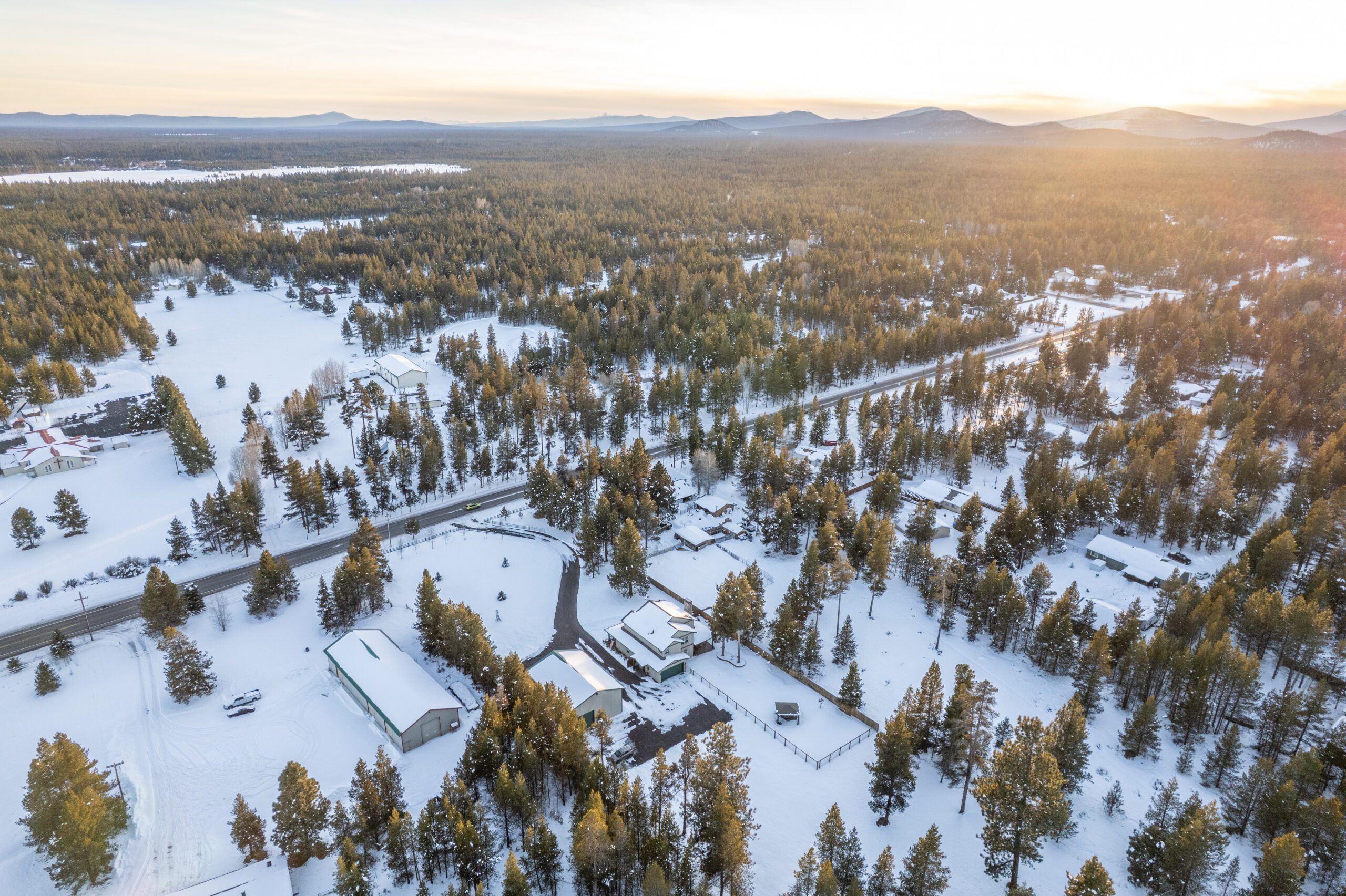

Roof snow load is not one universal Central Oregon number. The design criteria depend on the property’s exact location, elevation, governing code, building type and roof system. A value quoted for a home in Bend should not be carried over to a cabin near the Cascades, a rural property south of Sunriver or a structure in another jurisdiction.
For buyers, the practical goal is not to perform structural calculations. It is to identify the criteria that apply to the address, understand what documentation exists, spot reasons for closer review and involve the right professional before relying on the roof for another winter.
Ground Snow Load and Roof Snow Load Are Not the Same
Snow load is usually expressed in pounds per square foot, but the number shown on a geographic design map is generally a ground snow load. The design load for a particular roof is developed from the applicable code and factors such as roof shape, slope, exposure, thermal conditions, drifting and the importance of the building. A map value by itself does not certify a roof.
Oregon’s Design Criteria Hub provides site-specific climatic and geographic criteria for projects governed by the Oregon Residential Specialty Code and Oregon Structural Specialty Code, including ground snow load. Deschutes County also maintains a residential snow-load mapping layer used for local roof and truss design. Use these as starting points, then confirm the project criteria with the authority having jurisdiction and, when needed, a licensed engineer.
Why the Exact Address Matters
Central Oregon changes quickly with elevation and terrain. Snow conditions can differ meaningfully between Bend, Sisters, La Pine, Sunriver-area communities and higher-elevation sites. Jurisdiction also affects where permit and plan records are kept.
Before accepting a listing statement such as “built for local snow load,” ask:
- Which city or county issued the building permit?
- What code edition and design criteria applied when the structure was permitted?
- Do the approved plans, truss sheets or engineering documents identify the roof design load?
- Have additions, solar panels, roofing layers, mechanical equipment or framing changes altered the original system?
- Are a detached garage, shop, carport and manufactured home covered by separate permits or designs?
An older home is not automatically unsafe, and a newer permit does not replace an inspection. The useful comparison is between the building as approved, the building as it exists today and the conditions at the specific site.
What Buyers Should Review
Permit and structural records
Search the appropriate city or county permit system for the original construction and later roof, addition, solar or structural work. Ask the seller for plans, truss documentation, engineering letters, reroof invoices and inspection records that may not appear in a basic online search. Missing documents are not proof of a defect, but they can change the scope of due diligence.
The roof structure and visible condition
A general home inspector can document visible conditions such as sagging, uneven roof planes, cracked or altered framing, moisture staining, damaged sheathing, displaced connectors and signs of past leakage. The inspector may also flag additions or attic alterations that deserve specialist review. A visual inspection alone cannot confirm the engineered capacity of a concealed roof system.
When the design is unclear, the property has been modified, or visible conditions raise concern, involve an Oregon-licensed structural engineer. This follows a broader Bend Relo due-diligence principle: local knowledge helps identify the question, while the qualified specialist answers the technical one.
Roof geometry and snow movement
Steeper and metal roofs may shed snow more readily, but that does not automatically make them safer for every site. Sliding snow can create hazards above entries, walkways, decks, driveways and neighboring property. Valleys, parapets, roof steps and adjacent taller walls can create drifting or concentrated loads. Ask how the whole roof manages snow rather than focusing on pitch or material alone.
Ice, drainage and ventilation
Snow-load capacity and ice-dam prevention are related but different questions. Attic insulation, air sealing, ventilation, flashing, gutters and drainage all affect winter performance. Look for evidence of repeated ice dams or leaks and ask what was repaired. Our Central Oregon winterization checklist covers the broader plumbing, heating and drainage preparation around a home.
Be Careful With Renovation Assumptions
Replacing roof covering is different from changing the roof structure. The City of Bend’s current reroofing guide notes that material changes, framing changes, roofline changes, new sheathing, load-bearing work and some solar projects can trigger permit requirements. Requirements vary by scope and jurisdiction, so confirm them before budgeting a project.
Solar is a good example. The panels, attachment system and snow behavior should be evaluated together with the existing roof. A prior solar installation should have a permit trail and installation documents. Buyers can use our Oregon solar-home due-diligence guide for the ownership, financing and system questions beyond roof structure.
What to Do During a Heavy Snow Event
Do not climb onto a snowy or icy roof to investigate it yourself. The City of Bend warns about falls, overexertion, sliding snow and damage caused by improper removal. Snow weight also changes with moisture and ice, so depth alone is not a reliable measure of structural demand.
If a roof appears distressed, occupants hear new structural noises, doors suddenly bind, ceilings deform, or visible sagging develops, move away from the affected area and contact the appropriate emergency or non-emergency service based on the immediacy of the danger. For a building-specific assessment, contact a licensed engineer or architect and a qualified roofing contractor. Do not treat a generic online formula as clearance to occupy a questionable structure.
Insurance and Ongoing Ownership
Ask an insurance professional how the policy handles sudden damage from the weight of snow or ice, water intrusion and maintenance-related exclusions. Coverage language and deductibles vary. Also ask whether a planned roof replacement, solar installation or vacancy period changes the insurer’s requirements.
For maintenance, document roof inspections and repairs, keep drainage paths functioning and address leaks promptly. If professional snow removal is recommended, use a contractor with appropriate experience, licensing and insurance rather than sending an untrained person onto the roof.
A Buyer’s Snow-Load Due-Diligence Checklist
- Confirm the property’s jurisdiction and exact location.
- Check the Oregon Design Criteria Hub and local snow-load mapping for the address.
- Request original plans, truss sheets, permits and engineering records.
- Identify every later roof, addition, solar, mechanical or framing modification.
- Have the home inspector document visible roof and attic conditions.
- Escalate design-capacity or alteration questions to a licensed structural engineer.
- Confirm permit requirements before planning a reroof or structural change.
- Review insurance coverage and a realistic winter-maintenance plan.
Our Bend home-inspection guide explains how to coordinate general and specialist inspections without expecting one inspector to answer every technical question.
Make the Decision From Evidence, Not a Regional Rule of Thumb
A Central Oregon roof should be evaluated as a specific structure at a specific address. Map data, permits, plans, visible condition and professional review each answer a different part of the question. When those pieces line up, a buyer can make a much better decision about safety, maintenance and future improvements.
If you are comparing Bend or Central Oregon homes and need help organizing roof, permit or winter-performance due diligence, contact the Bend Relo team. We can help identify the right records and specialists without pretending a real-estate opinion is an engineering conclusion.
Talk with David & the Bend Relo team
Buying, selling, relocating, or evaluating a specific property? Tell us what you are working through. We are happy to help.





