

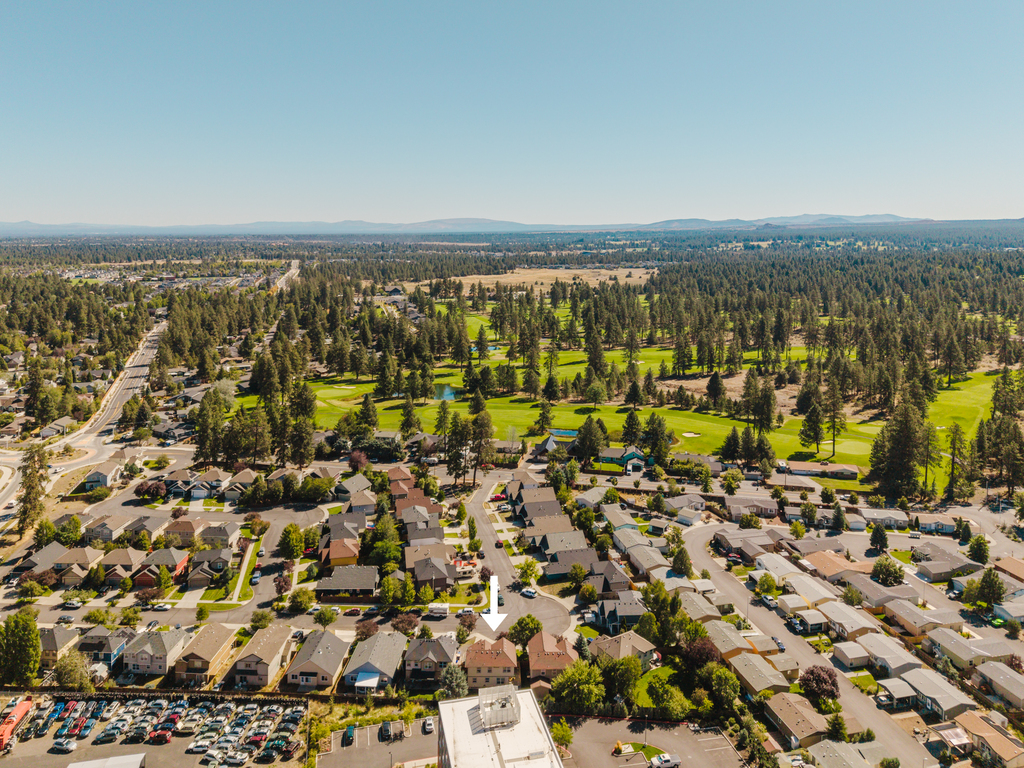
A Bend mailing address does not tell you which outdoor-lighting code applies. A home inside the City of Bend is governed by the Bend Development Code; a property in unincorporated Deschutes County follows the County’s outdoor-lighting chapter. The two codes overlap on shielding, downward direction and light trespass, but their exemptions and operating rules are not identical. Confirm the property’s jurisdiction before buying fixtures, requesting repairs or promising that a home is compliant.
Start with the property’s jurisdiction
Check the parcel in Deschutes County DIAL and confirm whether it is inside Bend’s city limits. A “Bend, OR” postal address can still be outside the City. If the home is in a planned community, also review the HOA or architectural rules; private restrictions can be more specific than the public code.
This distinction matters because some rules often described as “Bend dark-sky rules” actually come from Deschutes County Code Chapter 15.10, which took effect December 23, 2025, rather than from the City’s development code.
What the City of Bend code requires
Bend Development Code 3.5.200 applies to outdoor lighting used for buildings, recreation areas, parking and maneuvering areas, landscaping, streets and signs, display areas, canopies, holiday celebrations and construction.
For new fixtures installed after February 18, 2004, the City’s core rule is functional: use a full-cutoff fixture or another shielding method that directs light down onto the site without direct illumination or glare on adjacent property. In the City code, a full-cutoff fixture projects no light above its horizontal plane.
The same section contains important qualifications:
- Lawfully installed fixtures operating before the section’s effective date are generally exempt until they are replaced, although re-aiming or adding shielding is encouraged when light reaches beyond the property.
- Residential decorative and low-wattage yard or driveway lighting can be exempt when it does not create glare, direct illumination or a cast shadow on adjacent property.
- Contained uplighting can qualify for an exemption when an architectural or landscaping element keeps the light on its intended target and out of the night sky.
- Low-wattage holiday lighting is exempt for no more than 60 days.
The current City section does not create a universal residential 3,000-Kelvin limit or an 11 p.m. deadline for string lights. Do not apply the County’s rules to a City property without checking the controlling code.
What changes in unincorporated Deschutes County
The County chapter requires nonexempt outdoor lighting to be downcast, fully shielded and arranged to prevent direct illumination beyond the property line. Its definitions and exemptions are more detailed than the City’s in several areas.
- Existing fixtures: The County’s nonconformance section gives lawfully installed older fixtures a temporary exemption and states that the exemption ends three years after adoption. Because the chapter became effective December 23, 2025, confirm the exact deadline and any property-specific exception with Deschutes County before planning a retrofit.
- Residential string lights: They may outline patios, porches, decks and similar structures, may not flash or flicker, and must be off by 11 p.m. Holiday lights follow a separate exemption.
- Holiday and event lighting: Seasonal holiday lighting from the day after Thanksgiving through January 15 is exempt. Other event-specific lighting has its own limited duration.
- Color temperature: The County chapter encourages warm-colored light as a guiding principle, but it expressly says those guiding principles are not mandatory approval criteria. Do not turn that recommendation into a blanket 3,000-Kelvin legal requirement.
Audit the actual fixtures, not the marketing label
“Dark-sky friendly,” “warm” or “motion activated” on a package does not by itself establish compliance. For each exterior fixture, record:
- where it is mounted and what area it is intended to illuminate;
- whether the source is visible from the side or above;
- whether a shield directs the beam below the horizontal plane;
- whether direct light reaches a neighboring lot, window or public right-of-way;
- whether the fixture is permanent, portable, decorative, seasonal or part of a sign;
- whether it predates the applicable rule or is being replaced; and
- what timers, motion sensors or dimmers control its operation.
Then compare the fixture with the code that applies to the parcel. A bulb change is not always treated the same as replacing a fixture or housing. When wiring, mounting, permitting or code interpretation is uncertain, ask the applicable planning or code-enforcement office and use a qualified electrical contractor.
What buyers and sellers should verify
Buyers should include exterior lighting in the property walk-through and due-diligence plan, especially on rural acreage, homes with extensive landscape lighting, sports areas, long driveways or neighboring bedrooms close to the property line. Note fixture locations after dark when practical, review HOA documents and request permits or contractor records for substantial recent work. Our home-inspection guide for buyers explains how to separate a general inspection from specialist follow-up.
Sellers can reduce avoidable questions by identifying jurisdiction, re-aiming obvious glare, replacing failed components safely and keeping product or contractor records. Do not promise that a fixture is compliant based only on its age, appearance or packaging.
A practical decision rule
Use the least light necessary for the task, direct it only where needed and control when it operates. That approach fits the purpose of both the City and County codes, but legal compliance still depends on the parcel, fixture, installation date, use and applicable exemptions.
Codes can change, and this guide cannot decide a specific enforcement or electrical question. If you are evaluating a Bend-area home, start with Bend Relo’s buyer resources or contact Bend Relo. We can help organize the property-specific questions while the appropriate public office, inspector and licensed contractor address issues within their expertise.
Talk with David & the Bend Relo team
Buying, selling, relocating, or evaluating a specific property? Tell us what you are working through. We are happy to help.





