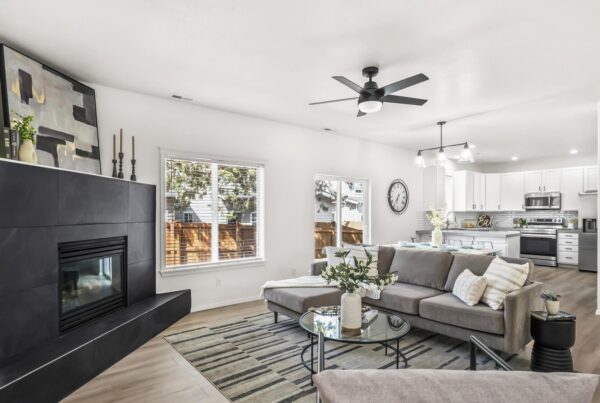

Bend Real Estate Market Update – September 2026
By David Keyte with Bend Relo
Beacon Report Deep Dive: Higher Rates, More Negotiation, and a Market Still Moving
September has brought a noticeable change to the Bend real estate market—but perhaps not the one the loudest housing headlines would have you believe.
Mortgage rates have moved higher. Buyers are feeling the difference in their monthly payments. Sellers are facing a more price-sensitive audience. Days on market are increasing as we move into fall.
And yet, homes are still selling.
According to the September 2026 Beacon Report, 160 Bend single-family homes closed in August. There were 522 Bend single-family homes listed as of the September 8 report date, representing 3.5 months of inventory. The median price for August was $721,000, and the median days on market for homes that sold increased to 34 days.
Those numbers don’t describe a market that’s frozen.
They describe a market where buyers and sellers are still finding each other—but the distance between what sellers want and what buyers are willing or able to pay has become increasingly important.
That may be the defining story of Bend real estate heading into fall.
📈 Mortgage Rates Changed the Conversation
Let’s start with the issue that’s probably getting the most attention: interest rates.
In the September market update, David Keyte points to the recent rise in 30-year mortgage rates as one of the biggest changes affecting buyers right now.
Earlier this year, rates were around 6%. More recently, they’ve moved closer to 7%.
That might sound like a relatively small change on paper. Unfortunately, mortgage payments don’t have a sense of humor.
For a buyer trying to maintain the same monthly housing payment, a higher interest rate can significantly reduce purchasing power.
David gives a useful simplified example in the September update: a buyer who could previously afford around a $1 million home at a 6% rate might have purchasing power closer to $900,000 after rates move higher, assuming they want to maintain roughly the same payment.
The exact effect will vary based on the loan, down payment, taxes, insurance, credit profile and other factors, so buyers should run their actual numbers with a lender.
But the broader point matters:
Higher rates don’t just affect buyers. They ultimately affect sellers too.
When buyers lose purchasing power, the pool of people capable of paying a seller’s desired price can shrink.
And that brings us to one of the biggest themes of September.
🤝 The Bid-Ask Spread Is Wide
There’s a concept investors use all the time that also does a surprisingly good job of describing today’s Bend housing market: the bid-ask spread.
The “ask” is what a seller wants.
The “bid” is what a buyer is willing—and financially able—to pay.
Right now, those numbers aren’t always particularly close.
A seller might look at their home and think:
“$1 million.”
Buyers might look at the same home, calculate the payment at today’s mortgage rate, compare it with five competing listings and think:
“Not quite.”
And then begins the great Bend real estate staring contest of 2026.
Who moves first?
Sometimes it’s the seller through a price adjustment.
Sometimes it’s the buyer through a stronger offer.
Sometimes neither side moves and the home simply sits.
But eventually, successful transactions happen when price, condition, motivation and timing line up well enough for both parties to say yes.
That’s why understanding the specific property matters so much more than broad declarations about whether Bend is a “buyer market” or “seller market.”
Different listings are operating in very different realities.
🏡 160 Bend Homes Still Sold in August
Despite higher rates and plenty of uncertainty, buyers didn’t disappear.
The Beacon Report recorded 160 Bend single-family home sales in August. That follows 187 in July and 201 in June.
Yes, activity has declined from the exceptional early-summer numbers.
But context matters.
The Beacon Report’s three-year sales chart shows that 160 closings remains a substantial level of activity compared with many months during the previous several years.
That’s important because it’s easy to confuse slowing with stopping.
They’re not the same thing.
Bend had an exceptionally active June and July. As summer winds down and fall begins, some moderation is normal.
Buyers are still buying.
Sellers are still selling.
The market is simply becoming more selective about which properties get those deals done.
💰 Bend’s Median Price Fell to $721,000—but Don’t Read Too Much Into One Month
The median sale price for Bend single-family homes was $721,000 in August, down from $780,000 in July.
That’s a sizable month-to-month move.
But it doesn’t mean every Bend home suddenly lost roughly 8% of its value.
Median price measures the midpoint of the homes that sold during a particular period. The mix of properties closing each month can move that number considerably.
A month containing more luxury transactions can push the median higher. A month containing more lower-priced homes can pull it down.
That’s why it’s more useful to zoom out.
Looking across the Beacon Report’s multi-year chart, Bend prices have been choppy and broadly range-bound rather than following a sustained straight-line decline.
That distinction is especially important for homeowners who purchased during the last several years.
Some may have gained equity.
Others may be close to their original purchase price.
And some who bought near a higher point in the market may find that today’s likely sale price is below what they originally paid.
There isn’t one answer for every homeowner.
Your purchase date, neighborhood, condition, improvements, original purchase price and today’s competing inventory all matter.
📐 Price Per Square Foot Tells a Similar Story
The September Beacon Report provides another useful way to look at pricing.
Bend’s median sales price per square foot was $360 in August, compared with $373 in July, $356 in June and $381 in May.
Again, it’s moving around.
But that’s the point.
The chart doesn’t show prices marching relentlessly upward.
It also doesn’t show them falling off a cliff.
Instead, Bend has spent much of the recent period moving within a range.
For homeowners, this is why citywide averages should be the beginning of a pricing conversation—not the end.
A remodeled home on a desirable lot with mountain views isn’t interchangeable with a dated home next to a busy road simply because both have the same square footage.
Real estate stubbornly refuses to be that convenient.
📦 Only 3.5 Months of Inventory Is Helping Support Prices
Here’s one of the most important numbers in the entire September Beacon Report:
3.5 months of inventory.
As of September 8, the report showed 522 Bend single-family homes currently listed, compared with 1,832 sales during the previous 12 months. The Beacon Report calculates inventory using current listings divided by the prior 12 months’ sales rate.
That’s worth paying attention to.
Why?
Because large, sustained price declines typically become easier when supply substantially overwhelms demand.
That’s not what this particular inventory measurement is showing in Bend.
There are certainly sellers who need to sell. There are homes receiving significant price reductions. And some listings will ultimately leave the market without selling.
But 3.5 months of inventory doesn’t suggest an enormous surplus of Bend single-family homes relative to the recent sales pace.
That helps explain something that can otherwise feel contradictory:
Buyers have more negotiating leverage, yet overall prices have remained relatively stable over a longer horizon.
Both things can be true.
⏳ Days on Market Climbed to 34 Days
The median days on market for Bend single-family homes that sold in August reached 34 days, compared with 27 days in July and 18 days in June.
That’s a meaningful increase.
It’s also consistent with the seasonal shift discussed in the September market update.
Bend typically moves from its busy spring and summer period toward a slower fall and winter market.
For buyers, that can be welcome.
More time on market can mean fewer situations where you tour a home at noon and feel like you need to make a life-changing financial decision before dinner.
But don’t mistake a higher overall median for permission to move slowly on every property.
Some homes are still selling quickly.
And the separate MLS analysis David discusses in the September update makes that distinction especially clear.
⏱️ The First 30 Days Are Still the Seller’s Golden Window
Perhaps the most actionable information in David’s September update comes from a separate MLS analysis of Bend homes that closed during the previous three months.
Approximately half of those successful sales went pending during their first 30 days.
According to that analysis, 356 homes sold during that first-month window, and those properties averaged approximately 99.25% of their original asking price.
Homes going pending in the first week were even closer to full asking price.
That’s a pretty healthy experience for those sellers.
Then the picture changes.
Homes that didn’t sell until their second month averaged roughly a 5% discount from original list price.
As time on market increased, the gap generally widened, reaching roughly 12% for homes taking five months or longer to sell, according to the presentation.
There’s an important limitation here: this first-30-days/list-to-sale analysis comes from the additional MLS analysis presented in David’s September update, not from the Beacon Report itself.
But the practical lesson is hard to ignore.
A home’s first month on the market remains incredibly important.
🎯 Sellers: Pricing High “Just to See What Happens” Has a Cost
There was a time when sellers could test an ambitious price and still expect the market to bail them out.
Today’s market is less forgiving.
Buyers have choices.
They’re looking closely at monthly payments.
They’re comparing competing listings.
And they’re increasingly sensitive to value.
That doesn’t mean sellers need to underprice their homes.
It means the goal should be to identify the price that makes your home compelling relative to everything else a buyer can purchase today.
If the home is positioned as one of the best combinations of condition, location and price in its category, buyers can still respond quickly.
If it’s priced substantially above its competition, the listing may spend months trying to convince the market that everyone else is wrong.
The market usually wins that argument.
For sellers, this is where compassionate advice matters too.
Reducing a price can feel personal.
Your home may contain years of improvements, memories and money. It’s understandable to believe those things should translate directly into a particular number.
But buyers aren’t rejecting your memories.
They’re comparing financial choices.
Treating early market feedback as information rather than criticism can make the selling process much easier.
✂️ More Sellers Are Adjusting Their Prices
David’s current MLS snapshot adds another important layer to the Beacon data.
The September presentation showed 729 active Bend single-family listings in the MLS snapshot he was reviewing, with well over half having undergone a price change. The average adjustment was more than 6%, and active listings had reached roughly 70 days on market.
It’s important not to confuse that figure with the Beacon Report’s 522 currently listed homes as of September 8. The two figures come from different snapshots/methodologies, so they shouldn’t be presented as if they’re the same dataset. The Beacon figure is specifically identified as Bend-area SFR and excludes condominiums, manufactured homes and acreage properties.
But directionally, the MLS analysis reinforces what we’re seeing on the ground:
Sellers are adjusting.
As fall approaches, sellers who genuinely want to complete a transaction before winter have a reason to pay close attention to price.
And buyers know it.
🍂 Fall Could Be an Interesting Window for Bend Buyers
For buyers, this may be one of the more interesting periods of the year.
Higher mortgage rates hurt affordability. There’s no reason to sugarcoat that.
But higher rates can also change the negotiating environment.
A buyer who remains qualified and comfortable with the payment may encounter sellers who are much more receptive to negotiation than they were earlier in the year.
That doesn’t necessarily mean simply throwing out a dramatically lower offer.
There are other ways to structure a transaction.
A seller may be willing to contribute toward closing costs.
There may be room to negotiate repairs.
Or a buyer and seller might explore a mortgage-rate buydown with the buyer’s lender.
Sometimes the best deal isn’t the lowest purchase price.
It’s the structure that creates the best combination of purchase price, monthly payment, cash required at closing and long-term fit.
This is where creative—but financially responsible—negotiation becomes valuable.
🏗️ New Construction Remains Part of the Supply Story
The Beacon Report recorded 36 new single-family detached building permits in Bend in August, following 29 in July.
Permits can bounce around considerably from month to month, so they shouldn’t be treated as a direct prediction of where the resale market is headed.
But new construction matters.
Builders compete with resale sellers for the same buyers, particularly in certain price ranges.
And builders can sometimes offer incentives or financing structures that an individual homeowner can’t easily replicate.
For sellers competing near newer developments, knowing what those builders are offering can be just as important as studying the house that sold two streets over.
💵 Cash Buyers Haven’t Disappeared
The Beacon Report also tracks conventional and cash transactions.
Its August data shows 92 conventional transactions and 44 cash transactions in Bend’s single-family market.
That’s useful context in a higher-rate environment.
Mortgage rates matter enormously, but they don’t affect every buyer equally.
Some buyers are relocating with substantial equity from another property. Others may have larger down payments. Some purchase with cash.
That creates another reason individual properties and price ranges can behave differently even within the same Bend market.
🧭 Buyers: Don’t Try to Predict the Perfect Bottom
When rates rise and homes sit longer, it’s natural for buyers to wonder:
“Should I wait?”
Sometimes the answer genuinely may be yes.
If the payment doesn’t fit comfortably within your budget, waiting can be a perfectly reasonable decision.
If you expect to move again quickly, renting may make more sense than absorbing the transaction costs associated with buying and selling.
And if you simply haven’t found a home you like enough to own, there’s no trophy for buying something just because the market gave you negotiating leverage.
But there’s another side to waiting.
Trying to simultaneously predict the lowest home price, lowest mortgage rate and perfect inventory level is extraordinarily difficult.
Even if one variable improves, another can move against you.
A lower rate, for example, could bring additional buyers back into the market and increase competition.
That’s why a better question may be:
Can I find a home I genuinely want at a payment I can comfortably afford?
If yes, then you have something concrete to evaluate.
If no, waiting is okay.
Real estate should serve your life—not turn your life into a market-timing experiment.
🏠 Sellers: The Market Isn’t Dead, but Buyers Need a Reason to Choose You
For sellers, the September numbers contain both encouragement and a warning.
The encouragement is obvious:
160 Bend homes sold in August.
Buyers exist.
The warning is that those buyers have options, higher borrowing costs and increasingly sharp expectations about value.
That makes presentation more important.
Professional photography matters.
Condition matters.
Marketing matters.
Access for showings matters.
And above all, price matters.
The goal shouldn’t simply be to become another active listing.
The goal is to become the property buyers compare the other listings against.
That’s especially important during the first few weeks, when a home is fresh and buyer attention is highest.
📍 It’s Not One Bend Market
One of the easiest mistakes to make with citywide data is assuming every neighborhood and price point behaves the same way.
The Beacon Report’s sales-versus-current-listings chart makes clear that inventory and transaction activity vary substantially by price bracket.
A $600,000 Bend home isn’t competing in exactly the same environment as a $1.6 million home.
Likewise, a turnkey property in a highly desirable location may behave very differently from a home needing substantial updates—even if their square footage looks similar on paper.
So when someone asks:
“Is Bend a buyer’s market or a seller’s market?”
The useful answer requires another question:
At what price, in which neighborhood, and for what kind of home?
That’s where broad market statistics become local strategy.
📌 September 2026 Bend Market Takeaways
The September Beacon Report and David’s accompanying MLS analysis point to several clear themes:
- 160 Bend single-family homes closed in August, down from the exceptional 201 closings in June and 187 in July, but still representing meaningful transaction activity.
- The median Bend sale price was $721,000, while median price per square foot was $360. The broader charts continue to look choppy and range-bound rather than showing a simple straight-line trend.
- Median days on market increased to 34 days, continuing the slowdown from 18 days in June and 27 in July.
- Inventory remains at 3.5 months, with 522 Bend-area SFR listings as of the September 8 report date.
- Pricing strategy is increasingly separating successful listings from homes that linger. David’s separate MLS analysis found that first-month sales were achieving roughly 99.25% of original asking price, while the average gap grew significantly for homes requiring several months to sell.
🤝 Final Thoughts: Build a Plan for the Market We Have
September’s Bend real estate market isn’t particularly interested in giving us a simple headline.
Rates are higher.
Buyers have more leverage.
Some sellers are making substantial price adjustments.
Days on market are rising.
But 160 homes still sold in August, inventory remains relatively constrained at 3.5 months, and the broader price charts remain more range-bound than catastrophic. The Beacon Report itself is compiled from Central Oregon MLS information and notes that its data is subject to change.
For buyers, the message is don’t confuse negotiating leverage with a requirement to buy. Find a home you genuinely like, understand the payment, and negotiate intelligently. If the numbers don’t work, it’s okay to wait.
For sellers, don’t confuse an active market with an automatic sale. Buyers are out there, but they’re paying attention. Strong presentation and realistic pricing are increasingly important.
And for everyone?
Trying to predict exactly where mortgage rates or home prices will be six months from now can become a full-time hobby with remarkably poor benefits.
A better approach is to understand the market in front of you and build a plan that works within it.
The best time to move isn’t determined by a headline. It’s when the home, payment and timing make sense for your life.
If you’re considering buying or selling in Bend this fall, the Bend Relo team can help you look beyond citywide averages and understand what’s happening in your specific neighborhood, property type and price range.
Read the full Beacon Report for Central Oregon September 2026
Available to Serve Our Clients
© Bend Relo at eXp Realty LLC 2025. All rights reserved.
Central Oregons Most Trusted Real Estate Team