

Short answer: putting 20% down can be a smart choice, but it is not a universal requirement or an automatic win. The right number is the one that gives you a manageable payment and leaves enough cash for closing costs, moving, repairs, and a reasonable reserve after you get the keys.
For a Bend or Central Oregon move, ask your lender to compare the same purchase at several down-payment levels before you commit your sale proceeds or savings. The useful question is not “Can I reach 20%?” It is “What does each option do to my total payment, cash to close, and cash left afterward?”
You do not need 20% down to buy a home
Twenty percent is a familiar benchmark, not a blanket rule. The Consumer Financial Protection Bureau explains that qualified buyers may have options below 20%, although the loan type and borrower profile affect the terms.
- Conventional financing: a down payment below 20% commonly includes private mortgage insurance. The exact premium and loan pricing depend on the lender, credit profile, loan-to-value ratio, and other factors.
- FHA financing: eligible borrowers may have a minimum required investment of 3.5% under current HUD guidance. FHA loans also generally include mortgage insurance, so compare the full cost rather than the down payment alone.
- VA financing: eligible borrowers can often buy without a VA-required down payment or monthly private mortgage insurance. Lender requirements, the appraisal, entitlement, and a possible funding fee still matter; the VA home-loan program has the current details.
Loan rules change, and not every program fits every property or borrower. Treat these as starting points for a lender conversation, not a preapproval.
What 20% down can change
On a standard conventional loan, reaching 20% usually means you avoid borrower-paid private mortgage insurance. CFPB notes that PMI may be required when a conventional buyer puts down less than 20%.
A larger down payment also reduces the amount borrowed. With the same rate and term, that generally means a lower principal-and-interest payment and less interest paid over time. It also creates more equity at closing.
Those benefits are real, but two common claims need qualification:
- A larger down payment does not guarantee the best rate. Credit, loan type, property type, points, market conditions, and lender pricing all influence the offer.
- It does not guarantee the seller will choose your offer. Price, contingencies, closing timing, appraisal risk, and the strength of the full financing package can matter as much as the down-payment percentage.
What a larger down payment can cost you
Money used for the down payment becomes home equity. It is no longer readily available for the expenses that arrive before and after closing. CFPB recommends accounting for upfront costs in addition to the down payment, including the amount shown as “cash to close” on the Loan Estimate.
Before moving more cash into the house, keep room for:
- closing costs, prepaid taxes and insurance, and any lender-required reserves;
- moving expenses and overlapping housing costs;
- inspection findings, immediate repairs, furnishings, or planned improvements;
- property-specific needs such as a well, septic system, private road, shop, or acreage maintenance; and
- an emergency reserve that still feels adequate after closing.
A 20% down payment that leaves you cash-poor may be less useful than a smaller down payment with a comfortable reserve. On the other hand, if you can reach 20% and still protect your liquidity, the lower balance and lack of conventional PMI may be worth it.
Use national down-payment statistics as context, not a target
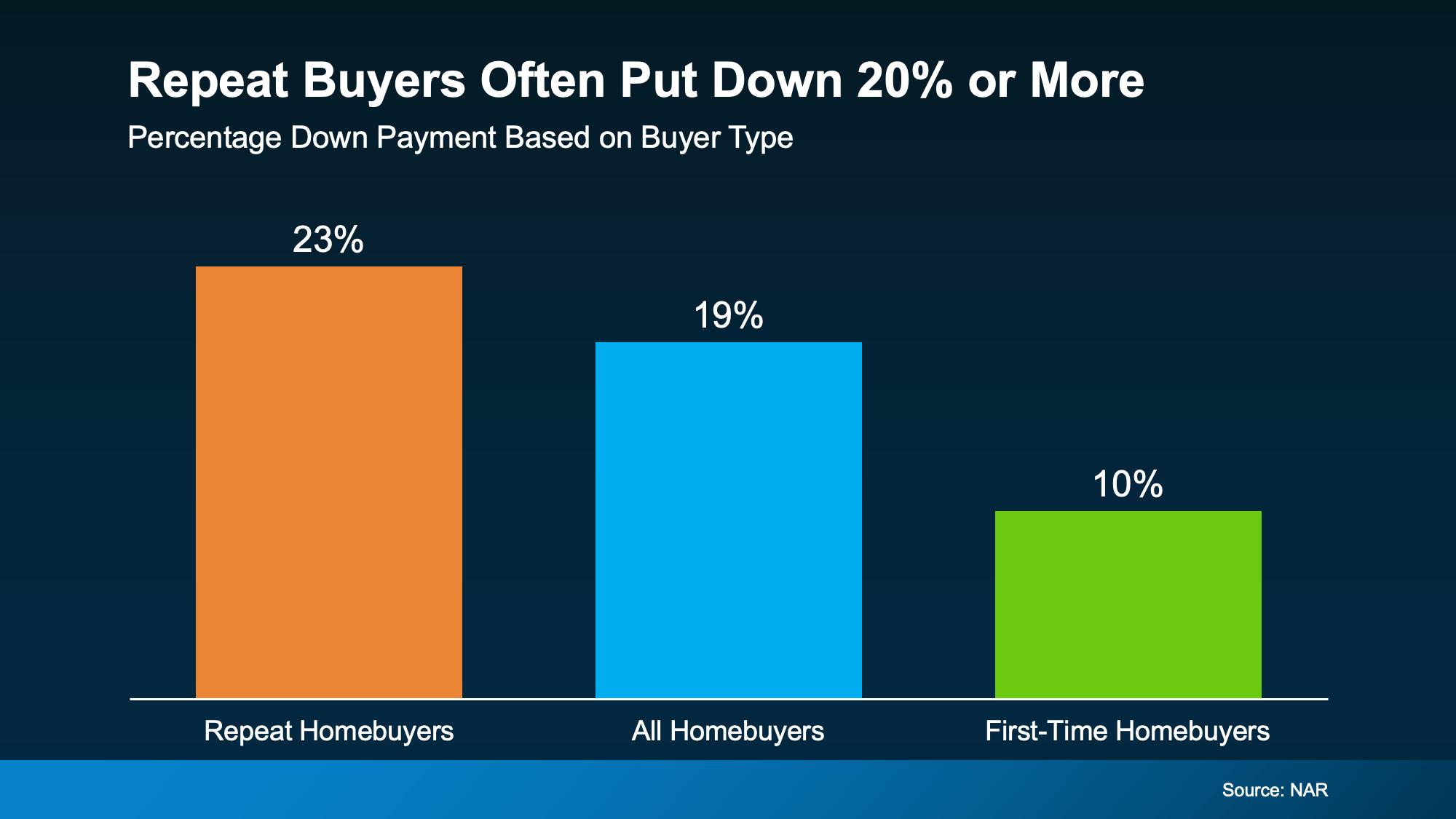
The original August 2026 version of this article included the national chart below. It describes a historical median for repeat buyers; it is not a required or recommended down payment for your household.
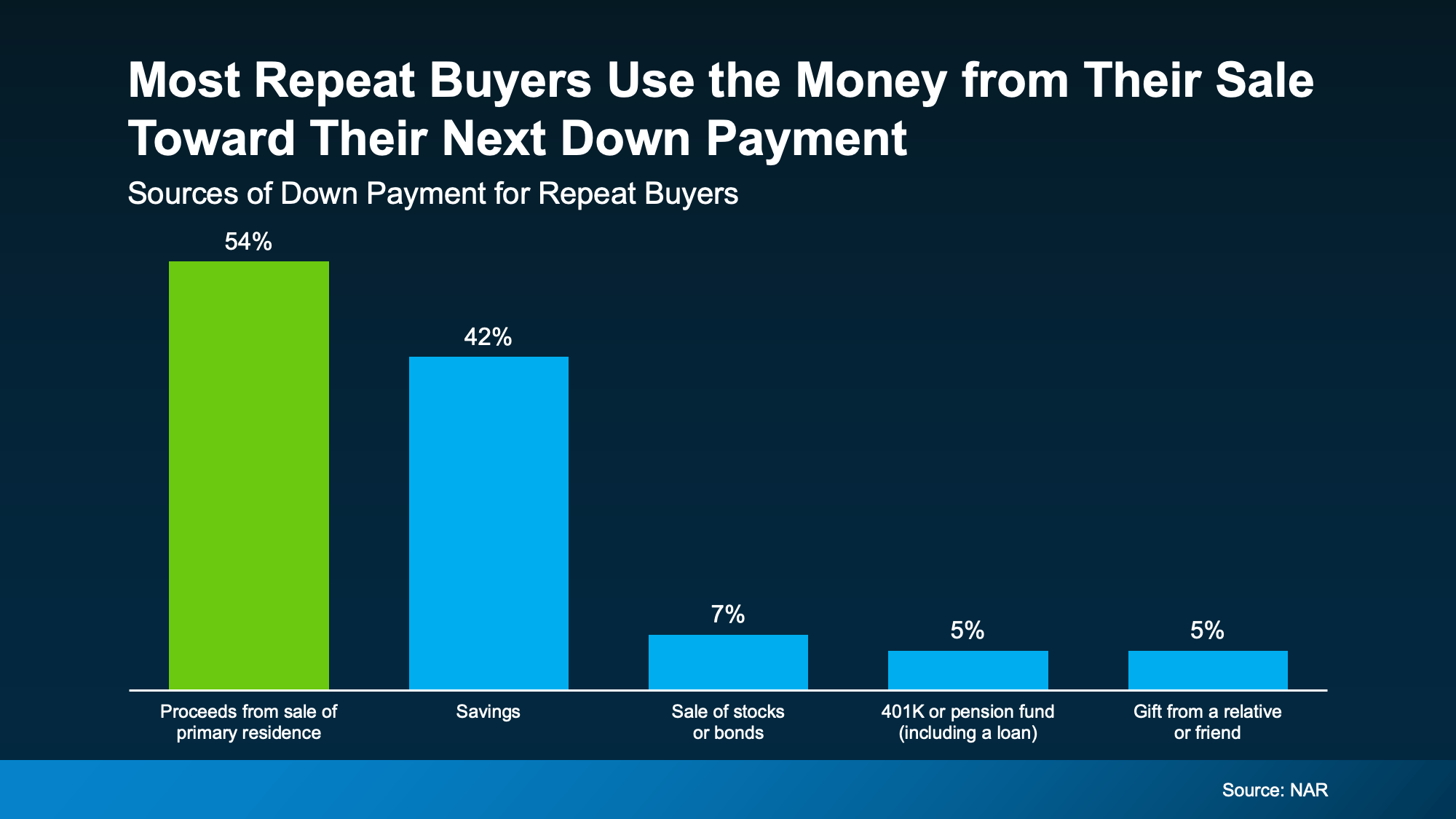
Repeat buyers often fund a down payment with proceeds from their current home, but the usable amount is not the headline estimate of equity. Start with an expected sale price, then subtract the mortgage payoff, seller closing costs, taxes, repairs, concessions, and other transaction expenses. Your final proceeds are not certain until the sale closes.
Compare the same purchase at several down-payment levels
Ask your lender to model at least two or three scenarios—such as 10%, 15%, and 20% down—using the same purchase price, loan term, and quote date. For each scenario, compare:
- loan type and loan amount;
- interest rate, points or lender credits, and annual percentage rate (APR);
- principal and interest, mortgage insurance, estimated taxes, homeowners insurance, and any HOA dues;
- total estimated cash to close;
- cash reserves remaining after closing; and
- the cost over the period you realistically expect to own the home.
The CFPB Loan Estimate comparison guide shows where to find the loan amount, total monthly payment, mortgage insurance, upfront loan costs, lender credits, and cash to close. Compare formal Loan Estimates on matching assumptions whenever possible; a payment quote alone does not show the whole tradeoff.
Coordinate the home sale and purchase before committing the cash
If your down payment depends on selling another home, the contract sequence matters. Your lender and real estate agent should understand whether you need the sale to close first, how a sale contingency would affect the offer, and what happens if the appraisal or net proceeds differ from the plan.
Do not assume a large down payment automatically solves an appraisal gap. The lender bases the loan on its underwriting and valuation rules, and cash needed because a property appraises below the contract price is a separate issue from the planned down-payment percentage.
Bottom line
Twenty percent down is best treated as one scenario, not a finish line. It may reduce the loan balance and eliminate conventional PMI, but it should not drain the cash you need to complete the move and own the property comfortably.
Start with payment comfort, expected time in the home, reliable sale proceeds, and the quality of the opportunity in front of you. Then compare the numbers. Visit our financing resources and contact Bend Relo when you want to coordinate the lending plan with a Bend or Central Oregon home search.
Talk with David & the Bend Relo team
Buying, selling, relocating, or evaluating a specific property? Tell us what you are working through. We are happy to help.





