

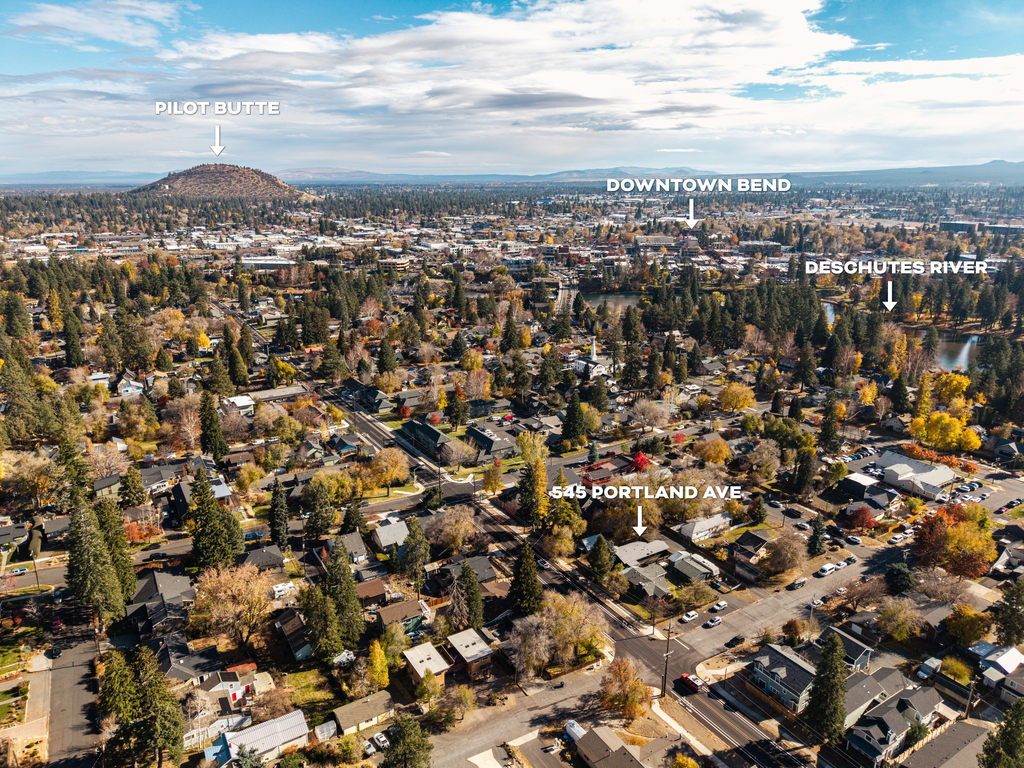
There is no single “best” Bend neighborhood. The right fit depends on how you want an ordinary Tuesday to work: where you commute, whether you want to walk for coffee, how often you use trails, how much yard you want, and which property costs you are comfortable carrying.
That is the useful way to approach Bend neighborhoods when you are relocating. Start with your routines, compare a few parts of town, and then verify the details at the address level. A neighborhood name can describe a broad area; it cannot tell you the traffic, sun exposure, homeowners association rules, school assignment, insurance cost, or trail access for a particular home.
Start with your daily life, not a neighborhood ranking
Before opening a map, write down the three or four things that will most affect your week. Useful questions include:
- Where will you travel most often, and at what time of day?
- Do you want to walk or bike for errands, or is driving acceptable?
- Would you rather have a smaller in-town lot or more outdoor space at home?
- How important is quick access to west-side trails, the river, parks, medical services, or Highway 97?
- Are HOA amenities and design standards appealing, or would you prefer fewer private rules?
- Do you need a specific school assignment, transit route, home-office setup, or accessory dwelling unit option?
At Bend Relo, we use those answers to build a short list, then compare actual homes and blocks. That keeps the search grounded in the way you plan to live instead of a generic “top neighborhoods” list.
Five Bend area patterns worth comparing
The City of Bend recognizes 13 Neighborhood Districts. Those public boundaries are useful for orientation, but real estate listings may also use subdivision, development, or informal area names. Always confirm what a label means for a specific property.
Downtown, Old Bend and Southern Crossing
These central areas are often considered by buyers who want shorter trips to downtown businesses, the Old Mill District, the Deschutes River, or established parks. Housing can vary from older cottages to infill homes, townhomes, and larger residences.
Block-by-block conditions matter here. Tour at the times you would normally be home, check parking and alley access, and notice traffic or event activity. With an older home, make room in the inspection plan for the systems and materials that come with its age rather than assuming “historic” describes condition.
River West, Northwest Crossing and Summit West
West-side buyers often focus on access to neighborhood commercial areas, Shevlin Park, Phil’s Trail, and routes toward the Cascades. The housing mix includes established streets, compact planned development, hillside properties, and newer construction.
Those categories create different tradeoffs. A walkable address may come with a smaller lot. A view property can bring winter-access, driveway, and insurance questions. A planned community may offer shared amenities while adding dues, design review, or use restrictions. If this part of town fits your routine, compare the exact route from each home rather than treating the entire west side as interchangeable.
Century West and southwest Bend
Southwest Bend includes established neighborhoods, planned communities, golf-oriented development, and homes near recreation corridors. Buyers considering this area may value access toward Century Drive, the national forest, or the south side of town.
Review every community on its own terms. Ask for current HOA documents and budgets where applicable, identify what the dues cover, and check whether there are transfer fees or pending assessments. For golf or resort-style living, our guide to Bend-area golf communities explains additional questions to ask about memberships, amenities, and ownership costs.
Boyd Acres, Mountain View, Orchard District and Larkspur
North and east Bend offer a wide range of housing ages, lot sizes, and street patterns. Depending on the address, buyers may prioritize access to medical services, employment centers, Pine Nursery Park, east-side shopping, or routes north and south.
Do not reduce these areas to a claim about “value.” Compare total cost and condition: roof and mechanical age, energy use, landscaping, any irrigation arrangement, and the time and route to the places you actually use. The Bend Park and Recreation District publishes current trail maps so you can distinguish a nearby line on a map from a practical access point.
Old Farm and southeast Bend
Southeast Bend includes established residential pockets and newer growth areas. Buyers may find different combinations of lot size, age, street connectivity, and access to the south end of town.
For any candidate home, verify how nearby planned development or road work could affect the property. The City’s Bend Data Viewer guidance explains how to look up zoning, land-use applications, permits, and licensing information for a tax lot within city limits. That is more reliable than assuming the open land you see today will remain unchanged.
Use objective checks for the issues that matter to you
Walkability and trail access
“Close to” is not a measurement. Map the route, then test it. Look for crossings, sidewalk gaps, lighting, winter shade, elevation change, and whether the trailhead or destination has the access you expected. Bend Park and Recreation District’s parks and trails directory is a good starting point for public facilities.
Commute and transit
Drive your likely commute during the hour you would normally travel. If transit is part of the plan, use Cascades East Transit’s current routes and schedules and confirm the walk between the home and the stop. Service and frequency are route-specific.
School assignment
A listing, map screenshot, or neighborhood reputation is not enough to establish school placement. Bend-La Pine Schools says assignments are based on the home address and provides an official attendance-area lookup and maps. Verify the address directly with the district, especially if a particular assignment is essential to your move. We do not rank neighborhoods by schools or make demographic assumptions about who should live where.
Insurance and wildfire exposure
Request an insurability review and a real quote while you still have time to evaluate the result. Location, construction, roof, vegetation, claims history, and other underwriting factors can affect availability and price. The Oregon Division of Financial Regulation provides current home-insurance consumer guidance; your insurance professional can evaluate the individual property.
HOAs, zoning and intended use
If the property belongs to an HOA, read the governing documents rather than relying on a summary. If an ADU, home business, rental, renovation, or future addition matters, verify the use before you buy. City zoning and permits, HOA rules, recorded documents, and practical site conditions can all affect the answer. Short-term rentals have their own City of Bend permit and eligibility rules, and an online map is only a screening tool.
A simple neighborhood comparison exercise
Choose two or three candidate areas and spend time in each one. Use the same checklist so the comparison stays honest:
- Drive from a candidate home to your most frequent destination.
- Walk the immediate blocks and the route to one place you expect to use.
- Visit once during the day and once around your likely evening routine.
- Price the address-specific items: insurance, utilities, HOA dues, and expected maintenance.
- Note the compromise you would be making and decide whether it is acceptable.
This process often changes the shortlist. A neighborhood that looks ideal online may not fit the daily route; another may work better once you understand the block, home, and total cost.
Build your Bend shortlist with local context
A good relocation search is not about being told which Bend neighborhood is “best.” It is about seeing how the city’s different housing patterns line up with your priorities, then doing careful due diligence on the home you choose.
If you are preparing a move, the Bend Relo team can help you turn your routines, budget, and property requirements into a focused tour. Contact us to start an address-specific conversation.
Talk with David & the Bend Relo team
Buying, selling, relocating, or evaluating a specific property? Tell us what you are working through. We are happy to help.





